





Remote Cosmetology Consultation Benefits Explained
This article is educational and does not diagnose a condition or replace care from a qualified medical professional.
If you are weighing whether an online skin assessment can genuinely help with stubborn acne, rosacea, or pigmentation, the short answer is yes: the remote cosmetology consultation benefits most people care about—clinical results comparable to in-clinic care, faster access, tighter follow-up, and integrated skincare-plus-lifestyle planning—are supported by teledermatology research and built into how we work at Macherre Medical Center. This guide explains what a remote consultation actually is, why it works for many chronic skin conditions, where it reaches its limits, and how to decide whether it fits your situation.
Table of contents
What a remote cosmetology consultation actually is
A remote cosmetology consultation is a professional skin assessment and treatment-planning session carried out online instead of in a physical clinic. You share your medical history, lifestyle details, and high-quality skin photographs, and in return you receive a personalized plan and ongoing follow-up through digital channels. In dermatology research this model is usually called teledermatology, and it generally runs in one of two formats: store-and-forward, where your photos and intake form are submitted and then reviewed, or real-time video and chat consultations.
For acne and many chronic skin conditions, teledermatology has been shown to be clinically effective, time-efficient, and associated with high patient satisfaction, with clinical outcomes on standardized acne scores generally equivalent to in-person care. That distinction matters: remote care is not a diluted version of clinic care for these conditions, but a different delivery method that keeps the same clinical intent.
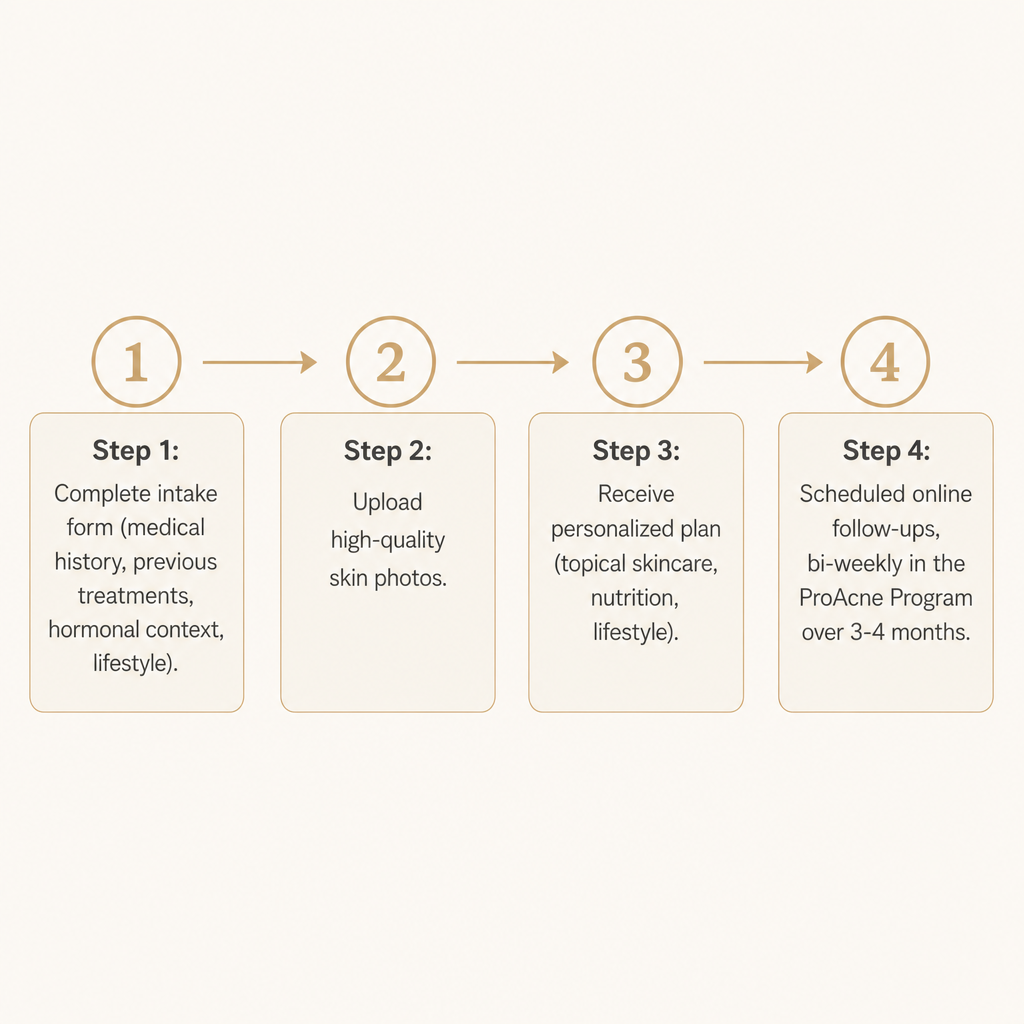
We use a remote-first, store-and-forward model at Macherre. You complete an intake form, upload skin photos, and receive an individualized plan covering topical skincare, nutrition, and lifestyle changes, supported by scheduled online follow-ups. Our focus is deliberately narrow—acne, rosacea, pigmentation, texture, sensitivity, dehydration, and early aging—because those are the conditions where careful visual assessment and structured history do most of the diagnostic work.
The core benefits, and the evidence behind them
The first question most people ask is whether online care can match a clinic for results. Multiple reviews and trials have found that teledermatology can manage acne vulgaris as effectively as in-person dermatology, with similar reductions in acne severity scores. Digital assessments of acne severity correlate strongly with in-person examination, and even when systemic medications such as isotretinoin are managed through teleconsultations, outcomes are comparable with only mild adverse effects. For chronic or hormonal acne, that body of evidence supports the idea that remote consultations are a clinically credible way to diagnose acne type, track progress, and adjust treatment over time.
We apply that evidence-backed model specifically to chronic and hormonal acne treatment, rosacea and diffuse facial redness, post-acne discoloration and broader hyperpigmentation, sensitive and reactive skin, and early signs of aging or texture problems. We report a 95% success rate for our structured ProAcne Program. That figure is a clinic-reported outcome metric drawn from our own client experience rather than an independent clinical trial, and it reflects how we evaluate our program-based approach internally.
Convenience and access are the second cluster of benefits, and they are consistent across the research. Remote care removes travel, parking, and time away from work, which matters most for adults managing conditions like acne that require regular follow-up. Telehealth dermatology appointments are often available sooner than in-person slots, shortening the gap before effective treatment begins. And remote delivery widens access for people in rural areas, internationally mobile clients, and anyone who prefers care in a non-local language. For our English- and Russian-speaking clients, that translates into the ability to start care from anywhere with a stable connection, bilingual support across consultations and educational content, and easy scheduling of bi-weekly follow-ups without disruptive clinic visits.
The third benefit is one people underestimate: frequency. Teledermatology enables more regular contact between patient and provider, which is linked to better adherence and outcomes. Studies note that telemedicine facilitates frequent communication, improves treatment compliance, and allows more appointments with fewer no-shows, so clinicians can keep progress monitoring tight. Our 3-4 month ProAcne Program is built on exactly this principle, with bi-weekly check-ins to review progress, adapt topical routines, and refine nutrition and lifestyle guidance. For clients frustrated by one-off visits and generic product lists, that iterative rhythm is often the difference between a plan that drifts and one that improves.
Finally, remote cosmetology lends itself to integrated, lower-medication care. Traditional dermatology often centers on prescriptions and procedures; our model more readily combines tailored topical routines, nutrition strategies relevant to acne, rosacea, and pigmentation triggers, and lifestyle adjustments such as sleep, stress, and environment. Medication can still be recommended when appropriate, but we build plans around skin barrier support, inflammation control, and trigger management rather than pharmaceuticals alone, which suits clients who specifically want a topical-first approach.
How our remote acne and skin assessment works
For someone with chronic or hormonal acne, the mechanics are straightforward but deliberate. It starts with a detailed intake form capturing medical history, previous treatments, hormonal context, and lifestyle. You then provide high-quality facial and, where relevant, body photographs, which let us classify acne severity and distribution and spot co-existing issues such as rosacea or post-inflammatory hyperpigmentation. From there you receive a tailored plan combining topical products, routine structure, nutrition recommendations, and lifestyle adjustments, followed by scheduled online follow-ups to assess response, manage side effects, and escalate or de-escalate intensity.
This mirrors how research handles remote acne care. Acne severity in studies is often graded with tools such as the Global Acne Grading System, and these have been applied successfully in teledermatology using patient photos. Our method reflects the same logic: careful visual assessment paired with standardized tracking across several months, so changes are measured rather than guessed. That is also why our follow-up cadence is fixed rather than optional—consistent re-assessment is what turns photos into a reliable progress record.
When remote care is enough, and when you still need an in-person visit
Remote cosmetology consultation benefits are most pronounced for conditions that are visually diagnosable and respond to ongoing topical and lifestyle management. Evidence and clinical practice point to remote care being well suited for mild to moderate acne, including persistent or hormonal patterns; rosacea and redness-dominant facial conditions; many forms of hyperpigmentation and post-acne marks; and stable chronic conditions that need regular follow-up rather than urgent intervention.
Remote care also has clear boundaries, and being honest about them protects you. Teledermatology guidance emphasizes that some situations should be redirected to in-person evaluation:
- Suspicious pigmented lesions or rapidly changing moles.
- Acute, severe infections or rapidly spreading rashes.
- Conditions requiring biopsies, procedural interventions, or urgent systemic management.
- Cases where photo quality is simply not sufficient for safe assessment.
Our remote model works within those limits. We focus on acne, rosacea, pigmentation, texture, sensitivity, dehydration, and early aging rather than surgical or oncology cases, and when signs fall outside the safe scope of online care, we advise clients to seek local in-person dermatology. If your main concern is stubborn marks left behind after breakouts, for example, our post-acne and discoloration treatment is designed for exactly that visually assessable, follow-up-driven work, while a changing mole is not.
Deciding whether a remote consultation is right for you
Most adults can narrow the decision to a few practical criteria rather than a long checklist.
Your main skin problem and goals. Remote care fits especially well if you are dealing with chronic or hormonal acne, rosacea, post-acne discoloration, sensitive or reactive skin, or early aging changes, and your priority is long-term control and visible improvement rather than procedures.
Your preference for integrated, low-medication care. If you want a plan built around topical skincare, nutrition, and lifestyle, with medication added only when needed, our cosmetology-led model is aligned with that preference by design.
Your schedule, location, and language. Demanding schedules, remote work, or limited access to local dermatology are exactly the conditions where tele-cosmetology returns the most value. Our bilingual English and Russian setup makes us a natural fit for international clients and Russian speakers living abroad.
Your comfort with a structured program. The ProAcne Program's bi-weekly follow-ups over 3-4 months ask for engagement and consistency, but they provide the structure many frustrated acne patients have been missing. If you are ready to follow a plan and report progress regularly, the remote format becomes a strength.
Budget and expectations. We position ourselves as a premium yet accessible alternative to in-person dermatology, offering multi-month programs instead of single quick visits, with consultations starting in a mid-range price band. Teledermatology studies generally support the cost-effectiveness of remote care once travel savings and time off work are included.
If redness and flare-ups are your central concern, our dedicated rosacea management consultation applies the same structured, barrier-first logic to a condition that rewards patient, repeated adjustment over aggressive one-off treatment.
Risks, limits, and how we manage them
Every care model has trade-offs, and remote care is no exception. Teledermatology depends on photo quality and patient-reported history, so poor lighting, low resolution, or incomplete information can reduce diagnostic accuracy. Even so, large reviews conclude that teledermatology is a reliable diagnostic method for many skin problems, with outcomes on par with traditional care in most cases. We reduce these risks by requesting structured photo sets and detailed intake forms, focusing on conditions where visual assessment and history are typically sufficient, and using repeated follow-ups to refine diagnosis as more information appears.
Safety and side effects are the next concern. Research on telemanaged acne, including isotretinoin, reports mild adverse effects and similar or even lower rates of certain side effects compared with in-person care, partly because tele-follow-ups allow closer monitoring of dryness, irritation, and flare-ups, with adjustments made quickly rather than at the next physical appointment. In our setting, emphasis on barrier repair, gentle actives, and gradual escalation of treatment intensity helps limit unnecessary irritation, which matters most for sensitive or rosacea-prone skin—the same principles behind our sensitive skin care consultation.
There is also the matter of interpreting success claims honestly. Our reported 95% acne success rate comes from our own outcome tracking and is a first-party clinic figure, not a published clinical-trial statistic. Read it as a signal of how we evaluate our structured program internally, and weigh it alongside the independent evidence that teledermatology can match in-person outcomes for acne. Treated that way, the number is useful context rather than a guarantee.
Frequently Asked Questions
Can a remote cosmetology consultation really help with severe or hormonal acne?
Evidence shows teledermatology can manage mild to moderate and many chronic acne cases with outcomes comparable to in-person care, including hormonal patterns. Our ProAcne Program is built around these cases using structured follow-up and ongoing plan adjustments.
How quickly will I see results from a remote program?
Studies report meaningful acne score reductions over several months of teledermatology care. Many of our clients see visible improvement within the first few months of the ProAcne Program, though the pace varies with severity, adherence, and individual biology.
Is remote consultation safe if I have very sensitive skin or rosacea?
Rosacea and sensitivity are commonly managed through teledermatology using careful visual assessment and gradual topical strategies. We offer dedicated consultations for both, emphasizing barrier-supportive routines and trigger management.
What if my condition is not suitable for remote care?
Teledermatology guidance is clear that suspicious moles, acute severe rashes, or issues needing procedures should be evaluated in person. If your photos or history suggest such concerns, we will guide you to seek appropriate local dermatology care.
Why choose Macherre over a generic online skincare service?
We combine evidence-aligned teledermatology principles with a cosmetology focus on acne, rosacea, pigmentation, sensitive skin, and early aging, delivering bilingual, multi-month, plan-based care rather than one-off product suggestions.