





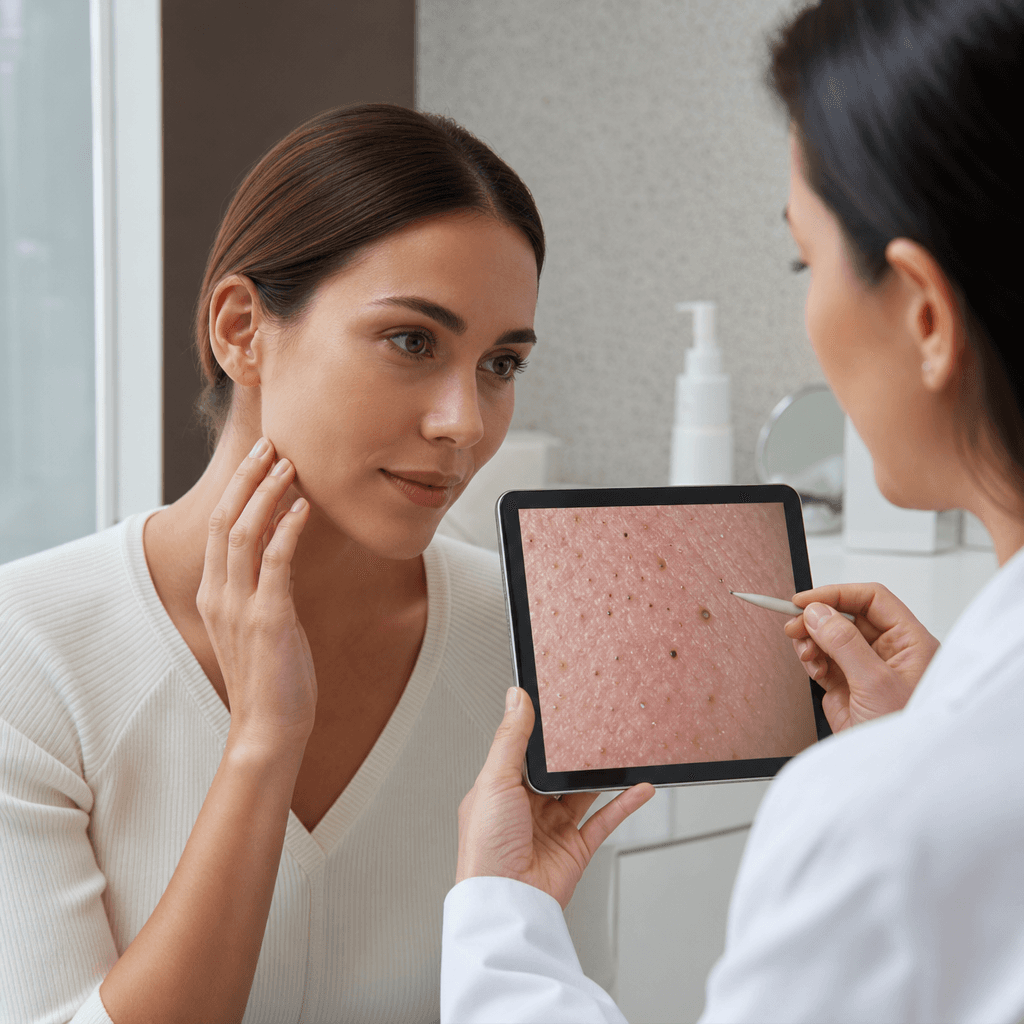
What Are Blackheads and Why Do They Form?
This article is educational and does not diagnose a condition or replace care from a qualified medical professional.
Blackheads are open comedones: tiny follicles plugged by a mix of sebum and dead skin cells, with the opening left exposed to air. That exposure, not trapped dirt, is why the surface darkens. Understanding what blackheads are and why they form matters because the fix most people reach for first, scrubbing harder, usually irritates the skin without touching the follicular process underneath. This is the hub for our acne-mechanisms guides, so we'll explain the biology clearly, separate blackheads from look-alikes, and show where gentle, consistent care makes a real difference.
Table of contents
What a blackhead actually is
A blackhead is a small, non-inflammatory acne lesion that forms inside a hair follicle. Its clinical name is an open comedo. Every follicle holds more than most people picture: a hair, even one too fine to see, sebum from the sebaceous gland, keratin shed from skin cells, and the follicle opening we casually call a pore.
When oil and dead cells collect inside that follicle, they can compact into a plug. If the opening stays open, the contents sit exposed at the skin surface and read as grey, brown, or black. If the opening closes over, the same kind of plug becomes a whitehead instead. The distinction is simply whether the follicle is open to the air or sealed, which is why blackheads and whiteheads are described together so often.
That single detail, open versus closed, shapes everything that follows: how the lesion looks, why colour appears, and why squeezing rarely ends well.

Why blackheads look black
The dark colour is not dirt and not evidence of poor hygiene. Several things combine at the surface of an open pore. The plug material is exposed to air, and oxidation shifts its appearance darker over time. Surface pigment, including melanin, adds to that tone. Light also reflects differently off the compact material packed into an open follicle than off surrounding skin.
This is the detail that frustrates people most: because the colour sits at the surface, it looks removable by force. It isn't. Scrubbing harder does nothing to the underlying tendency to form comedones, and aggressive cleansing, abrasive tools, or repeated squeezing can inflame the follicle and leave the surrounding skin worse than before.
The mechanisms that form a blackhead
Blackheads form through a combination of three processes acting together: excess sebum, abnormal shedding of the cells lining the follicle, and blockage of the follicle itself. DermNet describes comedone formation as involving increased sebum production and overgrowth, or cornification, of the cells lining the sebaceous duct, with the resulting debris blocking the follicle. No single one of these causes a blackhead on its own; it is their overlap that creates the plug.
Excess oil. Sebaceous glands produce sebum to lubricate skin. When output rises, more oil is available to mix with shed cells and form a plug. Hormonal changes can influence that output, which is one reason comedonal acne becomes more noticeable during puberty, around menstrual cycles, or through other hormonal shifts. Blackheads alone, however, do not establish a hormonal disorder.
Sticky cell buildup. Skin cells normally shed from the follicle lining and clear away. If they turn unusually sticky or multiply faster than usual, they bind with sebum and obstruct the opening. This often begins below the surface as a microcomedone, too small to see, which may later surface as a visible blackhead or whitehead.
Follicular blockage and individual biology. Some people simply produce more sebum or develop blockages more readily. Family history, age, hormones, skin sensitivity, and a history of acne all shape the pattern. Blackheads are not a verdict on cleanliness, and washing excessively tends to strip and irritate skin without correcting the follicular process.
If you want to understand the sealed-pore counterpart in detail, our explainer on what closed comedones are and how they form covers whiteheads and how they differ from the open lesions here.
Where blackheads appear and what they can be confused with
Blackheads cluster where sebaceous glands are densest: the nose and the sides of the nose, the forehead, the chin, the cheeks, and the upper back or chest. A spread of dark dots across the central face is often comedonal acne, but not every dark dot is a blackhead. Enlarged pores, sebaceous filaments, ordinary hair follicles, sun-related lesions, and other skin conditions can all look similar.
The most common mix-up is with sebaceous filaments. These are normal structures that channel sebum through a pore. They tend to be small, pale, yellowish or grey, and they reliably return after being squeezed because they are part of how the pore works. Blackheads are usually more distinct, darker, and tied to a compact plug.
Telling them apart from a photo or a bathroom mirror is genuinely difficult. When the picture is unclear, the safest move is to avoid aggressive extraction and get an appropriate assessment rather than force a lesion that may not be a blackhead at all.
What quietly makes blackheads worse
Much of what aggravates blackheads is well-intentioned. The usual culprits include picking, squeezing, or scraping; abrasive scrubs, brushes, or pore strips used repeatedly; heavy or oily cosmetics and hair products; introducing several active products at once; harsh or alcohol-based cleansers; and ongoing friction, sweat, and occlusion. Starting and stopping acne products unpredictably belongs on the list too, because skin rarely gets the consistency it needs to respond.
Squeezing deserves a specific warning. It may clear visible material for a day, but it can push debris deeper, raise inflammation, and increase the risk of marks or scarring. The American Academy of Dermatology advises keeping hands away from acne lesions precisely because picking and squeezing can prolong acne and raise the risk of scarring and post-inflammatory hyperpigmentation.
Rich products and congestion are worth a measured view. Some people notice more clogged pores after oily creams, heavy pomades, or cosmetics that don't suit them, and humidity or sweating can make congestion more obvious. That does not mean every oily product causes blackheads or that one product explains a stubborn problem. Formula, amount, frequency, skin type, and the rest of your routine all interact.
What genuinely helps prevent and manage them
The approach that works is usually unglamorous: consistent, gentle care that eases follicular blockage without wrecking the skin barrier.
Cleanse gently, generally up to twice a day and after heavy sweating, using fingertips rather than rough cloths, brushes, or devices. Scrubbing does not clean out a blackhead; it adds irritation. Where appropriate, favour products labelled non-comedogenic or oil-free. That label is not a guarantee for every person, but it is a reasonable starting point for acne-prone skin.
A workable baseline routine is small on purpose:
- A gentle cleanser
- A suitable moisturiser
- Daytime sun protection
- One carefully chosen acne active, if appropriate
Resist changing several products at once. When everything shifts together, you lose the ability to tell what improved your skin, what irritated it, and what triggered a new breakout.
On active ingredients, clinicians may consider comedolytic options. DermNet lists salicylic acid, benzoyl peroxide, azelaic acid, glycolic acid, and retinoids among topical choices for comedonal acne, with benzoyl peroxide often relevant when inflammatory acne is also present. Prescription retinoids such as adapalene require medical guidance in the relevant jurisdiction. The right ingredient depends on the full picture: skin sensitivity, current products, pregnancy or breastfeeding status, other medicines, and whether inflamed lesions are present. More product is not more progress; overuse brings dryness, burning, peeling, and irritation.
Professional extraction has a defined role. A trained provider can sometimes remove persistent comedones using proper technique and hygiene, which addresses lesions already present. It does not stop new comedones forming, so prevention still depends on a suitable routine. Forcing deep or stubborn lesions with needles, nails, comedone tools, or household gadgets is not worth the risk, and pain, bleeding, spreading redness, pus, or swelling after an attempt warrants medical attention.
When to seek professional advice
A closer look is worth arranging when blackheads persist despite a consistent, gentle routine, or when the wider picture suggests more than simple congestion. Consider an assessment if you also have painful, deep, or inflamed spots; if breakouts are leaving dark marks or scars; if acne is widespread across the chest or back; if your skin is very sensitive, burning, or peeling; if you're unsure the lesions are even blackheads; if acne is affecting your confidence; or if you're weighing prescription treatment, pregnancy, or a possible hormonal cause.
Moderate or severe acne, painful nodules, scarring, sudden adult-onset acne, or a rash that doesn't resemble typical acne may need in-person evaluation. Treatment should be chosen by severity, distribution, previous treatment, age, sex, and response to earlier care, not by blackheads alone.
How we support blackhead-prone skin
When the main concern is persistent comedones and you want professional removal or prevention guidance, our Blackheads and Whiteheads Removal consultation is the direct fit. When breakouts are broader or recurring, our Acne Treatment consultation is often more appropriate, because blackheads frequently sit alongside inflammatory acne, sensitivity, hormonal-pattern breakouts, or post-acne marks.
For a structured, longer pathway, our current Virtual ProAcne Program begins with an extended consultation built from a questionnaire, photographs, skin history, your current routine, and any laboratory results you provide. From there it uses a personalised routine, gradual product introduction, progress reviews every two weeks, and support between those reviews. We describe the program as running four to six months, with the exact duration set individually. Current options, product selections, currency, and suitability are confirmed on the live program page and during consultation, since pricing and length depend on the plan you choose.
An online consultation is educational and personalised, but it is not a substitute for urgent or in-person care. Remote assessment may not suit lesions that are severe, unclear in diagnosis, possibly infected, or needing examination beyond photographs. In those situations, in-person medical care comes first. For anyone outside the country, confirm the available language, payment currency, consultation format, local product access, and whether a local referral is needed before booking.
Frequently asked questions
Are blackheads caused by dirt?
No. Blackheads are open comedones formed by a follicular plug of sebum and skin cells. The dark colour comes from air exposure, oxidation, and surface pigment, not from dirty skin.
Should I squeeze a blackhead?
It's safer not to. Squeezing can push debris deeper, increase inflammation, and raise the risk of post-acne marks or scarring. Selected persistent comedones may be removed by a trained professional instead.
Do blackheads mean I have hormonal acne?
Not necessarily. Hormonal changes can raise sebum and contribute to comedones, but blackheads also arise from follicular shedding, genetics, products, humidity, or friction. A clinician needs your wider history to judge a hormonal pattern.
Can blackheads turn into pimples?
Yes. A blocked follicle can stay a non-inflammatory blackhead, or inflammation can build around it and produce an inflamed acne lesion.
How long does it take to see improvement?
There is no universal timeline. Comedolytic treatments usually need consistent use over several weeks or longer, and irritation can appear if they're introduced too quickly. A personalised plan should follow your skin's response rather than promise a fixed result.