





What Is Cystic Acne? Causes and Signs Explained
This article is educational and does not diagnose a condition or replace care from a qualified medical professional.
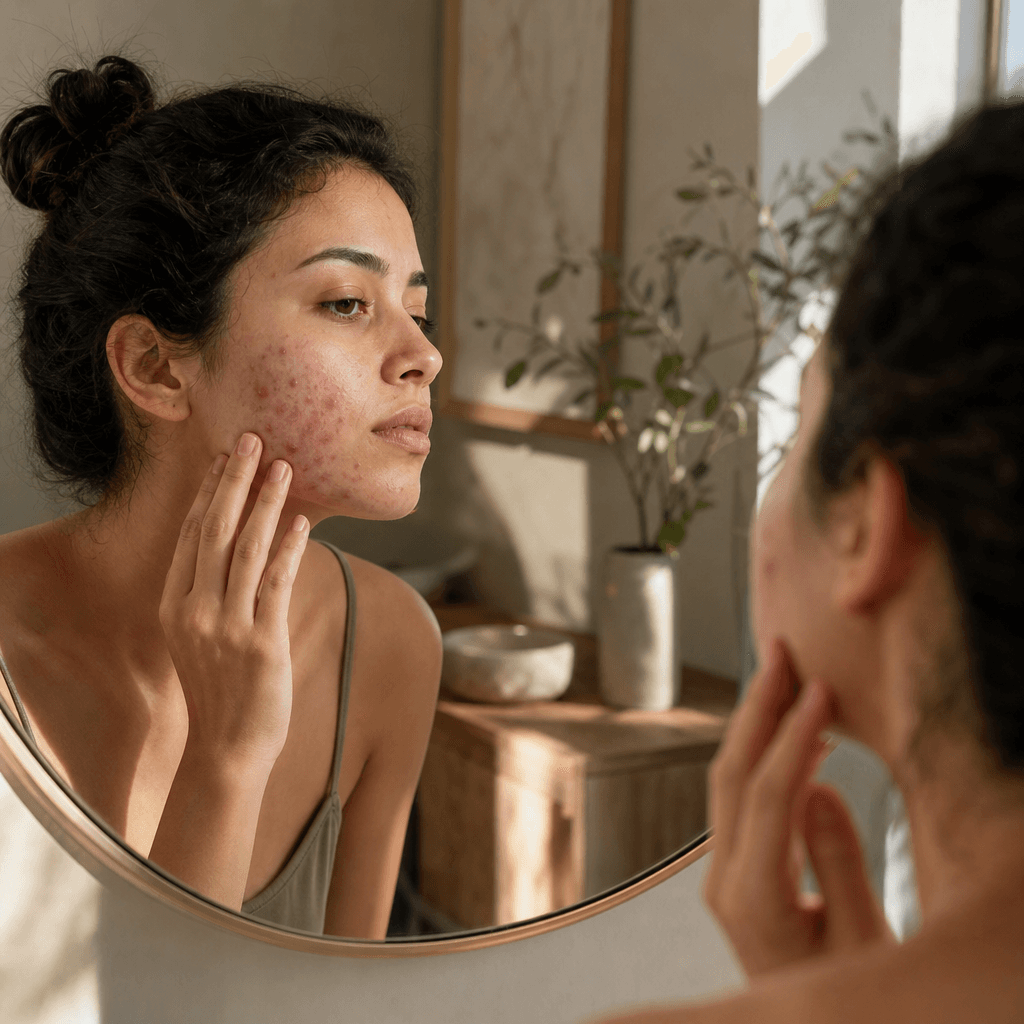
If you keep getting deep, painful bumps that sit under the skin and refuse to come to a head, you are probably wondering what is cystic acne and whether it needs more than a drugstore routine. Cystic acne is a common name for severe, inflamed breakouts that form deep in the skin, often tender or sore, and capable of leaving marks or scars once they heal. Clinicians sometimes group these under the term nodulocystic acne, and the distinction matters: a cyst contains pus, while a nodule does not and usually feels firmer. Knowing how these lesions look and feel helps you judge whether careful skincare is enough, or whether it is time for a clinical assessment. What appearance alone cannot do is confirm a diagnosis.
Table of contents
What actually causes cystic acne
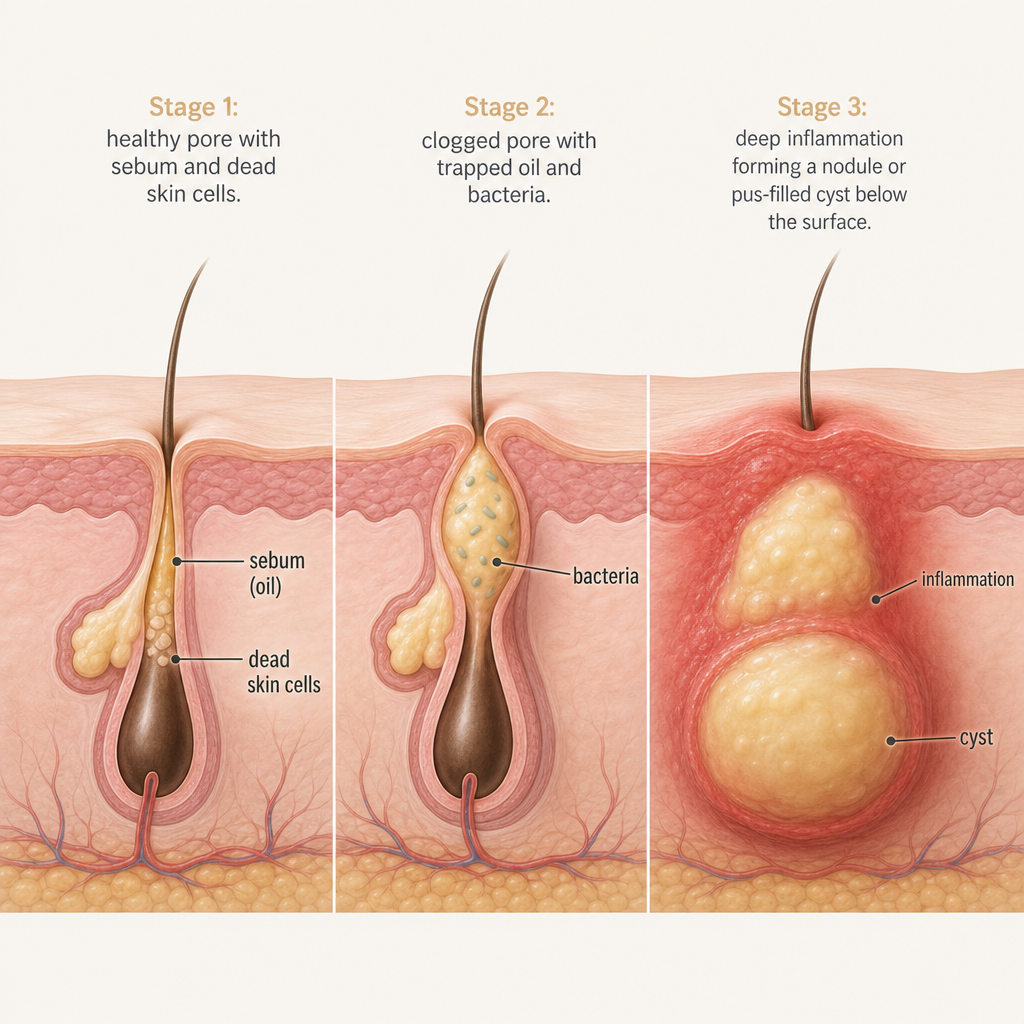
Every breakout starts the same way: a pore becomes clogged. Excess oil, which clinicians call sebum, mixes with dead skin cells and blocks the opening. Bacteria and inflammation build inside that blockage. With cystic acne, the difference is depth. When the inflammation extends far below the surface rather than staying near the top of the pore, the body walls it off into a nodule or a pus-filled cyst instead of a simple whitehead.
Hormones play a supporting role here, not a solo one. Androgens can stimulate oil glands to produce more sebum, which is one reason deep breakouts often flare along the jaw and chin or in the days before a period. That link is real, but it does not mean cystic acne is proof of a "hormone imbalance" in the way the phrase is often used. In most people, hormone levels sit within a normal range while the skin's oil glands simply respond strongly to them. Genetics, individual inflammation patterns, and the behaviour of pore-dwelling bacteria all feed into why one person develops surface pimples and another develops deep, painful cysts.
That depth is also why cystic acne behaves so differently from the blackheads and whiteheads many people treat at home. Surface comedones clog the top of the pore; cysts involve a deeper, inflammatory process that topical spot treatments often cannot reach on their own.
How to recognise the signs
Deep acne lesions have a recognisable feel more than a single look. They tend to be sore, tender, or genuinely painful to press, unlike a surface pimple that mostly looks irritated. They often sit as firm lumps beneath the skin, and a nodule usually feels harder than a cyst because it lacks the pocket of pus that makes a cyst feel softer or more fluctuant.
They rarely appear in isolation. Cystic lesions commonly show up alongside other blemishes such as whiteheads, blackheads, or inflamed pimples, which is part of why the overall skin can look mixed and unsettled. After they heal, deep lesions can leave temporary dark or discoloured marks, and in some cases permanent scarring, because the inflammation reached deep enough to disrupt the skin's structure.
One caution is worth holding onto: a painful bump is not automatically a cyst. Several other skin conditions produce tender lumps, and self-labelling can send you toward the wrong routine. If you are unsure what a lesion is, or it keeps getting worse despite sensible care, that uncertainty is itself a reason to have it assessed rather than guessed at.
When deep acne needs professional assessment
Some situations call for more than patience and a better moisturiser. Consider a medical assessment if you have deep, painful breakouts, if scars are starting to form, if your acne persists despite consistent treatment, or if you simply are not sure what you are looking at. These are not signs of failure; they are the points where expert eyes genuinely change the plan.
Formal guidance backs this up. NICE recommends referral to a consultant dermatologist-led team for nodulocystic acne and for cases where the diagnosis is uncertain, and says referral should be considered when acne is leading to scarring. In other words, deep lesions and emerging scars are exactly the scenario where specialist input is expected rather than optional.
There is also one habit to resist firmly: do not squeeze or puncture a deep lesion. Picking at a cyst can damage the surrounding skin and raise the risk of lasting scars, often making the very outcome you fear more likely. Treatment itself depends on the type and severity of acne, your health history, and other individual factors, which is why there is no single universal fix. Severe acne can require clinician-directed treatment; NICE notes, for example, that oral isotretinoin may be considered for people over 12 with severe acne that has resisted adequate courses of standard systemic antibiotic and topical treatment. That is a prescribed, supervised option under professional oversight, not something to source or start on your own.
A painful bump is not a diagnosis. When lesions are deep, worsening, or scarring, assessment beats guesswork.
Where structured online support fits
Not every acne concern needs a hospital clinic, and not every concern is safe to manage alone with trial-and-error products. For milder to moderate breakouts, or for the discoloured marks that linger after deeper lesions settle, structured guidance can bridge the gap between doing nothing and waiting months for specialist access. Our Virtual ProAcne program is built as that kind of online support: it begins with an extended consultation, moves into a personalized routine with an introduction plan, and continues with progress reviews every two weeks plus support between check-ins over a 4 to 6 month period.
We are clear about what this is and is not. A remote program is education, routine guidance, and ongoing adjustment tailored to your skin over time. It is not a promise of a particular result, and it is not a substitute for specialist assessment when severe, scarring acne clearly calls for it. If your breakouts fit that severe, deep, scarring picture, the responsible path may be in-person dermatology-led care, and we will say so rather than stretch a routine to fit.
If your concern leans toward the surface or the aftermath of acne, there are more targeted starting points. Surface congestion often maps to our work on blackheads and whiteheads removal, while the marks left behind after deep lesions are closer to post-acne and discoloration treatment. For a broader look at identifying the cause and building a plan, our general acne treatment consultation is the place to begin.
Program length and pricing depend on the option you choose and your individual plan, so check the live Virtual ProAcne program page for current details, and contact us about availability and pricing relevant to your location. The most useful next step is to tell us what your lesions look and feel like, how long they have persisted, and what you have already tried, so we can suggest whether a remote routine or an in-person referral makes more sense for you.
Frequently asked questions
Is cystic acne the same as nodular acne?
The terms are often used together to describe deep acne, but they are not identical. A cyst contains pus and tends to feel softer, while a nodule does not contain pus and usually feels firmer and harder beneath the skin.
Can cystic acne cause scars?
Yes. Because the inflammation reaches deep into the skin, cystic lesions can leave permanent scars. That is why timely assessment is sensible when breakouts are deep, painful, or already starting to scar.
Can I tell for sure from a photo?
No. Clear photos can help a clinician review your skin, but an image alone cannot guarantee a diagnosis. If the diagnosis is uncertain or the acne is severe, seek an appropriate clinical assessment rather than relying on appearance.
Is deep acne a sign of a hormone imbalance?
Not necessarily. Hormones can stimulate oil glands and contribute to breakouts, but most people with cystic acne have hormone levels within a normal range. Deep acne reflects how strongly the skin responds, not automatically a measurable imbalance.
This guide is general education, not a diagnosis or an individualized treatment plan. For severe, painful, or scarring acne, seek assessment from a qualified health professional.