





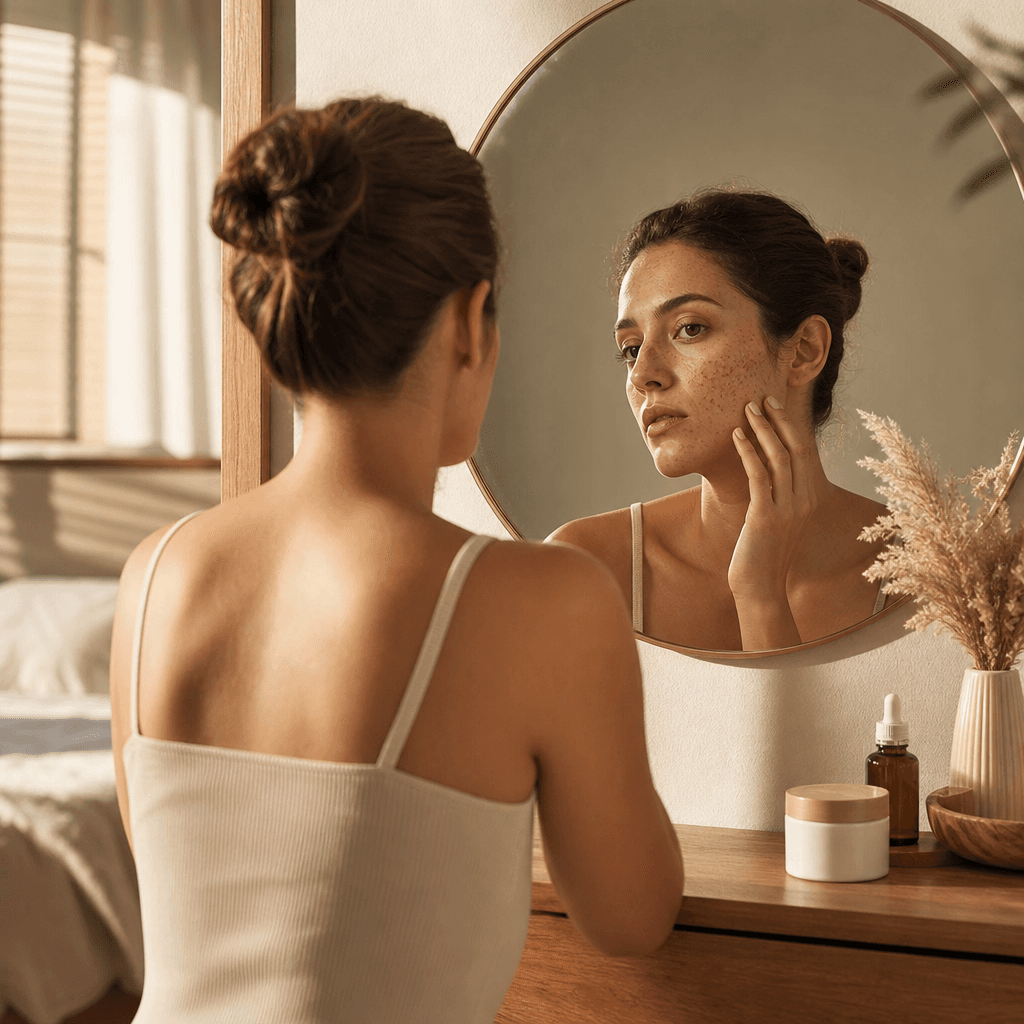
What Causes Skin Pigmentation And Dark Spots
This article is educational and does not diagnose a condition or replace care from a qualified medical professional.
Dark spots and uneven tone almost always trace back to one pigment: melanin. Understanding what causes skin pigmentation and dark spots means understanding when your melanin-producing cells make too much, too little, or distribute pigment unevenly in response to a trigger. Most of the time that trigger is sun exposure, inflammation after acne, hormonal shifts, genetics, aging, medications, or an underlying health condition. These changes are usually harmless, but they can be stubborn, emotionally draining, and occasionally a signal that something deeper needs attention. This guide explains the mechanisms behind common dark spots, separates cosmetic concerns from health signals, and helps you decide what kind of care actually fits your skin.
Table of contents
What skin pigmentation and dark spots actually mean
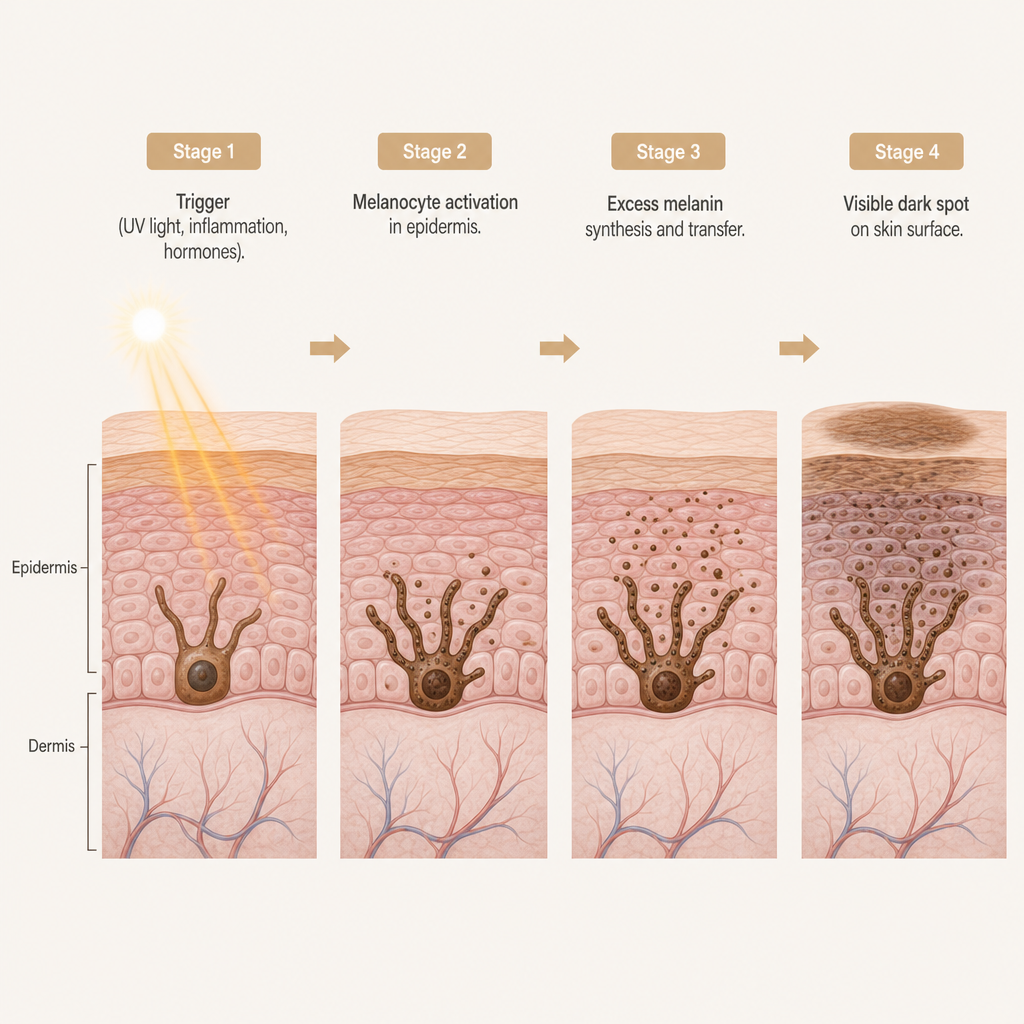
Your natural skin color comes from melanin, a pigment produced by specialized cells called melanocytes in the epidermis. Melanin is packaged and transferred into surrounding skin cells, where it helps protect your DNA from UV radiation and gives your skin its tone. When that system is disrupted, three broad changes can appear.
Hyperpigmentation is the most familiar: areas that look darker because there is too much melanin or more active melanocytes in one spot. Dark spots, age spots, melasma patches, and post-acne marks are all forms of hyperpigmentation. Hypopigmentation is the opposite pattern, where melanin production drops or melanocytes are damaged and patches look lighter. Depigmentation refers to nearly white areas where melanocytes are lost altogether, as in vitiligo.
For most people who reach out to us, the concern is localized hyperpigmentation: brown or greyish spots that appear after acne, sun exposure, pregnancy, or irritation from skincare. Naming the type correctly is the first practical step, because a sun spot, a hormonal patch, and a post-acne mark do not respond to the same routine.
The real decision: cosmetic issue, health sign, or both
Behind the question of what causes dark spots sit three decisions that shape everything else.
The first is whether the change is safe or needs medical evaluation. Most dark spots are benign. But sudden, widespread darkening, pigment involving mucous membranes such as the mouth or genitals, nail changes, or spots accompanied by fatigue and weight loss can point toward endocrine or systemic conditions like Addison's disease, thyroid problems, or nutritional deficiencies. Those patterns warrant in-person medical assessment, not cosmetic care alone.
The second decision is about the dominant driver: is this mainly inflammation from past acne, a hormonal pattern such as melasma, or accumulated sun damage? Each responds differently, with its own ingredient choices, lifestyle adjustments, and timeline.
The third is how far treatment needs to go. Some pigmentation improves significantly with topical agents and disciplined UV protection alone. Other cases call for chemical peels, laser work, or a medical workup for hormones, medications, or nutrition. Our job is to help you classify which type of pigmentation you have and build a remote-first plan around your skin type, health context, and preferences.
How dark spots form: the core mechanisms
Melanin overproduction and clustering
In almost all common dark spots, the underlying mechanism is excess melanin production or its uneven distribution. Triggers such as UV light, inflammation, and hormones activate melanocytes through signaling molecules and oxidative stress. That activation increases melanin synthesis inside the cells and pushes more pigment into surrounding skin cells, where granules can cluster in specific areas. The visible result depends on the trigger: flat brown solar lentigines from years of sun, brown-grey melasma patches on the cheeks and upper lip, or brown marks left where acne, eczema, burns, or cuts once were.
UV radiation and oxidative stress
UV radiation is the single most important external driver of hyperpigmentation. When UV reaches the skin, it damages DNA and generates free radicals, signaling melanocytes to produce more melanin as protection. Over time this creates sun spots and freckles and worsens existing melasma or post-acne marks. Without daily, adequate photoprotection, nearly every form of hyperpigmentation grows darker, more widespread, and harder to treat. This is why sun protection is never an optional add-on.
Inflammation after acne and irritation
Any inflammatory process, from acne lesions and eczema to burns, rashes, or aggressive cosmetic procedures, can disturb melanin regulation. Inflammation releases mediators that stimulate melanocytes and disrupts the barrier and healing process, leaving residual dark marks once the red lesion resolves. This post-inflammatory hyperpigmentation, or PIH, is especially common in darker skin tones and can last months to years without targeted care. For clients with chronic acne, controlling active breakouts matters as much as fading existing spots, because every new lesion is a potential new mark, and picking or scrubbing breakouts makes it worse.
Hormonal and endocrine influences
Hormonal shifts change how active melanocytes are and how strongly they respond to UV. Pregnancy and oral contraceptives can trigger melasma, a symmetric pattern of brown facial patches that worsens with sun exposure. Endocrine disorders such as Addison's disease can cause generalized darkening, particularly on sun-exposed and friction areas, often alongside fatigue and other systemic symptoms. Thyroid disease and diabetes can also accompany pigment changes. When a hormonal or endocrine driver is present, topical care alone may not be enough until the underlying issue is addressed.
Genetics, skin type, and age
Genetics set your baseline melanocyte activity, your tendency to freckle, and how aggressively your skin reacts to UV and inflammation. Darker phototypes are more prone to PIH, while lighter phototypes more often show freckles and sun spots. With age, the skin regulates melanin less precisely, so age spots and uneven tone appear even with modest sun exposure. Certain conditions such as haemochromatosis or drug-induced pigment deposition can also present as diffuse or patchy darkening.
Medications, chemicals, and nutrition
Several agents can cause or worsen dark spots. Some antibiotics, chemotherapy drugs, antimalarials, hormonal therapies, and light-sensitizing medications trigger hyperpigmentation as a side effect. Certain fragrances, misused bleaching agents, or harsh irritants can injure the skin and lead to PIH or paradoxical darkening. Heavy metals such as iron and silver can deposit in the skin in specific disorders, and low B12 or folate can contribute to diffuse pigment changes in some individuals. A careful history of medications, supplements, and products is therefore central to any honest pigmentation assessment.
Common dark spot patterns we see
A handful of pigmentation patterns come up repeatedly, and each carries its own risks.
| Pattern | Typical appearance | Main driver | Key risk to manage |
|---|---|---|---|
| Post-acne marks (PIH) | Brown spots where pimples were | Inflammation | Rises with uncontrolled acne and aggressive peels |
| Post-inflammatory erythema | Red or pink post-acne marks | Vascular change, not pigment | Needs a different approach than PIH |
| Melasma | Symmetric brown-grey facial patches | Hormones plus UV | Frequently relapses |
| Age / sun spots | Discrete flat brown lesions on face, hands, chest | Chronic UV exposure | Signals heavy sun damage |
| Rosacea-related change | Persistent redness, visible vessels | Vascular, not melanin | Flares with strong actives |
Post-inflammatory erythema is worth flagging, because it often coexists with true PIH but reflects vascular change rather than pigment, so pigment-lightening ingredients alone will not resolve it. Rosacea-related redness is likewise not melanin-based, yet it limits how aggressive any topical plan can be.
How pigmentation is managed
A plan should be individualized, but evidence-based management usually rests on four pillars.
Sun protection and barrier support. Consistent broad-spectrum UV protection is the non-negotiable foundation. Without it, every other treatment loses effectiveness and relapses more easily. In practice this means sufficient SPF and UVA coverage, reapplication during ongoing exposure, physical shields such as shade, hats, and clothing, and a repaired barrier maintained with non-irritating moisturizers to reduce inflammation and PIH risk. For sensitive or rosacea-prone skin, filters and textures must be chosen carefully to avoid stinging and flushing.
Topical brightening and pigment-regulating agents. Several ingredients reduce dark spots by inhibiting melanin synthesis, slowing pigment transfer, or accelerating turnover to disperse granules. Tyrosinase inhibitors such as hydroquinone, kojic acid, azelaic acid, and certain botanical extracts target synthesis. Antioxidants like vitamin C reduce oxidative stress and brighten tone. Retinoids increase cell turnover and can improve penetration of other actives, though they need caution in sensitive or rosacea-prone skin. Niacinamide supports the barrier and may reduce pigment transfer while improving tolerance. Strong bleaching agents used without supervision can cause irritation, rebound darkening, or ochronosis in some populations, which is why professional guidance matters, especially for darker and sensitive skin.
Procedural options. Chemical peels, laser and light therapies, and microneedling can target more stubborn or deeper pigment when they are safe for the person's skin and health. They also carry a real risk of worsening PIH, particularly in darker phototypes or during active acne, eczema, or rosacea. The decision depends on skin type and ethnicity, how active the underlying disease is, any history of PIH or scarring, and access to careful pre- and post-procedure care.
Systemic and lifestyle adjustments. Because hormones, medications, UV load, and nutrition all shape pigment, a thorough plan reviews contraceptives, hormone therapies, and phototoxic medications with the client's physicians when appropriate, screens for endocrine or nutritional contributors when the pattern suggests them, and addresses smoking, UV habits, sleep, and stress that fuel inflammation. Nutrition guidance tailored to the client's culture and preferences supports skin repair and lowers inflammatory triggers.
Where our clinic fits into your decision
We are an online skincare consultation clinic led by Dr. Maria, a cosmetologist experienced in acne, rosacea, pigmentation, sensitive skin, and early signs of aging. You complete a detailed form, submit skin photos, and receive a personalized plan built around four things: identifying the dominant pigment mechanism from your history and images, selecting ingredients and products for your skin type and pigment depth while avoiding PIH triggers in acne- and rosacea-prone skin, adding nutrition and lifestyle guidance that reduces inflammation and supports barrier recovery, and following up remotely to monitor tolerance and track your pigment response over several months.
This is where we can help you connect a diffuse concern to a specific route. If your dark marks follow breakouts, our post-acne and discoloration treatment and acne treatment consultations address the mark and the cause of new marks together. When persistent redness and sensitivity limit strong actives, our rosacea management and sensitive skin care paths keep the plan gentle, while accumulated sun damage fits our age spots and hyperpigmentation treatment. For people who prefer to avoid systemic medications or higher-risk procedures, this remote-first, topical-focused model can be a safer and effective starting point, especially when acne and pigmentation are intertwined. When a procedure is genuinely warranted, we can recommend it in cooperation with local providers while we handle preconditioning, the topical framework, and recovery support.
When and how to seek help
Some situations clearly call for guided care rather than another over-the-counter experiment. Consider a consultation if dark spots follow ongoing or scarring acne, or if every breakout leaves a mark that lingers for months. Consider it if pigmentation is symmetrical on the face and tracks hormonal phases or contraceptive use, which points toward melasma. A history of rosacea or reactive skin is another reason, because strong actives and peels are risky without supervision. And if over-the-counter brightening products have left you with irritation, redness, or darker marks, your current approach may be aggravating PIH rather than treating it.
One pattern deserves urgency rather than skincare: rapid, generalized darkening accompanied by fatigue, weight changes, or other systemic symptoms. That combination should prompt medical evaluation for endocrine or internal disease. Remote consultation is well suited to pattern recognition, treatment planning, and monitoring, while serious or atypical pigment changes may still require in-person diagnostics.
Frequently Asked Questions
Are dark spots permanent, or can they fade?
Most hyperpigmentation, especially post-acne marks and mild sun spots, can fade significantly with UV protection and targeted treatment. Melasma and long-standing age spots tend to be more persistent and prone to relapse, so they often need maintenance rather than a one-time fix.
What is the difference between post-acne marks and melasma?
Post-acne marks appear exactly where pimples or inflammation were and can be brown or red. Melasma forms more uniform brown-grey patches in typical facial patterns and is strongly linked to hormones and sun exposure, which is why it usually needs long-term, maintenance-focused care.
Can I treat pigmentation without prescription medications?
Many people improve with diligent sun protection plus non-prescription ingredients such as vitamin C, niacinamide, and certain tyrosinase-inhibiting botanicals in a structured routine. Deeper melasma or stubborn PIH may still benefit from prescription agents or in-clinic procedures under professional supervision.
How long does it take to see results?
Because melanin turnover is gradual, meaningful improvement usually takes at least several weeks, and more entrenched pigmentation can require several months of consistent care. Interrupting treatment or skipping sun protection slows progress and raises the chance of relapse.
Is an online consultation effective for pigmentation and acne marks?
For pattern-based issues like chronic acne with PIH, melasma, and rosacea-sensitivity combinations, a remote model that combines detailed history, photo analysis, tailored topical regimens, and lifestyle guidance can be highly effective, particularly with built-in follow-up. Complex or systemic pigment disorders may still need coordination with local medical providers.