





Rosacea Treatment Plan Explained: What to Expect
This article is educational and does not diagnose a condition or replace care from a qualified medical professional.
A rosacea treatment plan explained in plain terms is a structured, long-term strategy to calm persistent redness, reduce inflammatory bumps, and prevent flare-ups using tailored skincare, trigger control, and—when genuinely needed—medical therapies. The goal is not to find one miracle cream, but to build a routine your skin can tolerate for years. At Macherre Medical Center, we deliver this remotely: your photos and history become a personalized, cosmetologist-designed routine focused on gentle, evidence-based care rather than quick fixes.
Rosacea is a chronic, relapsing condition, so the most useful thing to understand early is that we manage it rather than cure it. That single shift—from chasing each flare to preventing the next one—changes almost every decision that follows.
Table of contents
The core decision behind any rosacea plan
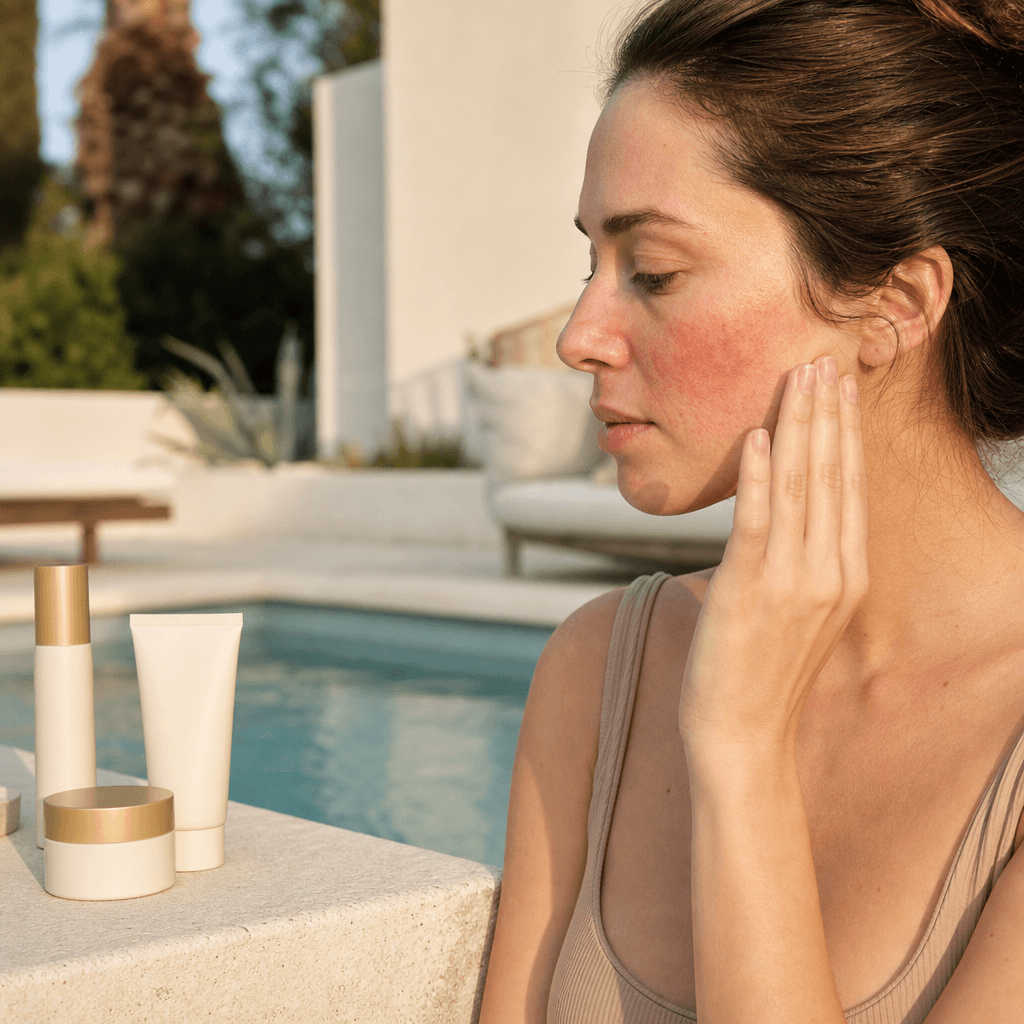
Starting a rosacea treatment plan means committing to proactive, ongoing management instead of reacting to each flare with a new product. Rosacea typically involves persistent facial redness, visible blood vessels, and sometimes papules and pustules that can resemble acne but respond to entirely different treatments. Clinical guidelines are consistent on one point: there is no cure, yet symptoms can be controlled and quality of life meaningfully improved when skincare, triggers, and appropriate therapies are addressed together rather than in isolation.
The real question is therefore not "Which single product will fix this?" but "Which combination of lifestyle changes, skincare, and possible medical treatment fits my subtype, severity, and preferences?" For many people—especially those with sensitive or reactive skin—the answer prioritizes barrier repair and trigger avoidance, and reserves medication for when it is clearly indicated. Getting this framing right protects you from the common trap of layering aggressive "active" products onto already inflamed skin.
How rosacea treatment actually works
A complete plan combines several mechanisms that reinforce one another. Understanding what each one targets makes it far easier to judge whether a recommendation actually fits your skin.
Trigger and lifestyle management
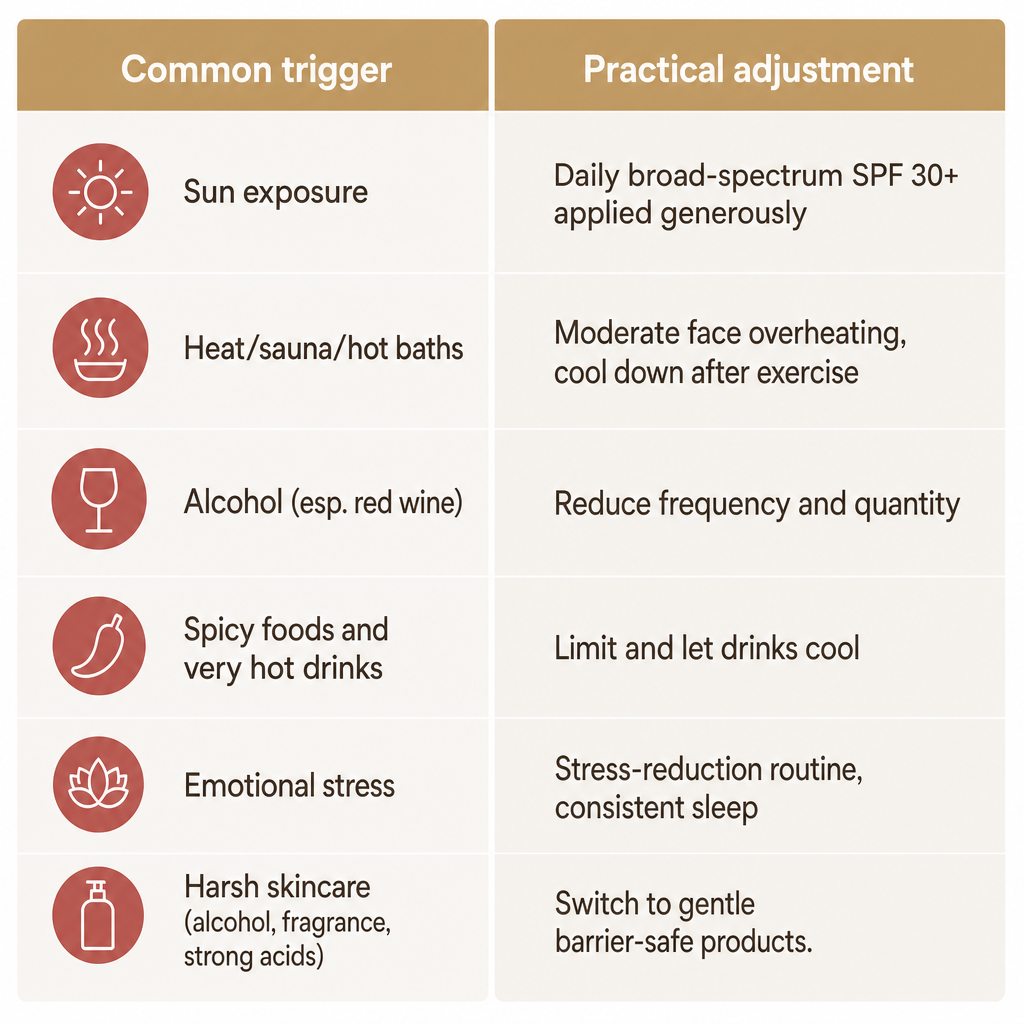
Flare-ups are strongly linked to identifiable triggers: sun exposure, heat, emotional stress, alcohol, spicy foods, hot drinks, wind, heavy exercise, and certain skincare or cosmetic products. Patient surveys consistently place sun, stress, hot weather, alcohol, and irritating products among the most common. These stimuli drive inflammation, vasodilation (blood vessel widening), and barrier damage in rosacea-prone skin.
Reducing that risk usually means keeping a simple trigger diary, moderating overheating of the face from saunas, steam, and very hot baths, and adjusting diet to limit frequent offenders such as red wine, spicy food, and very hot drinks. We build this into every consultation by reviewing your lifestyle and nutrition in detail, then translating it into practical, culturally adaptable changes that survive a real daily routine.
A rosacea-friendly skincare routine
Guidelines and expert consensus panels agree that a simplified, gentle routine is the foundation for every patient. The core is short: a mild, non-alkaline, fragrance-free cleanser used once or twice daily; regular moisturizer to support the barrier and reduce stinging and burning; and daily broad-spectrum sunscreen at SPF 30 or higher, applied generously and consistently.
Just as important is what to leave out. Dermatology sources advise avoiding ingredients that commonly irritate rosacea—alcohol, witch hazel, fragrance, menthol, eucalyptus oil, sodium lauryl sulfate, and strong exfoliating acids. Over-doing skincare with frequent masks, multiple cleansers, heavy makeup, and constant salon treatments has been associated with worse symptoms. As an online clinic focused on sensitive, reactive skin, our rosacea plans emphasize barrier-safe products, minimal steps, and irritant avoidance. Our Rosacea Management consultation and Sensitive Skin Care service are built around exactly this kind of soothing, low-friction regimen.
Prescription topical therapies
For persistent redness and inflammatory bumps, guidelines recommend several evidence-based topicals that fall into distinct functional roles. Metronidazole and azelaic acid reduce inflammatory lesions in mild to moderate papulopustular rosacea. Ivermectin cream targets Demodex mites and offers both anti-parasitic and anti-inflammatory action. For persistent flushing, brimonidine and oxymetazoline are topical vasoconstrictors that can temporarily reduce facial erythema by constricting superficial blood vessels.
These are almost always combined with gentle skincare and trigger control, and may be tapered as the skin stabilizes. Where a plan calls for prescription products, we focus on integrating them into a tolerable, protective routine and preventing the irritant reactions that so often derail treatment. If your skin also carries post-inflammatory marks, our post-acne and discoloration treatment can address those alongside the redness.
Systemic medication and in-clinic procedures
More severe or resistant papulopustular rosacea sometimes needs systemic therapy. Low-dose doxycycline is a widely recommended first-line oral option because it works mainly as an anti-inflammatory rather than at a traditional antibiotic dose, which lowers resistance risk. In selected cases—especially severe or phymatous forms with thickened skin—other oral antibiotics or low-dose isotretinoin may be considered. These carry real side effects (photosensitivity, gastrointestinal upset, and teratogenicity for isotretinoin) and are managed by physicians under formal medical care.
For visible blood vessels and long-standing redness, vascular laser or intense pulsed light (IPL) can target hemoglobin to reduce telangiectasias and persistent erythema, usually over several in-clinic sessions. A remote-first clinic cannot perform these procedures, but we can advise whether and when they are appropriate, and how to prepare and maintain the skin around them with gentle routines and trigger control.
Why telehealth suits rosacea
Teledermatology has been validated as delivering diagnostic accuracy and outcomes comparable to in-person care for many chronic skin diseases, including rosacea, when clear photos and detailed intake forms are used. Rosacea is especially suited to remote care because its signs are visible and its response can be tracked over time through photos and symptom reports. Our model mirrors this evidence base: you complete a detailed form, upload skin photos, and receive a plan covering nutrition, topical skincare, and lifestyle triggers—then we adjust it through ongoing follow-up, which is precisely what improves control and reduces relapse in chronic skin conditions.
When is each option appropriate?
A practical plan weighs a handful of factors, and naming them makes the trade-offs visible.
Subtype and severity. Erythematous ("red only") rosacea often responds well to trigger control, skincare optimization, and redness-targeting topicals. Papulopustular disease usually needs anti-inflammatory topicals and sometimes low-dose oral doxycycline. Phymatous changes may require isotretinoin and procedural interventions.
Skin sensitivity and barrier status. Highly sensitive, stinging skin benefits from strict irritant avoidance and barrier repair with non-foaming cleansers and richer moisturizers. Over-active routines with frequent peels, strong acids, or a rotation of new products often make things worse and should be pared back before anything else is added.
Medication preferences and health context. Some people want to avoid oral antibiotics or isotretinoin because of side-effect profiles, pregnancy plans, or microbiome concerns. In those cases a plan can lean more on topicals, lifestyle, and procedures, accepting slower but still meaningful improvement.
Access to prescribers and procedures. Whether prescription topicals, systemic drugs, or lasers are realistic depends on your local dermatology and telehealth access. Our premium yet accessible online consultations, from $115 | €99, are designed for international clients who want expert guidance on what fits their skin—including a clear signal for when to seek in-person care.
A well-structured plan should make all of this explicit: what is being targeted (redness, bumps, stinging), which tools are used, expected timelines, and how success and safety will be monitored.
What to expect from your Macherre consultation
Macherre Medical Center is an online skincare consultation clinic led by a cosmetologist specializing in acne, rosacea, pigmentation, sensitive skin, and early signs of aging. Our process is remote-first: you complete an intake form, upload facial photos, and describe your symptoms, lifestyle, and current products. From there we build a tailored plan that typically covers a simplified cleanser–moisturizer–sunscreen routine, specific product and ingredient guidance based on your triggers, nutrition and lifestyle adjustments to reduce inflammation and barrier stress, and clear direction on if and when to consult a local physician or teledermatologist for prescription or procedural options.
Our dedicated Rosacea Management consultation centers on reducing visible redness and preventing flare-ups. Related services such as sensitive skin care, post-acne discoloration, and early signs of aging prevention support clients whose concerns overlap. Our signature ProAcne Program—bi-weekly follow-ups over a 3–4 month course with a claimed 95% success rate—shows the follow-up rhythm rosacea clients can also expect: ongoing fine-tuning and close monitoring, not a one-time product list handed over and forgotten.
Frequently asked questions
How long does a rosacea treatment plan take to show results?
Most guideline-based regimens expect visible improvement in redness and bumps within about 8–12 weeks when skincare, triggers, and therapies are applied consistently. Full stabilization and flare reduction often continue over several months.
Can rosacea be treated without oral medications?
Many mild to moderate cases can be managed well with trigger control, gentle skincare, and topical therapies alone, especially with diligent sunscreen use and irritant avoidance. Severe or resistant cases may still need low-dose oral antibiotics or isotretinoin under medical supervision.
Are exfoliating acids good for rosacea?
Strong glycolic, lactic, and similar acids frequently worsen stinging, redness, and barrier damage in rosacea and are generally discouraged for daily use. Most experts recommend minimal, very gentle exfoliation, if any, and prioritizing barrier repair.
Is telehealth a safe way to manage rosacea?
Research and clinical experience show teledermatology can deliver outcomes comparable to in-person visits for common chronic skin conditions, including rosacea, when good photos and structured intake are used. It suits ongoing monitoring well, with in-person referral kept for procedures or complex cases.
How is a Macherre plan different from buying products on my own?
Instead of trial-and-error shopping, your plan is built from your photos, history, language and cultural context, and tolerance profile, integrating skincare, nutrition, and lifestyle in one strategy. It is designed and adjusted by a specialist who works daily with rosacea and sensitive skin, aiming for long-term control rather than short-term aggressive treatments.