


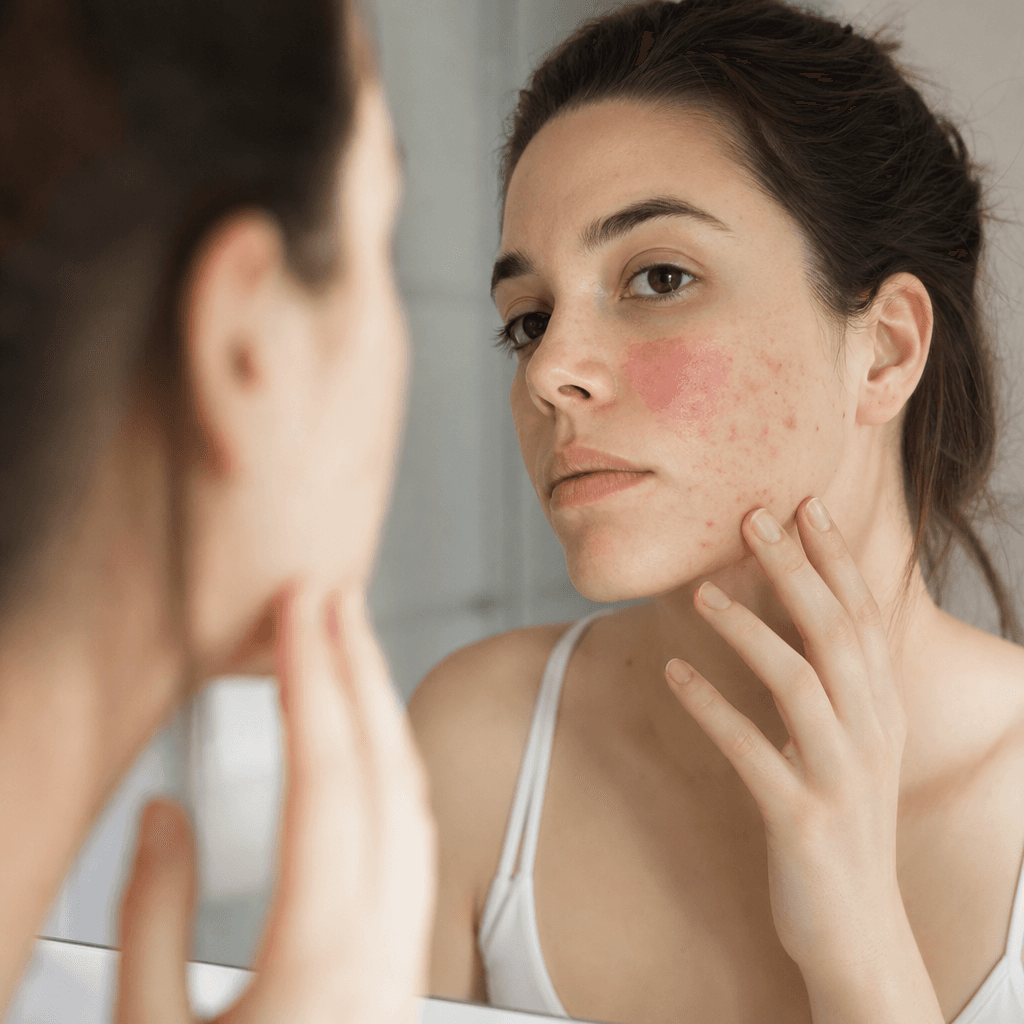
Difference Between Acne And Rosacea: Acne vs Rosacea: How to Tell the Difference
This article is educational and does not diagnose a condition or replace care from a qualified medical professional.
The clearest difference between acne and rosacea is where each condition starts. Acne usually begins with a clogged hair follicle, while rosacea more often begins with flushing or a lasting change in facial colour. Both can leave you with red bumps and pus-filled spots, which is exactly why appearance alone often fails to settle the question. Getting the distinction right matters more than it first seems, because a routine built to unclog pores can inflame rosacea-prone skin, and treating rosacea as ordinary acne can delay the care that actually calms it.
This guide is general education, not a diagnosis. Acne and rosacea can occur together, and several other facial conditions mimic both, so persistent, severe, or uncertain symptoms deserve assessment by a qualified clinician.
Table of contents
Where each condition truly begins
Acne develops when a hair follicle becomes blocked with excess oil and dead skin cells. A closed blocked pore surfaces as a whitehead; an open one appears as a blackhead, whose dark colour comes from changes at the pore opening rather than trapped dirt. From there, inflammation can build papules, pustules, and deeper, painful nodules. Acne is not confined to the central face either: the chest, shoulders, and back are common territory, and hormonal shifts, friction, and occlusive products can all feed the pattern.
Rosacea follows a different storyline. It is a chronic inflammatory condition that primarily affects the face and often opens with a tendency to flush or blush easily. Over time the colour lingers longer, and some people go on to develop visible small blood vessels or acne-like papules and pustules. Alongside the colour change, rosacea can bring a warm or burning feeling, stinging when products are applied, heightened sensitivity to sun or heat, and flares after triggers such as alcohol, spicy food, or emotional stress. Not everyone experiences every feature, and the absence of obvious redness does not rule it out.
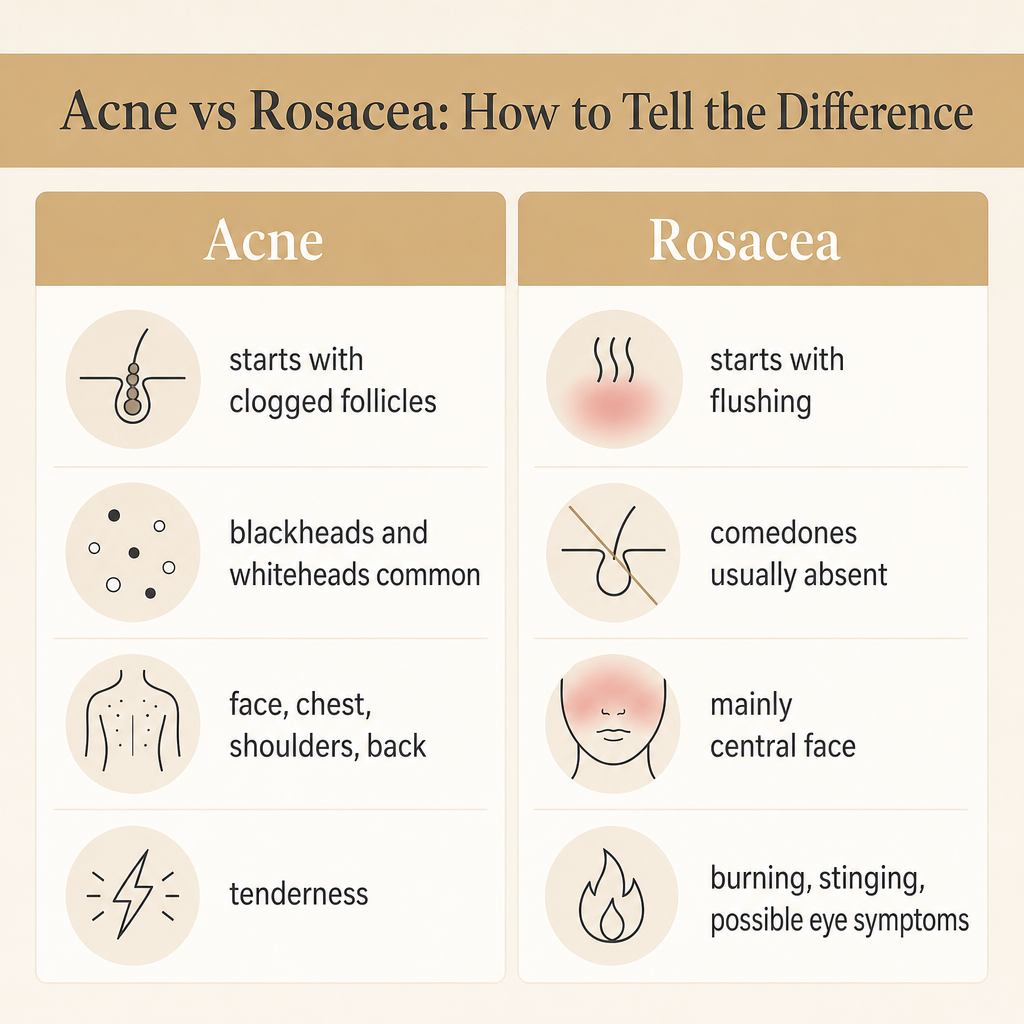
Acne vs rosacea: the differences that matter
Appearance overlaps, but a handful of features separate the two conditions more reliably than any single bump ever could.
| Feature | Acne | Rosacea |
|---|---|---|
| Underlying pattern | Follicles blocked by oil and dead cells, then inflammation | Chronic facial inflammation with flushing and colour change |
| Most useful clue | Blackheads and whiteheads strongly suggest acne | Flushing, lasting redness or brown-violet colour, visible vessels |
| Typical areas | Face, forehead, chest, shoulders, upper back | Mainly central face: cheeks, nose, forehead, chin |
| Sensation | Spots may be tender | Warmth, burning, stinging, product sensitivity common |
| Eye involvement | Not typical | Dry, gritty, burning or light-sensitive eyes possible |
| Comedones | Common and diagnostically useful | Usually absent |
Treat this as a guide, not a substitute for examination. Acne can cause redness around individual spots, and rosacea looks different across skin tones. In darker skin it may be harder to recognise visually; warmth, burning, acne-like bumps, or persistent brown-violet colour can be more noticeable than the classic descriptions of redness.
Reading your own skin: six practical checks
No single sign is decisive. The pattern across these questions is what points one way or the other.
Look for blackheads and whiteheads. Numerous comedones make ordinary acne far more likely than rosacea, which usually lacks them. A few clogged pores can appear alongside other conditions, so weigh the overall count.
Ask what came first. A history of easy flushing, then longer-lasting facial colour, then acne-like bumps leans towards rosacea. Notice whether your face becomes warm or changes colour after heat, exercise, sunlight, alcohol, spicy food, or stress.
Notice burning and product sensitivity. Frequent stinging and reactions to skincare are meaningful clues for rosacea or another sensitive-skin condition. They can also follow a damaged barrier from over-aggressive acne treatment, so read this symptom together with the rest of the picture.
Check the distribution. Breakouts across the back, chest, and shoulders favour acne. Rosacea tends to concentrate on the central face, though individual patterns vary.
Check the eyes. Gritty, dry, burning, or light-sensitive eyes, recurrent eyelid inflammation, or a sensation of something in the eye raise the possibility of ocular rosacea. Eye pain, blurred vision, or marked light sensitivity needs prompt medical attention, because more serious eye inflammation can occur.
Consider that both may be present. The two are not mutually exclusive. Comedonal acne on the forehead can sit beside rosacea-related flushing on the cheeks, and calming one pattern does not automatically address the other.
Why the label changes your skincare
The reason the distinction is worth the effort is that it reroutes the whole routine. Acne-focused care often targets clogged pores and inflammation directly. Rosacea-focused care leans harder on reducing irritation, identifying triggers, protecting from sunlight, and keeping the routine gentle.
For rosacea-prone skin, the American Academy of Dermatology advises gentle cleansing, daily moisturising, sun protection, and avoiding rubbing, scrubbing, and harsh exfoliation, plus choosing products made for sensitive skin and patch-testing anything new. That does not brand every acne ingredient unusable for everyone with rosacea. It means actives should be chosen and introduced according to your skin's tolerance. Piling on several strong products at once makes it almost impossible to tell whether a flare came from the condition, the product, or simple over-treatment.
One caution carries real weight: avoid self-treating facial redness with topical steroid creams unless a qualified clinician has specifically advised it. Steroid-related, rosacea-like eruptions are among the conditions that imitate rosacea, and prolonged or inappropriate use can worsen facial symptoms.
When to seek professional assessment
Some situations call for a clinician rather than another tweak to your shelf. Arrange an assessment when you are unsure whether the problem is acne, rosacea, or something else; when breakouts are deep, painful, rapidly worsening, or scarring; when persistent dark or lighter marks develop after inflammation; when facial redness or flushing will not settle; when products repeatedly cause burning; or when eye symptoms appear.
NICE recommends considering specialist referral for acne that has not responded to appropriate treatment, is causing scarring or persistent pigmentary changes, or is contributing to persistent psychological distress. Seek urgent medical care for sudden severe facial swelling, serious eye pain or vision changes, or symptoms suggesting a severe allergic reaction.
What a remote consultation can and cannot do
A remote consultation is strongest at organising your history and photographs around the questions that actually sort acne from rosacea: where the lesions sit, whether comedones are present, whether flushing or warmth occurs, what triggers a flare, whether there is burning or stinging, whether the eyes are affected, what has already been tried, and whether scars or persistent colour changes exist.
What it cannot do is guarantee a diagnosis from a single photograph. Image quality, lighting, skin tone, medication history, and overlapping conditions all shape interpretation. In-person medical care may fit better when the diagnosis is uncertain, symptoms are severe, eye involvement is present, or prescription treatment and testing are likely to be needed.
Where we fit into your next step
At Macherre Medical Center we offer online skincare consultations for acne-prone skin and related concerns including rosacea, sensitivity, and pigmentation. Our Virtual ProAcne Program describes an individually determined support period that begins with an extended consultation, a personalised starting plan, gradual routine introduction, progress reviews every two weeks, and support between check-ins. Because duration and pricing depend on the option you choose and your individual plan, we ask that you confirm the current length, inclusions, currency, and eligibility on the live program page before booking. This is a personalised support service, not a promise of a cure or a fixed result.
If your main concern is confirmed or suspected rosacea, you can review our Rosacea Management consultation, which focuses on reducing redness and preventing flares. If blackheads and whiteheads dominate, our Blackheads and Whiteheads Removal consultation addresses comedonal skin, and for marks left behind, our Post-Acne and Discoloration Treatment targets post-inflammatory colour changes. Telling us where your lesions sit, whether flushing came first, and what already irritates your skin lets us tailor the right starting point rather than guessing.
Frequently asked questions
Can rosacea look like acne?
Yes. Rosacea can produce papules and pustules that resemble pimples. Flushing, lasting central facial colour, visible blood vessels, burning, sensitivity, or eye symptoms make rosacea more likely, while blackheads and whiteheads favour acne.
Can you have acne and rosacea at the same time?
Yes, the two can coexist. Someone may have comedonal acne alongside rosacea-related flushing on the cheeks. A personalised assessment is more useful than assuming every facial bump shares one cause.
Does acne cause facial flushing?
Inflamed acne can redden the skin around individual spots, but recurrent flushing, warmth, and colour that lasts beyond single lesions point more towards rosacea or another facial inflammatory condition.
What should I do if acne products make my face burn?
Pause the products clearly causing the burning, return to a gentle cleanser, moisturiser, and sun protection, and arrange professional advice. Avoid stacking more active ingredients to push through a reaction.
Is online care suitable for rosacea?
It can suit discussing symptoms, triggers, photographs, and a skincare plan when symptoms are mild and the diagnosis is reasonably clear. In-person assessment matters more for uncertain diagnoses, severe inflammation, significant eye symptoms, or lesions needing examination.