






Understanding Skin Complexion: Everything You Need to Know About Your Skin Tone
This article is educational and does not diagnose a condition or replace care from a qualified medical professional.
You've stood in front of the foundation wall before. Three shades swatched on your jawline, the middle one "closest" under those fluorescent tubes, and you walked out convinced this time would be different. It wasn't. By the time you got home and caught your reflection in natural light, the mismatch was obvious — too orange, too pink, too flat, too something. The impulse is to blame the brand. The brand isn't the problem. The problem is that you've been shopping for skin tone when the question you actually need answered is: what is skin complexion, and how does mine differ from the person next to me with seemingly identical coloring?
Complexion isn't tone. Tone isn't undertone. And most beauty marketing conflates all three into a single word that explains nothing. The real question behind your search is biological: what determines how my skin looks, why does it shift, and how should that change every skincare and sun-protection decision I make? By the end of this article, you'll distinguish complexion from tone and undertone with precision, know your Fitzpatrick type, and be able to match products to your actual skin profile instead of guessing. You'll understand skin complexion types the way a dermatologist does — as a profile, not a label.
Complexion vs. Skin Tone vs. Undertone: The Three-Term Problem Ruining Your Skincare Decisions
Before anything else, three terms need to be pulled apart and kept that way. The question what is skin complexion can't be answered without cleanly separating it from two adjacent concepts that get treated as synonyms — incorrectly, and expensively, every day at the cosmetics counter.
Complexion is the overall visible appearance of your skin. It's the sum of your tone, your texture, your clarity, your brightness, and your condition at any given moment. According to True Jewel Cosmetic Center, "complexion describes the visible appearance, tone, and texture of skin, while skin refers to the body's largest protective organ." Complexion changes. It shifts with age, with cumulative sun exposure, with hormonal cycles, with your last three weeks of sleep. It's the full picture — what a practiced eye reads when it reads your face.
Skin tone is narrower. It's the genetically determined amount of melanin sitting in your epidermis — how light or dark your skin reads in a neutral light. Tone fluctuates seasonally as melanocytes respond to UV exposure (the mechanism behind tanning), and it shifts gradually over decades as pigment distribution changes with age. Tone is what a foundation shade tries to match. It is not the same as complexion.
Undertone is the hue beneath the surface — cool (pink, red, bluish), warm (yellow, peach, gold), or neutral (a balance of both). It comes from the interplay of melanin subtypes, the hemoglobin in capillaries beneath your skin, and the carotenoid pigment stored in your tissue. Undertone is biologically fixed. Skincare.com puts it bluntly: "Unlike skin tones, skin undertones never change — they're totally fixed." You can tan your tone. You cannot tan your undertone.
Conflating these three terms has real consequences. Someone with a medium tone and a cool undertone who buys a warm-undertone foundation will look orange — regardless of how accurately the shade number matches. Someone trying to "brighten their tone" when the real complexion complaint is uneven skin texture will burn through serums without addressing the actual issue. Someone assuming their Fitzpatrick type from ethnic background alone will under-dose their SPF. The three-term problem isn't academic — it's the reason half your skincare shelf is wrong for you.

"Skin tone is what you see in the mirror. Complexion is what that tone tells you about the condition of your skin."
What follows unpacks this in layers: first the biology beneath complexion (the three pigments that produce every human skin color in existence), then how dermatologists classify it clinically, then how you can self-assess yours in under ten minutes, and finally how to translate that profile into actual product and treatment decisions.
The Three Pigments Behind Every Complexion: Melanin, Hemoglobin, and Carotene
Complexion isn't a single pigment painted on — it's three pigments layered in a ratio unique to you. According to ColorScience, three distinct pigments determine the color you see in the mirror: melanin, hemoglobin, and carotene. Every complexion on the planet is a variation on that three-ingredient recipe. Two people can share the same Fitzpatrick type and still look nothing alike because the proportions of those pigments differ.
Understanding which one is doing the most work in your skin tells you why your complexion behaves the way it does under sun, under stress, and under different lighting — and which interventions will actually move it.
- Melanin — The Primary Architect of Skin Color. Produced by melanocytes in the basal layer of the epidermis, melanin is packaged into granules called melanosomes and deposited directly over the nucleus of surrounding keratinocytes, where it physically shields nuclear DNA from UV radiation. According to Wikipedia's entry on complexion, melanin is the main driver of color variation between individuals. Two subtypes do different work: eumelanin is brown-black, dominant in deeper complexions, and highly UV-protective. Pheomelanin is red-yellow, dominant in fair and freckled complexions, less protective, and — critically — generates free radicals under UV exposure instead of neutralizing them. This is why Type I–II complexions don't just burn; they accumulate oxidative damage even in shade.
- Hemoglobin — Why Your Skin Has a Pink Undercurrent. The oxygen-carrying molecule in red blood cells, visible through the translucent upper layers of skin wherever capillaries run close to the surface. Hemoglobin gives cheeks their flush, lips their color, and fair complexions their characteristic pink undertone. It's also the reason rosacea-prone skin reads "ruddy" — that redness isn't melanin activity; it's hemoglobin visibility amplified by dilated capillaries and inflammation. Treating rosacea as a pigmentation problem with brightening actives is a category error. It's a vascular problem, and it requires vascular-directed intervention.
- Carotene — The Yellow Layer You Rarely Hear About. A pigment absorbed from diet (carrots, sweet potatoes, leafy greens, egg yolks) and stored in subcutaneous fat and the stratum corneum. Carotene adds a yellow cast to complexion and is the quiet driver behind most warm undertones. A sustained high-carotenoid diet can visibly shift complexion toward gold within 4–6 weeks — a phenomenon documented in research on perceived attractiveness and skin health. Carotene is also the reason "looking tired" and "looking dull" aren't the same thing: tired skin has blood-flow and hydration issues; dull skin often has depleted carotene and slow cellular turnover.
The ratio of these three pigments is what gives every person their unique complexion signature. A Type III with high carotene and low hemoglobin reads golden and warm. A Type III with low carotene and high hemoglobin reads rosy and cool. Same tone classification, opposite undertone, entirely different product needs.
The Fitzpatrick Scale: How Dermatologists Actually Classify Complexion
When a dermatologist plans a laser treatment, calibrates a chemical peel, or estimates skin cancer risk, they're not eyeballing "light" or "medium." They're classifying you on the Fitzpatrick Scale — the six-type system developed in 1975 by Harvard dermatologist Thomas Fitzpatrick. According to Mamaearth, it remains the globally accepted standard for classifying skin by UV response and is used to determine laser settings, photodynamic therapy dosing, and skin cancer risk stratification. If your aesthetician doesn't ask your Fitzpatrick type before an energy-based treatment, that's a problem.
The scale classifies complexion by how skin responds to sun — not by how it looks in a photo. That distinction matters, because two people with visually similar tone can sit in different types once you factor in how they burn and tan.
| Type | Typical Features | Tan Response | Burn Risk | Skin Cancer Risk |
|---|---|---|---|---|
| I | Pale/ivory skin, often red or blonde hair, light eyes, freckles | Never tans — always burns | Extreme | Highest |
| II | Fair skin, light hair/eyes common | Burns easily, tans minimally with difficulty | High | Very high |
| III | Fair to beige with golden undertones, darker hair | Sometimes mild burn, gradually tans to light bronze | Moderate | Moderate |
| IV | Olive or light-brown skin, dark hair and eyes | Rarely burns, tans easily to moderate brown | Low | Lower but present |
| V | Brown skin | Very rarely burns, tans darkly and easily | Very low | Low (but often under-screened) |
| VI | Deeply pigmented dark brown to black skin | Never burns, deeply pigmented | Minimal | Low (but acral/mucosal melanoma risk exists) |
Source: classification data compiled from Mamaearth and Innovist.
What the scale does well: it quantifies UV tolerance in a way that makes medical decisions possible. A Type II getting an IPL treatment calibrated for a Type IV will blister. A Type V getting an ablative laser calibrated for Type II will develop weeks of post-inflammatory hyperpigmentation. The Fitzpatrick number is the input that makes energy-based dermatology safe.
What the scale does poorly: it was developed using Caucasian skin as the reference point, and it's widely criticized for compressing enormous diversity within Types IV, V, and VI. Type V alone encompasses most South Asian, Latin American, Middle Eastern, North African, and mixed-heritage complexions — populations with meaningfully different pigmentation behavior. Mamaearth notes the common expert framing that "the amount of melanin is directly proportional to skin health, meaning darker skin complexions are considered more protected against UV damage than lighter ones." That's directionally true but creates a dangerous gap: higher melanin lowers sunburn risk but doesn't eliminate cancer risk, and deeper complexions experience higher rates of undiagnosed melanoma because early signs are missed — by patients and clinicians alike.
Knowing your Fitzpatrick type tells you three practical things: your minimum daily SPF floor, your eligibility for specific laser and peel protocols, and your baseline hyperpigmentation risk profile. Types III through V sit in the zone where melanocytes are most reactive — meaning any inflammation, from a pimple to a careless exfoliant, can trigger persistent discoloration. That reactivity is the single most important variable in ingredient selection, which is why Section 7 breaks ingredient choices down by type.
Four At-Home Tests to Identify Your Complexion in Ten Minutes
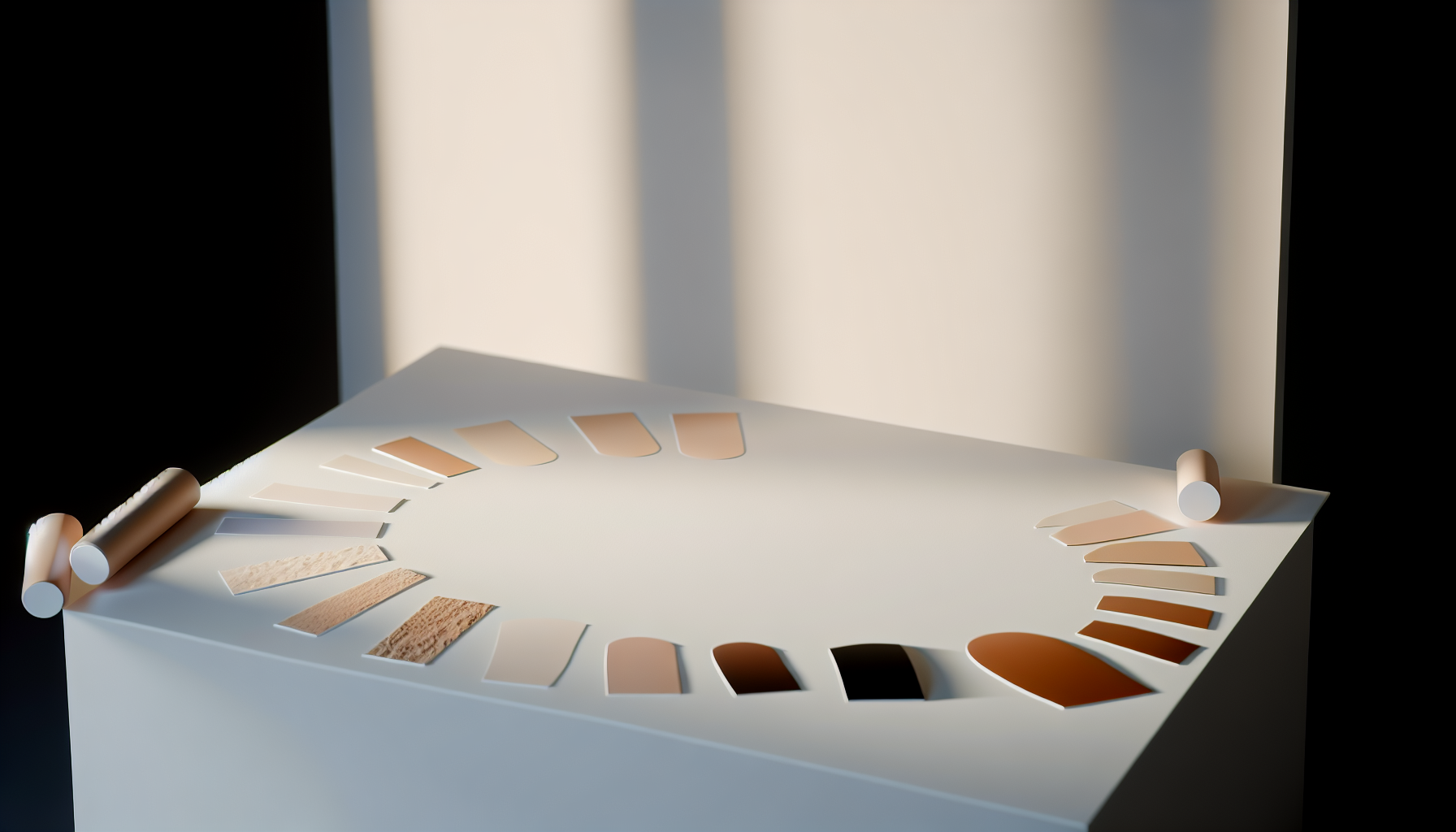
You don't need a dermatologist to identify your complexion baseline. Four tests under natural window light between 10am–2pm will get you roughly 90% of the way there. Critical setup: no artificial lighting, no recent sun exposure (tan or burn within the last two weeks will skew results), no makeup, and clean skin.
-
The Vein Test (Undertone — Primary Method).
Materials: clean inner wrist, natural window light.
Method: hold your wrist up at chest height in direct window light (not backlit). Observe the color of the veins running through the translucent skin.
How to read the result: blue or purple veins indicate a cool undertone. Green veins indicate a warm undertone. A mix of both, or genuine difficulty telling, indicates neutral. This test is endorsed by Skincare.com as the most reliable single-point undertone check because vein color is a direct readout of how hemoglobin reads through your particular pigment layer.
-
The Jewelry Test (Undertone — Confirmation).
Materials: one clean silver piece, one clean gold piece (rings or earrings both work).
Method: hold each piece against your bare jawline in natural light. Rotate between them. Ignore personal preference — you're looking for which metal appears to recede into your skin versus which metal makes your skin look gray, dull, or washed out.
How to read the result: silver flatters and harmonizes = cool undertone. Gold flatters and harmonizes = warm undertone. Both look equally good = neutral. If this test contradicts your vein test, run both twice; jewelry is the tiebreaker more often than the vein.
-
The White Paper Test (Tone + Undertone Together).
Materials: plain white printer paper, natural light, bare clean face.
Method: hold the paper directly beside your cheek and jawline in a mirror lit by a window.
How to read the result: skin reads pink or rosy against the stark white = cool. Skin reads yellow, peach, or gold = warm. Skin reads grayish, greenish, or balanced = neutral or olive. ColorScience recommends this as the baseline calibration test — paper gives your eye an absolute reference point that a mirror alone can't provide.
-
The Sun Reaction Test (Fitzpatrick Type).
Materials: none — this is memory-based.
Method: recall honestly what happens to your skin after roughly 30 minutes of unprotected midday sun in early summer, before your skin has built any seasonal tolerance.
How to read the result: always burn, never tan = Type I. Burn first, then tan lightly = Type II. Rarely burn, tan gradually to light bronze = Type III. Never burn, tan easily to medium brown = Type IV. Deeply pigmented with minimal visible sun reaction = Type V. Very deeply pigmented, no burn response = Type VI. If you haven't had unprotected exposure in years (good for you), use your childhood memory — Fitzpatrick type is genetic and doesn't drift.
After these four tests you have two structured data points: your Fitzpatrick type (tone plus UV response) and your undertone (cool, warm, or neutral). Together, those two coordinates locate your complexion on the same grid a dermatologist uses. That's the profile the rest of your product and treatment decisions should map against.
"If silver flatters you more than gold, your undertone is cool. If both look equally good, you're neutral — and you've just solved half your makeup frustrations."
Seven Forces That Shift Your Complexion — And How to Spot Them Early
Your complexion at 22 is not your complexion at 42. Tone darkens or lightens with sun history. Clarity drops as cellular turnover slows. Patchiness appears where hormones have reorganized melanin distribution. Understanding which force is moving your complexion lets you intervene in the window when changes are still reversible — rather than at the point where only procedures can undo them.
The dominant driver is UV Exposure. Ultraviolet radiation stimulates melanocyte overproduction, and that overproduction doesn't distribute evenly. It concentrates — as freckles, as melasma, as sunspots, as the overall dulling that people call "photoaging." It's cumulative and, past a certain threshold, irreversible without procedural intervention. According to True Jewel Cosmetic Center, sun exposure is the single largest external variable affecting how complexion changes over time. Daily broad-spectrum SPF is non-negotiable from Type I through VI. The myth that deep complexions don't need sunscreen costs lives.
Hormonal Shifts are the second force most people underestimate. Estrogen fluctuations during pregnancy produce melasma — the "pregnancy mask" — a pattern of symmetric pigmentation across upper lip, forehead, and cheeks. Oral contraceptives can trigger the same response. Perimenopause destabilizes melanin distribution in a different pattern, often showing as diffuse dullness and new hyperpigmentation in areas that were previously clear. Hormonally driven pigmentation is the hardest to treat topically because the trigger is internal and ongoing.
Cellular Turnover Slowdown is the quiet one. Skin cell renewal drops from roughly 28 days in your 20s to 45–60+ days by your 50s. The visible result: pigmented dead cells accumulate on the surface, and the complexion reads duller, rougher, and more uneven year over year. This is the foundation mechanism behind most early signs of aging, and it's the force that well-formulated retinoids and regular exfoliation address most directly.
Inflammation is what turns every breakout into a longer-term complexion problem. Every inflamed lesion — whiteheads, cysts, even aggressive blackhead extraction — triggers post-inflammatory hyperpigmentation (PIH), the brown or red marks that persist for weeks to months after the pimple itself is gone. This effect is dramatically more pronounced in Fitzpatrick Types III–VI, where melanocyte reactivity is higher. Treating the breakout is only half the job; preventing and fading the post-acne marks is the other half.
Environmental Pollution is the factor that's been quantified only in the last fifteen years. PM2.5 particulates generate free radicals, compound UV damage, and measurably accelerate discoloration. Urban complexions look visibly duller than rural counterparts at the same age, and antioxidant-based skincare is largely a defense mechanism against this specific input.
Nutrition and Hydration shape complexion more than most people believe. Low-antioxidant diets accelerate oxidative damage. Chronic dehydration compromises the barrier, making skin look flat, sallow, and reactive. Omega-3 intake and carotenoid-rich foods measurably improve skin luminosity within weeks — a visible change, not just a marketing claim.
Sleep and Stress close the list. Cortisol suppresses barrier repair and collagen synthesis. Chronic sleep deprivation visibly shifts complexion toward grayness and deepens under-eye discoloration within days, not months. This is the fastest-moving variable on the list and also the fastest to reverse.
The intervention logic is consistent across all seven: the earlier you identify which force is shifting your complexion, the more reversible the change. Melasma caught at month three responds to topicals. At year three it often needs procedural intervention. Post-acne discoloration treated within the first eight weeks fades faster and more completely than discoloration left alone for a year.

Matching Skincare and Makeup to Your Complexion: A Decision Matrix
Complexion-matched skincare isn't about spending more. It's about respecting the biology of your pigment profile. The same active ingredient that brightens one complexion will scar another. The same peel that refines a Type II will leave weeks of PIH on a Type V. Price tier doesn't fix this — matching does.
The matrix below maps the four decisions that most often go wrong: daily SPF floor, foundation undertone direction, prioritized actives, and actives that require caution or dermatologist supervision.
| Fitzpatrick Type | Minimum Daily SPF | Foundation Undertone Guide | Ingredients to Prioritize | Ingredients to Approach Cautiously |
|---|---|---|---|---|
| I–II (Fair) | SPF 50+ broad spectrum, reapplied every 2 hrs | Match exact undertone; highly reactive to mismatched warmth | Antioxidants (Vit C, E), niacinamide, gentle retinoids, ceramides | High-percentage AHAs/BHAs, strong fragrance, harsh physical exfoliants |
| III (Medium) | SPF 30–50, daily non-negotiable | Neutral to warm; watch for foundation oxidation | Vitamin C, niacinamide, retinoids, tranexamic acid for early melasma | Over-exfoliation (triggers PIH faster than Type I expects) |
| IV (Olive/Light Brown) | SPF 30+, especially on upper face | Warm to neutral-warm; olive undertones need green-corrected bases | Niacinamide, azelaic acid, tranexamic acid, retinoids, alpha arbutin | Hydroquinone without supervision; aggressive chemical peels |
| V (Brown) | SPF 30+ mineral or hybrid to avoid white cast | Warm, rich; many mass-market ranges under-serve | Azelaic acid, niacinamide, kojic acid, tranexamic acid, gentle retinoids | Hydroquinone (ochronosis risk with long use), high-% glycolic acid, ablative lasers |
| VI (Deep Brown/Black) | SPF 30+ mineral formulations matched for deep skin | Warm to red-warm; most mainstream ranges fail here | Azelaic acid, niacinamide, thiamidol, gentle retinoids, tranexamic acid | Hydroquinone, IPL (high burn/PIH risk), aggressive resurfacing |
Ingredient sensitivity patterns synthesized from Innovist product guidance by skin type.
Two complexion-mismatch errors account for the majority of routines gone wrong.
The first: fair complexions over-exfoliating. Types I and II have thinner stratum corneum and higher pheomelanin, which generates free radicals under UV rather than neutralizing them. Stacking high-strength AHAs with a daily retinoid and daytime sun exposure produces persistent redness, a compromised barrier, and skin that reacts to products that used to be fine. The fix is structural: rotate actives, never stack them. Retinoid nights and acid nights live on different days. Sensitive skin care that prioritizes barrier repair over active density is almost always the right direction for this group. When dehydration is layered on top, addressing dry and dehydrated skin at the barrier level has to come before any aggressive brightening protocol.
The second: deeper complexions using the wrong actives for pigmentation. Types IV through VI have more reactive melanocytes — any inflammation, including inflammation caused by the treatment itself, can worsen the exact hyperpigmentation you're trying to fix. Hydroquinone used long-term can cause ochronosis, a permanent blue-gray staining that's nearly impossible to reverse. High-percentage glycolic peels can trigger weeks of PIH. Ablative lasers misapplied can produce permanent pigmentary change. The safer first-line stack is well-documented: azelaic acid, niacinamide, tranexamic acid, and alpha arbutin — all evidence-backed, all minimal-PIH-risk. When breakouts are driving the pigmentation, targeted acne treatment focused on inflammation reduction does more for long-term complexion than any brightener will. Same principle for blackheads — gentle, patient extraction strategy beats aggressive intervention every time for reactive complexions.
If you've followed a well-matched routine consistently for 8–12 weeks and your complexion concern has plateaued, that's the signal to bring in professional guidance rather than escalate actives on your own.
"The ingredient that brightens a Fitzpatrick II complexion can scar a Fitzpatrick V. Matching actives to complexion isn't optional — it's the entire game."
Frequently Misunderstood Questions About Skin Complexion
Q1: Can your complexion actually change permanently?
Tone shifts seasonally and gradually. Undertone doesn't change. But complexion as a whole does change permanently through cumulative UV damage, hormonal events (pregnancy-related melasma can linger for years), and aging-related melanocyte dysfunction. True Jewel Cosmetic Center notes that melanin production becomes "unbalanced and unevenly distributed with age" — which is why older complexions show patchy pigmentation that wasn't there at 25. What's changeable with intervention: texture, clarity, and post-acne discoloration. What isn't: your underlying Fitzpatrick type and your undertone, both of which are genetically fixed.
Q2: What's the difference between complexion and skin type (oily/dry/combination)?
Two entirely different classification axes. Complexion describes color and visible condition — tone, undertone, clarity, brightness. Skin type describes sebum and hydration behavior — oily, dry, combination, sensitive. You have both simultaneously. A Fitzpatrick III complexion with combination skin is a real profile. So is a Fitzpatrick V complexion with dry skin. Product choices depend on both dimensions: complexion dictates which brightening ingredients are safe for your melanocytes; skin type dictates which delivery system (gel, lotion, cream, oil) your barrier tolerates. Reading one without the other is why so many "right for your skin type" products still don't work.
Q3: Why does my complexion look different in different lighting?
All lighting shifts complexion perception because different light spectrums emphasize different pigments. Warm incandescent bulbs (around 2700K) amplify yellow and carotene tones while suppressing pink and hemoglobin — skin reads warmer and more golden. Cool fluorescent and LED lighting (5000K and up) inverts this: skin reads paler, greener, or more sallow. The only reliable reference is natural daylight between 10am and 2pm. This is the entire reason foundation shade-matched in a store under cool fluorescent lighting almost always looks wrong in sunlight — the lighting lied to you, not your eye.
Q4: Does ethnicity determine complexion?
Ethnicity strongly influences baseline Fitzpatrick type and melanin subtype ratios, but not with the precision most people assume. The Fitzpatrick scale is widely criticized for compressing enormous complexion diversity within Types V and VI specifically — two people of the same ethnic background can fall into different Fitzpatrick types, and two people from very different backgrounds can share the same type. Treat ethnicity as a probability signal, not a diagnosis. Your four self-assessment data points — vein test, jewelry test, white paper test, and sun response — matter far more than any demographic assumption. Your complexion is a profile you verify on your own skin, not a label you inherit.