





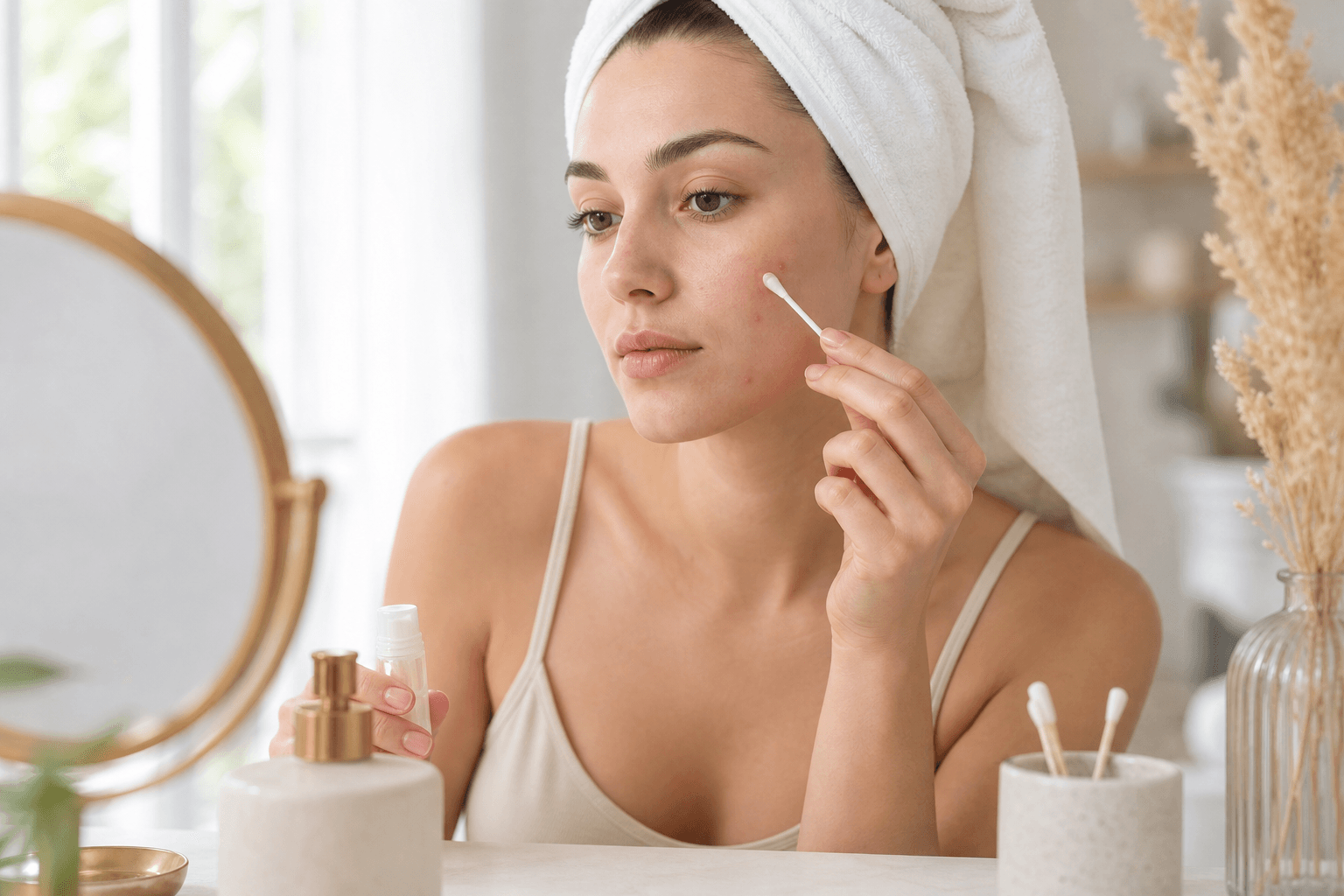
How to Use Spot Treatments for Pimples Without Damaging Your Skin
This article is educational and does not diagnose a condition or replace care from a qualified medical professional.
A pimple erupts the night before something that matters — a wedding, a photo shoot, a first date — and your instinct is to attack it with everything in your cabinet. Benzoyl peroxide, salicylic acid, a drying lotion, maybe a dot of toothpaste your friend swore by. By morning, the bump is redder, flakier, and somehow more obvious than it was the night before. You've heard the horror stories: spot treatments that burn, leave a dark mark, or scar worse than the original blemish. That "it's getting worse before it gets better" feeling isn't the treatment working. It's the sensation of over-treatment. Used correctly, spot treatment pimples care genuinely works — but only when the active matches the blemish type and you apply it with restraint. The real damage source is rarely the pimple. It's what you do to it.
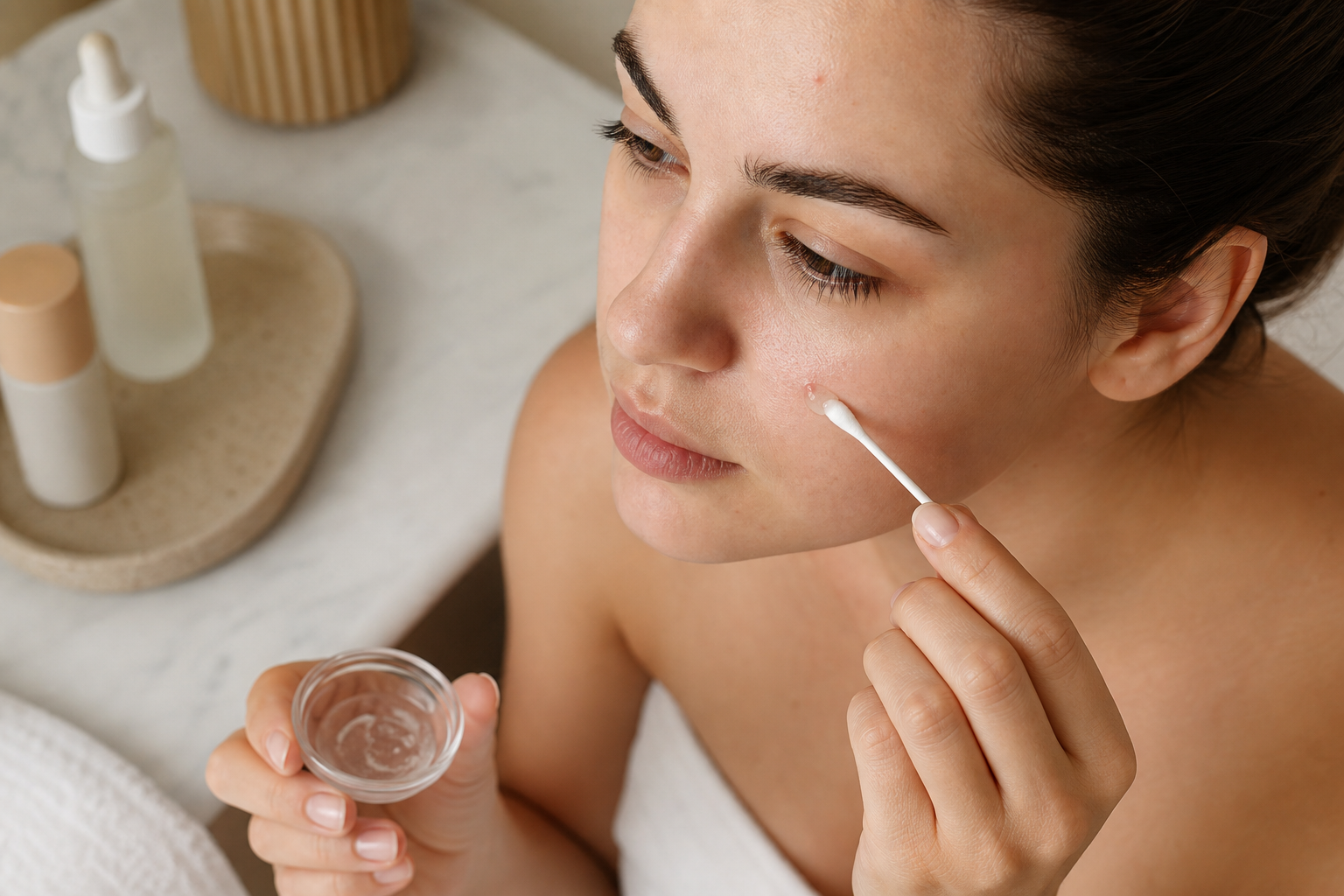
This guide reflects how a cosmetology practice actually approaches individual blemishes — one lesion at a time, matched to what it is, treated only as much as it needs.
Table of Contents
- Know What You're Actually Treating Before You Touch It
- Match the Active Ingredient to the Blemish (Not the Hype)
- The Correct Application Sequence, Step by Step
- Reading the Damage Signals Before They Scar
- Frequency, Layering, and the Combinations That Cause Scars
- Why the Same Pimple Keeps Coming Back — The Prevention Layer
- Your Safe Spot-Treatment Checklist
- Frequently Asked Questions
Know What You're Actually Treating Before You Touch It
The single most common mistake is treating a deep cyst the way you'd treat a surface whitehead. The lesion type dictates whether a spot treatment even helps — and in some cases, whether touching it at all is a good idea.
Clinically, acne lesions split into a few distinct categories. Non-inflammatory comedones — open comedones (blackheads) and closed comedones (whiteheads) — are small, not especially painful, and respond to comedolytic agents that unclog the pore. Inflammatory lesions — papules and pustules — are red and tender, with or without visible pus. Then there are nodules and cysts: larger, deeper, firm, and painful. According to StatPearls' Acne Vulgaris reference, treatment recommendations escalate along exactly this spectrum, moving from topical agents for comedonal and mild inflammatory acne to systemic therapy for nodulocystic disease.
That escalation matters more than most product labels admit. Nodulocystic acne is classified as a more severe form that typically requires systemic treatment — isotretinoin or oral antibiotics — rather than over-the-counter spot products. Dermatology overviews of papules, pustules, and nodules make the same point: applying a strong active to a deep cyst won't shrink it. It sits too far below the surface for a topical to reach. What the active can do is irritate the healthy skin stretched over the top, which is the opposite of helpful.
For scale, acne is the most common skin condition in the United States. According to the National Institute of Arthritis and Musculoskeletal and Skin Diseases, it affects tens of millions of people each year, most commonly beginning in puberty but often persisting well into adulthood. That volume is exactly why the market is flooded with "one product treats everything" spot treatments — and why matching the treatment to the lesion is the step almost everyone skips.
Before you reach for anything, identify what you're looking at.
Blemish Types: What Spot Treatments Can and Can't Fix
| Blemish Type | Appearance | Has a "Head"? | Spot Treatment Helps? | What NOT to Do |
|---|---|---|---|---|
| Whitehead (closed comedone) | Small, skin-colored/white bump | No open pore | Yes — comedolytic | Don't squeeze closed skin |
| Blackhead (open comedone) | Dark, flat/raised, open pore | Open, oxidized | Yes — comedolytic | Don't pick with nails |
| Papule | Small red tender bump, no pus | No | Partially — anti-inflammatory | Don't apply drying acid repeatedly |
| Pustule | Red bump with white/yellow pus | Yes | Yes — antibacterial | Don't pop early |
| Nodule/Cyst | Large, deep, painful, firm | No surface head | No — needs professional care | Don't spot-treat aggressively or squeeze |
Read the table as a decision path, not a menu. Comedones — your blackheads and whiteheads — are clogged pores, so they respond to agents that dissolve the plug and encourage the pore to clear. Inflamed papules and pustules are a bacterial and inflammatory problem, so they respond to antibacterial and anti-inflammatory actives. Nodules and cysts are the escalation point where topical spot treatment stops being useful and starts being a liability.
The reason that liability is real comes down to scarring risk. Clinical reviewers note that deeper inflammatory lesions are the ones most likely to leave permanent scars and pigment changes. Squeezing, picking, or hammering a deep nodule with a strong acid heightens inflammation in the exact tissue most prone to lasting damage. So the plainest rule in this article: if the bump is large, deep, painful, and keeps coming back in the same place, that's a consultation signal — not a spot-treatment situation. No concentration of benzoyl peroxide changes that.
Match the Active Ingredient to the Blemish (Not the Hype)
Once you know the lesion, the active almost chooses itself. The trouble is that marketing sells actives on potency, not fit. Here's how the evidence actually sorts them for spot treatment for acne.
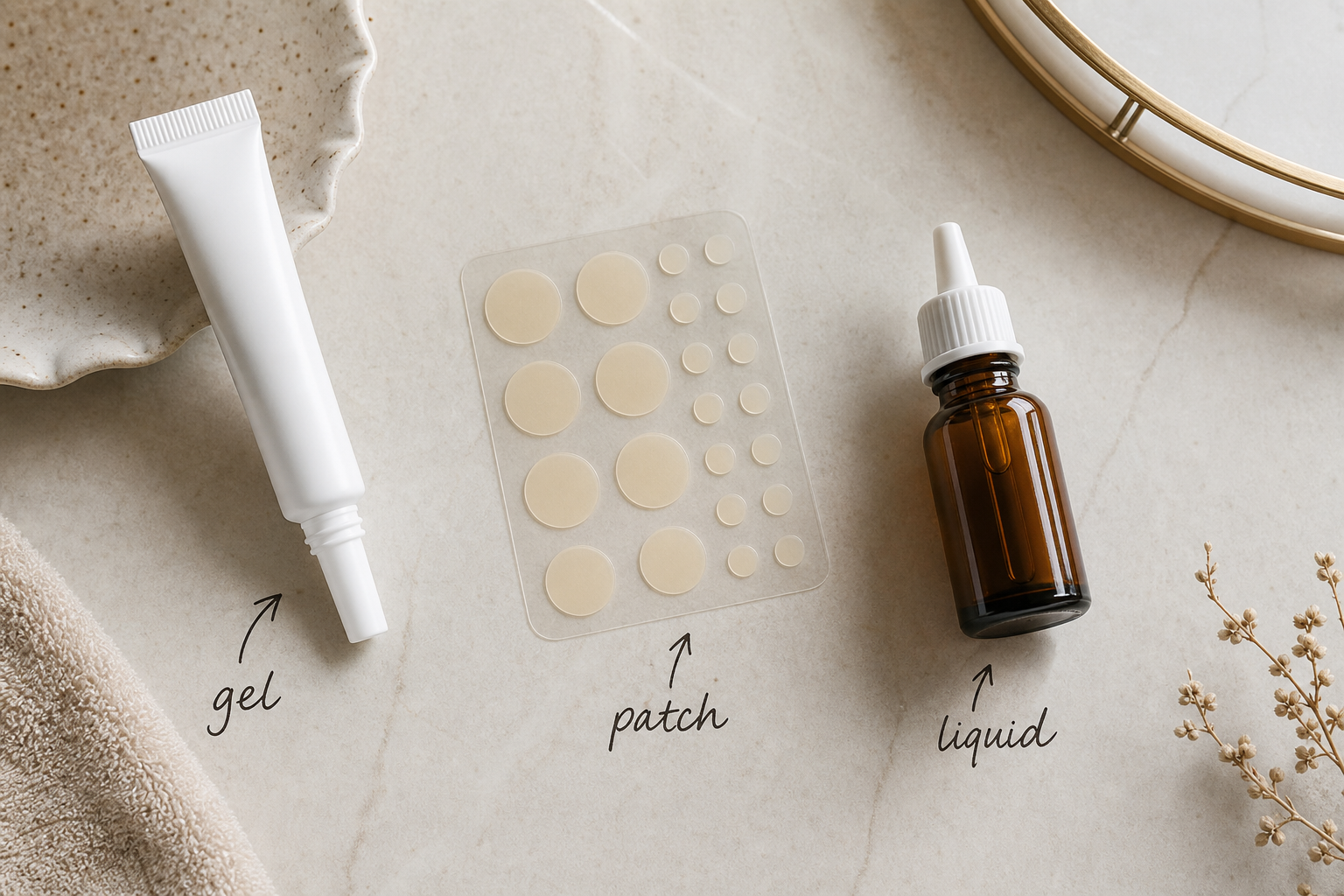
Benzoyl peroxide — the first-line choice for inflamed pustules and papules. It reduces Cutibacterium acnes (formerly P. acnes) and calms inflammation, and American Academy of Dermatology guideline summaries strongly recommend it as a core acne therapy, frequently in combination with a retinoid. The trade-offs are practical: it's drying, and it bleaches fabric and hair on contact, so a white pillowcase and a light towel are your friends here.
Salicylic acid (BHA) — a keratolytic that exfoliates and unclogs pores, which makes it a natural match for comedonal acne: whiteheads and blackheads. Here's the correction to the marketing story, though. Evidence reviews, including GoodRx's comparison of the two actives, note that salicylic acid's clinical trial evidence is meaningfully weaker than benzoyl peroxide's, and current guidelines neither strongly recommend for nor against it. It has a real role in unclogging pores. It is not the universally powerful solution the "acid" branding implies.
Sulfur — a drying agent with antibacterial and keratolytic properties, useful for mild inflammatory lesions and for sensitive skin that can't tolerate stronger actives. Its evidence base is thinner than benzoyl peroxide's or a retinoid's, so treat it as a gentler alternative rather than a heavy hitter — which is precisely its value for reactive skin.
Azelaic acid and niacinamide — azelaic acid earns a spot of its own because it does two jobs: it treats acne and fades residual dark spots, which makes it a strong choice if you're prone to post-acne marks. AAD guidelines give it a conditional recommendation, and dermatology PIH guidance specifically favors it in patients at higher risk of pigment change because it treats the lesion without adding unnecessary irritation.
Hydrocolloid and hydrogel patches — the "do no harm" option, and the most underrated one. For a popped, oozing, or open whitehead, a patch absorbs the exudate, holds a moist healing environment, and — just as importantly — physically blocks your fingers from picking. This isn't a soft claim. A randomized clinical trial of an unmedicated hydrogel patch, reported by EurekAlert, found roughly a 35% reduction in lesion size and a 44% improvement in lesion severity by day 3 versus control. Pilot data on hydrocolloid-type acne dressings point the same direction for mild-to-moderate inflammatory acne.
Sit with that trial result for a second, because it reframes the whole category. If a patch with no medication in it delivers that kind of day-3 improvement, then a good portion of the benefit people credit to "potent" spot actives is actually coming from occlusion, a protected wound environment, and — bluntly — not touching the thing.
The strongest active isn't the best one — it's the one your skin can tolerate for the three days it actually takes a pimple to heal.
The Correct Application Sequence, Step by Step
Most spot-treatment damage isn't caused by the wrong product. It's caused by the right product applied the wrong way. The sequence below is a ritual, and every step has a reason.
- Cleanse gently. Wash the area and remove oil and debris first. An active that lands on a film of sebum and makeup is contacting the film, not the blemish. Skip the scrubbing — this is a rinse, not a resurfacing.
- Dry completely. Actives applied to damp skin penetrate more aggressively, and benzoyl peroxide in particular gets noticeably more irritating on wet skin. Give it ten to twenty minutes if you need to. Damp-skin application is one of the quietest causes of "why is this burning."
- Moisturize the surrounding skin first. Put a thin layer of moisturizer on the healthy skin around the blemish before you treat it. This creates a barrier that keeps the active contained to the spot and spares the surrounding skin from collateral irritation. This one step prevents most of the flaky halos people mistake for the treatment "working."
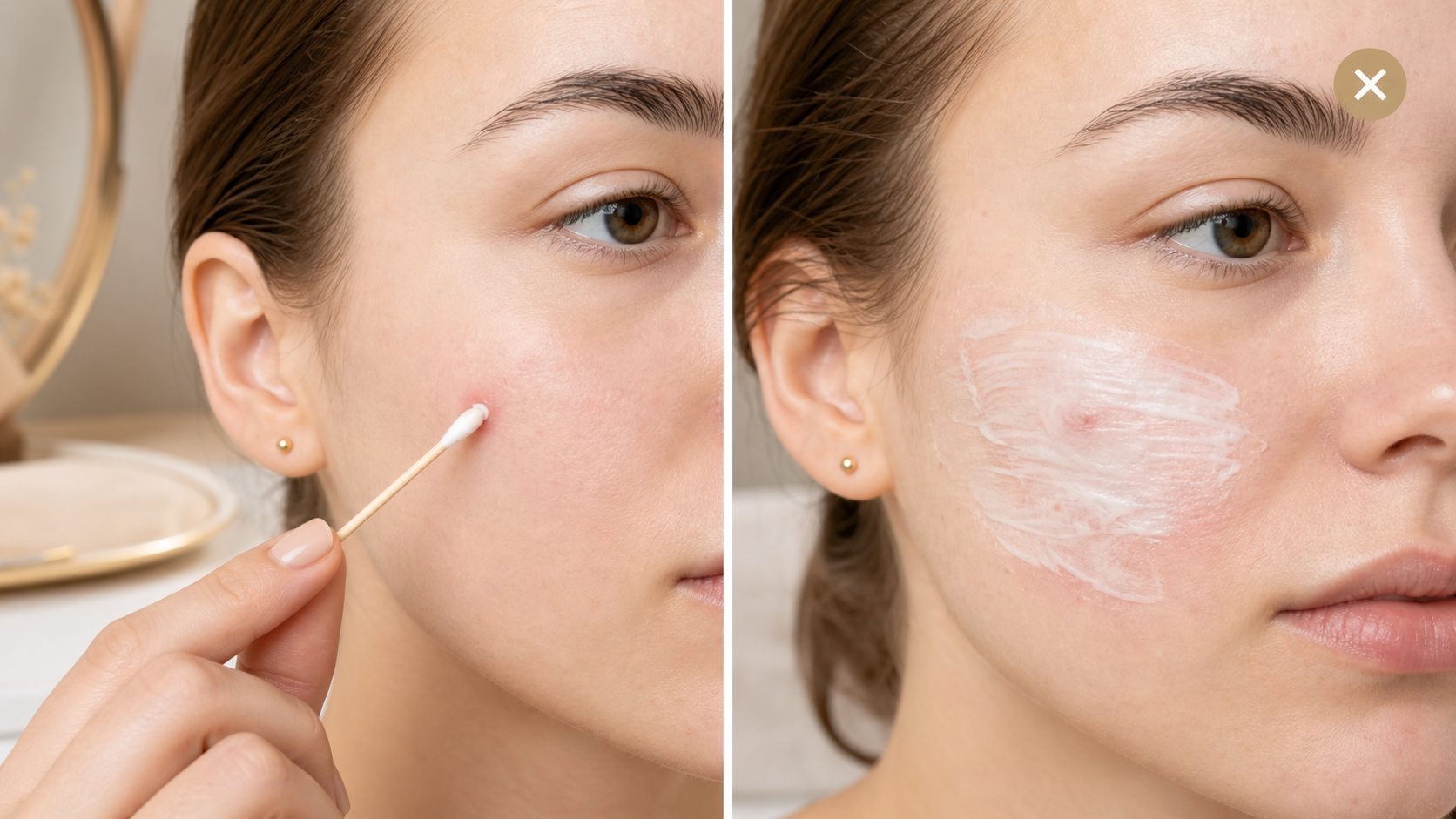
- Apply a dot ONLY on the blemish. A thin layer, blemish-sized, and nowhere else. Dermatology education and clinical reviews consistently stress thin application to affected areas only — and it matters most in sensitive skin and in skin of color, where over-application markedly raises the risk of post-inflammatory hyperpigmentation. If you have reactive or sensitive skin, this restraint isn't optional; it's the whole game.
- Let it absorb. Don't immediately layer serums, makeup, or a second active on top. Give the product time to set so it does its job instead of getting diluted or pushed around.
- Seal with a patch if it's oozing or popped. For an open lesion, a hydrocolloid patch beats a stinging acid on broken skin — it manages the fluid and blocks the picking, which is where the day-3 improvement data comes from.

On frequency: apply topical acne actives no more than once to twice daily, and less than that on sensitive skin. Guideline-based dermatology education is consistent that going beyond that increases irritation without speeding up clearance. More applications do not equal a faster result. They equal a more irritated one.
Reading the Damage Signals Before They Scar
Some drying is expected. The skill is telling normal drying apart from early injury, and catching the difference before it becomes a mark you'll see for months. Watch for these five signals.
- Stinging that doesn't fade. A brief tingle on application is common and usually harmless. A persistent burn — one that's still there minutes later, or that returns each time — means the active is too strong for you or you're using it too often. This is a signal to reduce, not to push through.
- Flaking or peeling rings around the spot. When healthy skin around the blemish starts to flake, the active is drying tissue it was never meant to touch. It almost always means the barrier-first step was skipped or you applied too much beyond the lesion.
- A darkening mark forming. Post-inflammatory hyperpigmentation is the expensive mistake. Clinical reviews of PIH note it can persist for months — sometimes longer — and it's especially common and stubborn in darker skin tones, frequently outlasting the original pimple by a wide margin. Over-aggressive treatment heightens inflammation, and more inflammation means more pigment. If you're already managing post-acne discoloration, this is the signal to treat most seriously.
- Redness spreading beyond the blemish. A spot treatment should affect the spot. Redness creeping into the surrounding skin is collateral irritation, not progress.
- Tightness or rough texture. A compromised barrier feels tight and reads rough to the touch. When you notice it, stop the active and switch the area to a bland, fragrance-free moisturizer until it settles.
Post-inflammatory hyperpigmentation lasts months; the pimple would have lasted days. Aggression is the expensive choice.
The corrective move is the same across all five signals: stop the active, restore the barrier with simple moisture, and protect from sun. Photoprotection matters more than most people expect here — PIH management reviews consistently recommend daily broad-spectrum sunscreen because sun exposure darkens and prolongs post-acne marks. In other words, damage control around the lesion — barrier support and sun protection — often does as much for the final result as the spot medication itself.
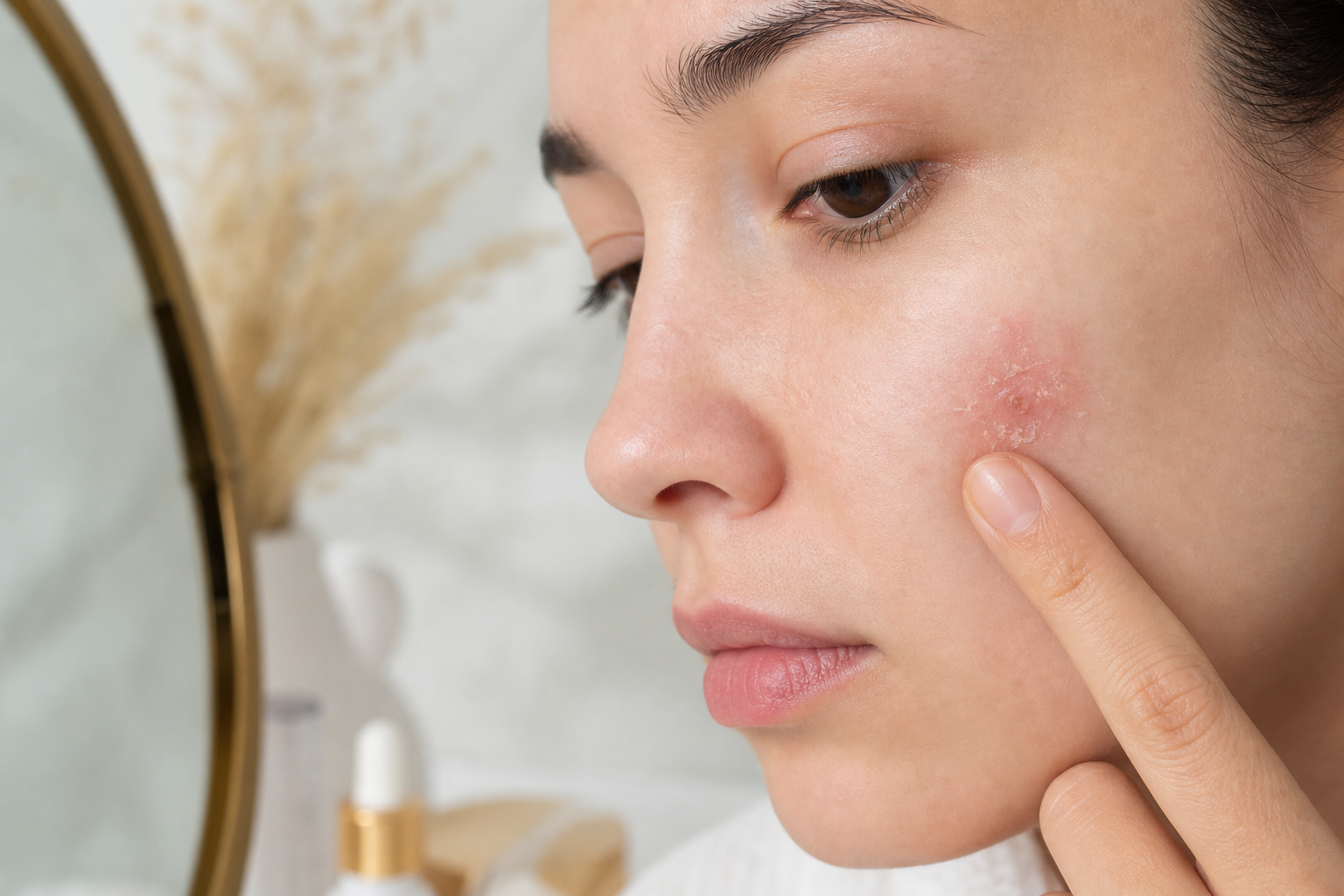
Frequency, Layering, and the Combinations That Cause Scars
Two habits cause most spot-treatment damage: applying too often, and stacking incompatible actives on the same spot. The matrix below sorts the common combinations by risk and gives you the safer move.
Can I Use These Together?
| Combination | Risk | Safer Approach |
|---|---|---|
| Benzoyl peroxide + retinoid (same time) | Increased dryness/irritation | Alternate — one AM, one PM |
| BHA (salicylic) + AHA together | Over-exfoliation, barrier stress | Use one, not both, on a blemish |
| Spot treatment + exfoliant on same spot | Compounded irritation, higher PIH risk | Skip exfoliation on treated areas |
| Two spot treatments layered | Amplified drying, no faster clearing | Choose one matched active |
| Spot treatment over the whole face | Widespread irritation of healthy skin | Treat only the blemish |
The reapplication reality is stricter than most routines assume. Once to twice daily is the ceiling, and sensitive skin should stay below it. This makes sense once you understand the timeline: individual inflammatory lesions take multiple days to resolve even under optimal therapy, and topical regimens generally need several weeks of consistent use for full effect. StatPearls and guideline-based resources are explicit on both points. So reapplying a spot treatment three hours after the last dab does nothing biological — the lesion isn't going to turn over that fast. All the extra application does is add irritation.
The whole-face mistake deserves its own callout because it's so common. Spreading a spot treatment across your entire face "to catch everything" doesn't prevent breakouts — it irritates a large expanse of healthy skin and raises your overall PIH risk. A spot treatment is a targeted tool. If you feel the urge to coat the whole face, that's a sign you need a consistent full-face routine, not a wider smear of a targeted product.
Both damage drivers reduce to the same false belief: that more — more often, stronger, more products layered — equals faster. It doesn't. It backfires. Recurring or scarring acne calls for a structured, consistent plan rather than escalating spot doses, which is why persistent cases are better served by a comprehensive acne treatment approach than by a heavier hand at the bathroom mirror.
Why the Same Pimple Keeps Coming Back — The Prevention Layer
If a breakout keeps appearing in the same zone, you don't have a spot problem. You have a pattern problem, and no amount of surface treatment resolves a pattern. This is where the smartest thing you can do is stop reacting and start preventing.
Prevention begins with the barrier, because everything else depends on it. A healthy skin barrier tolerates actives better, heals faster, and holds pigment down after a lesion clears. That's not a wellness slogan — it's the mechanical reason why over-treated skin scars and marks more than gently treated skin. A barrier that's constantly stripped by too-strong, too-frequent actives is a barrier that inflames easily and pigments readily. Protecting it is the foundation of every other step.
The non-negotiable basics are unglamorous: a gentle cleanse, a moisturizer suited to your skin, and daily broad-spectrum sunscreen. Sunscreen earns its place in a prevention routine specifically because it reduces the persistence of post-acne marks — the same PIH guidance that governs damage control also governs prevention. If you're prone to dark spots, skipping sunscreen quietly undoes the careful spot treatment you did the week before.
Here's the point that reframes how you should think about spot treatments entirely. The updated AAD guidance centers on consistency: topical benzoyl peroxide, retinoids, and combination regimens used regularly are the evidence-based foundation of acne care. Intermittent rescue dabbing is not. A guideline-based routine applied every day outperforms sporadic spot use precisely because acne is a chronic, cyclical condition — pores clog and inflame on their own schedule, not on the schedule of your social calendar. Waiting for a visible pimple to appear before you do anything means you're always a step behind the biology.
If you're reaching for a spot treatment every week, you're managing symptoms — not solving the breakout.
Recurring lesions in a fixed area also point to causes that live below the skin's surface. Hormonal patterns can drive breakouts along the jaw and chin in predictable monthly cycles. Diet, stress, sleep, and the products you use elsewhere all feed into where and how often a lesion returns. It's also worth ruling out what you're actually dealing with: persistent central-face redness and flushing that you keep treating as acne may be rosacea, which responds to a very different plan and can be made worse by harsh acne actives. Treating the wrong condition is its own form of over-treatment.
This is exactly where chronic or recurring acne benefits from a structured, personalized plan rather than a cabinet of single products. A plan that looks at nutrition, topical care, and lifestyle together — and adjusts over time based on how your skin actually responds — addresses the pattern instead of chasing each individual bump. Delivered through professional guidance, that kind of plan does what a spot treatment fundamentally can't: it works on the reason the pimple keeps returning. Spot-treating the same area week after week is a signal, and the signal is that surface treatment isn't the answer to what's happening underneath.
Your Safe Spot-Treatment Checklist
Keep this by the mirror. Run through it before you dab anything.
- Identify the blemish — is it a whitehead, blackhead, papule, pustule, or nodule/cyst? Naming it first prevents the most common mismatch.
- Confirm it's spot-treatable — comedones and surface inflammatory lesions, yes; deep painful nodules and cysts, no. Deep and painful means hands off.
- Match the active to the type — comedolytic (salicylic) for clogged pores, antibacterial (benzoyl peroxide) for pustules, a hydrocolloid patch for anything popped or oozing.
- Patch-test first — especially with a new active or if your skin is reactive. A small test spot beats a full-face reaction.
- Apply barrier-then-dot — moisturize the skin around the blemish, then place a thin dab on the lesion only.
- Cap frequency — once to twice daily maximum, and never layer two actives on one spot.
- Monitor for damage signals — persistent stinging, flaking rings, a darkening halo, or spreading redness.
- Stop if warning signs appear — pause the active, restore the barrier with plain moisturizer, and protect the area from sun.
- Know when to escalate — recurring, cystic, or scarring acne needs professional assessment, not a stronger product.
That last item is the honest boundary of what a spot treatment can do. When self-treatment plateaus — the same breakouts returning, deep painful lesions, or marks that won't fade — a personalized remote consultation is the logical next step rather than another trip down the pharmacy aisle. It's an accessible one, too, with an entry point starting from $115 | €99. Think of it not as giving up on your routine, but as the natural continuation of "know when to escalate" — the point where lingering post-acne and discoloration is better addressed by a plan than by a product.
Frequently Asked Questions
Can I use a spot treatment on a popped pimple?
Treat a popped or oozing lesion as a wound, not a target for strong actives. Broken skin does far better under a hydrocolloid patch — which absorbs fluid and physically blocks you from picking — than under a drying acid that stings and can worsen irritation. Randomized data on unmedicated patches show meaningful improvement in lesion size and severity within days, largely from occlusion and reduced manipulation. Save the acid for intact blemishes and let the patch handle the open one.
How long should I leave a spot treatment on?
It depends on the format. Leave-on gels like benzoyl peroxide and azelaic acid stay on until your next cleanse washes them off. Some sulfur or clay-based products are rinse-off treatments you remove after the time stated on the label. Don't leave a rinse-off product on overnight, and don't double-apply "to be safe" — that only raises your irritation risk without helping the lesion clear any faster.
Can I put spot treatment under makeup?
You can, but let it fully absorb first, and know that sealing an active under heavy makeup can trap it against the skin and increase irritation. The safer routine is a thin dot with real absorption time before foundation — or a hydrocolloid patch under lighter coverage. Layering foundation over still-wet product is how a manageable spot turns into an irritated one by midday.
Why does my pimple look worse after using a spot treatment?
Usually it's irritation, not "purging." Redness, flaking, or a darkening halo forming around the spot means the active is too strong, over-applied, or used too frequently. Drying of the lesion itself is expected and fine. Irritation spreading into the healthy skin around it is a stop signal — pause the active, restore the barrier, and give the skin a few days before treating again.