





Skincare Routine for a Glow Up: A Dermatologist-Backed 30-Day Plan
This article is educational and does not diagnose a condition or replace care from a qualified medical professional.
You are standing at the bathroom mirror holding your seventh serum of the year, and your skin looks exactly the same as it did before the first one: dull, a little congested, uneven in tone. You followed the routine that went viral last month. You layered the toner, the essence, the two acids, the vitamin C, all of it within the same week, and somewhere around day five your cheeks started stinging in a way you told yourself was "purging." It wasn't. A real skincare routine for glow up is sold to you as a product, but it is actually a sequence — and most people sabotage their own results by stacking six new actives at once and triggering irritation they mistake for progress.
This is built differently. It is a structured 30-day plan assembled the way Dr. Maria builds clinical treatment plans at Macherre Medical Center: diagnosis first, a minimal effective routine second, lifestyle layered third — adapted for safe execution at home. Here is the honest expectation that anchors everything: the average epidermis completes a full cell-turnover cycle in roughly 28 days (dermatology physiology reviews), so 30 days represents one full turnover — a genuine foundation reset, not a complete transformation. Real change in pigmentation, fine lines, and texture compounds over months of consistency (Academy of Nutrition and Dietetics). That honesty is the point. A routine you can actually keep beats a dramatic one you abandon by Day 12.
Table of Contents
- Know Your Starting Point
- The Glow-Up Core Four
- Your 30-Day Glow-Up Plan, Week by Week
- Beyond the Bottle: Nutrition, Sleep, and Stress
- How to Track Real Progress
- When a DIY Routine Isn't Enough
- Your Glow-Up Starter Checklist
- Glow-Up Skincare Questions, Answered
Know Your Starting Point: Identify Your Skin Type and Real Concerns Before You Buy Anything
A glow up fails when you skip diagnosis. A routine built for oily, acne-prone skin — high actives, gel cleansers, frequent exfoliation — actively harms a sensitive or rosacea-prone face. Reviews show that aggressive routines in reactive skin frequently cause irritant or allergic contact dermatitis that gets misread as breakouts (sleep and skin disruption review; Acta Dermato-Venereologica). You cannot build glow up skincare on a foundation you haven't identified.
Use the 30-minute test: wash with a gentle cleanser, apply nothing, and notice how your skin feels and looks after half an hour. That single observation places you in one of five profiles.
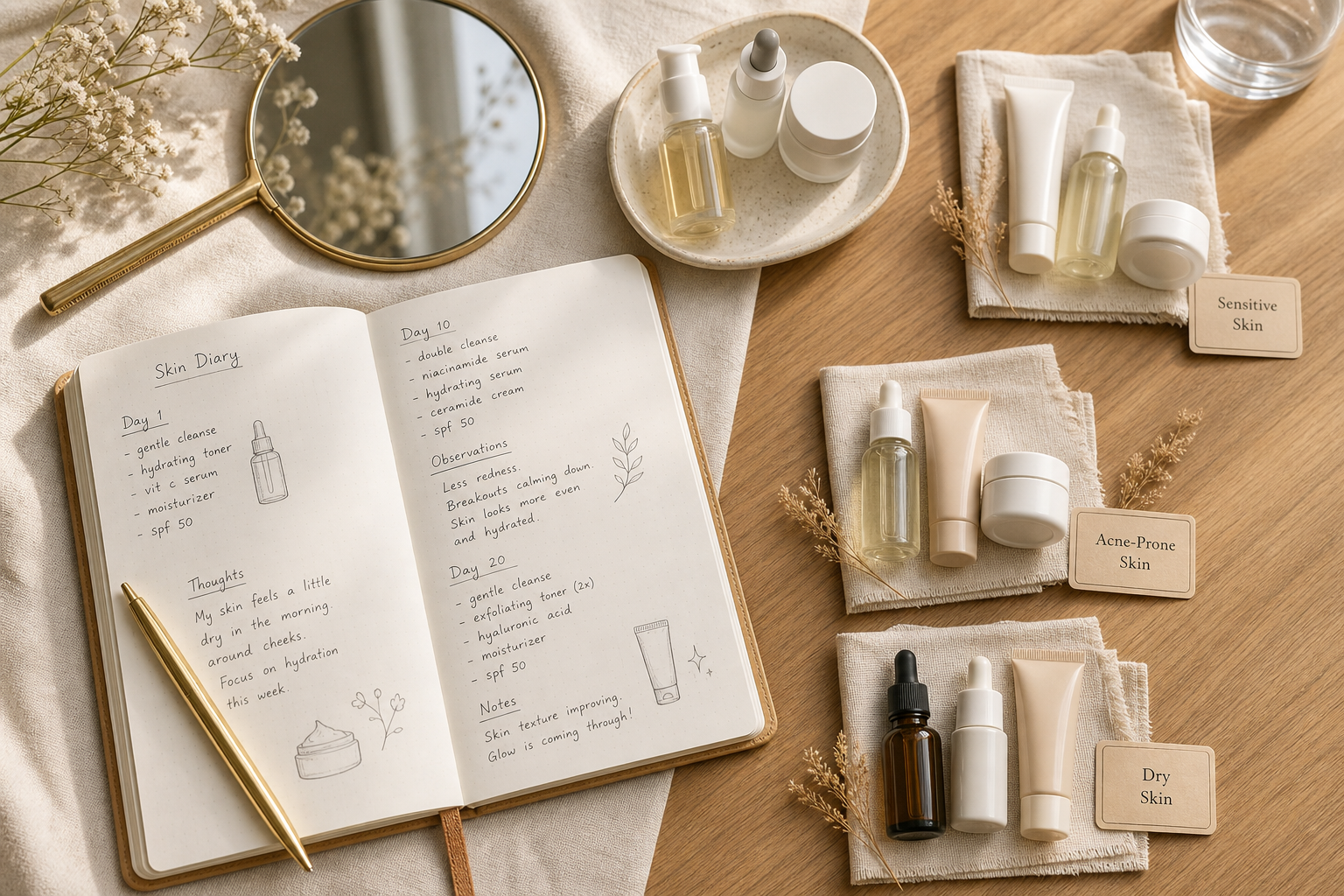
- Oily & Acne-Prone — Visible shine across forehead, nose, and chin within 30 minutes. You see recurrent breakouts, congestion, and enlarged pores. This profile tolerates actives better than most but still needs slow introduction, because over-treating oily skin damages the barrier and drives more oil, not less.
- Dry & Dehydrated — Tightness, flaking, or a "papery" feeling after cleansing, plus dullness even when you aren't breaking out. The fix here is barrier support, not exfoliation. If your cheeks feel like paper an hour after washing, you are reading a dehydration signal, and dry and dehydrated skin solutions start with restoring moisture before anything else.
- Sensitive / Rosacea — Stinging or redness from new products, central-face flushing, and visible capillaries. This profile must avoid strong fragrances, high-alcohol formulas, and physical scrubs entirely (Acta Dermato-Venereologica). If you flush across the center of your face, rosacea management is a different track than acne care, and sensitive skin care means fragrance-free basics introduced one at a time.
- Pigmentation & Post-Acne Marks — Even texture but uneven color: brown or red marks lingering long after blemishes heal. Your skin is smooth to the touch but reads patchy in photos. This profile lives or dies by daily sunscreen, which prevents existing marks from deepening.
- Combination & Early Aging — Oily T-zone with dry cheeks, plus emerging fine lines or a loss of bounce. You may need two slightly different approaches on two zones of the same face, which is why blanket routines disappoint this group most.
If you cannot clearly place yourself, or you have overlapping concerns — acne and rosacea, pigmentation and sensitivity — that ambiguity is exactly what a personalized consultation resolves. Macherre's remote model uses a short form plus submitted skin photos to map your skin accurately, so you stop guessing at a profile and start treating the one you actually have.
The Glow-Up Core Four: The Only Products You Actually Need First
The over-purchasing trap is the most expensive mistake in skincare. Clinical and guideline literature consistently frames an effective routine as four pillars — cleanser, moisturizer, sunscreen, and one evidence-based active — not twelve trendy steps (Academy of Nutrition and Dietetics; sleep and skin review). Glow comes from consistency with these four, not novelty.
| Pillar | Purpose | Ingredients to Look For | Avoid (Sensitive Skin) | When to Apply |
|---|---|---|---|---|
| Cleanser | Remove oil/debris without stripping | Gentle, low-foam, pH-balanced | High-alcohol, fragrance, sulfates | AM + PM |
| Moisturizer | Restore + maintain barrier | Ceramides, glycerin, hyaluronic acid | Heavy fragrance, denatured alcohol | AM + PM |
| Sunscreen | Prevent + partly reverse photoaging | Broad-spectrum SPF 30+ | Fragranced/alcohol-heavy formulas | AM (reapply every 2 hrs in sun) |
| One Active | Improve texture, tone, breakouts | Retinoid OR AHA/BHA OR Vitamin C | Physical scrubs, high starting % | PM (start 2–3 nights/week) |
Two facts decide whether this routine works for you. First: sunscreen is the single highest-yield glow multiplier, and the most-skipped step. In a 4.5-year randomized trial of 903 adults, daily broad-spectrum SPF users showed no detectable increase in skin aging, while discretionary users had roughly a 24% increase in photoaging scores (Annals of Internal Medicine, via Academy of Nutrition and Dietetics). It gets better: a 52-week study of daily facial SPF 30 found measurable improvement in fine lines, texture, and hyperpigmentation from sunscreen alone (Journal of Drugs in Dermatology study summary, vendor-hosted). The catch is application. Studies achieve those results using approximately 2 mg/cm² of product, and chronic under-application is precisely why so many people "wear SPF" daily and never see the payoff. If your sunscreen lasts three months, you are using a fraction of what the research dose requires.
Second: one active at a time prevents barrier damage. Retinoids, AHAs and BHAs, and vitamin C are the most evidence-supported actives for skin texture improvement, tone, and brightness — but they must be introduced slowly to avoid the irritation that masquerades as endless purging (sleep and skin review). Pick one. Not three. The person running a retinoid, a glycolic acid, and a vitamin C in the same week is not building glow up skincare; they are building a contact dermatitis study with a sample size of one.
A glow up is not built on the products you add — it is protected by the ones you have the discipline to leave out.
Your 30-Day Glow-Up Plan, Week by Week
The sequencing logic fits in one sentence: introduce one variable at a time so that if your skin reacts, you know exactly what caused it. Remember the frame for this entire 30-day skincare routine for a glow up — 30 days is one turnover cycle of roughly 28 days, a foundation, not a finish line (dermatology physiology reviews).

Week 1 — Reset. Cleanser, moisturizer, and SPF only. No actives, no exfoliation, nothing new. This validates against barrier-recovery research: healthy skin partially restores barrier function within 24–72 hours, and a 1–2 week simplified phase is the clinically supported window to calm irritation before you layer anything stronger (Clinical and Experimental Dermatology summary; sleep and skin review). This week feels boring. Boring is the goal. You are establishing a calm, comfortable baseline so that every later change is measurable against something stable.
Week 2 — Introduce one active. Based on the profile you identified, add a single active at 2–3 nights per week — the standard dermatology starting frequency (Academy of Nutrition and Dietetics; sleep and skin review). Keep everything else identical to Week 1. Apply the active on non-consecutive nights, after cleansing, before moisturizer. If your skin tolerates it without persistent stinging, you have your answer; if it doesn't, you know the exact culprit because nothing else changed.
Week 3 — Build tolerance and add targeted care. If the active was well tolerated, increase it by one additional night. Then add a single targeted treatment — spot care for acne, or a step aimed at congestion like blackheads and whiteheads removal, or a pigment-focused product if marks are your concern. Change only one thing. The discipline of the one-variable rule is what separates a routine that compounds from one that collapses.
Week 4 — Optimize and lock the habit. Settle into a stable AM and PM rhythm you can repeat without thinking. Take your Day 30 progress photos under the same conditions as your Day 0 baseline. Then decide: maintain this routine, or escalate carefully into month two. Most readers find that by Week 4 the routine has stopped feeling like a project and started feeling like brushing their teeth — which is exactly the outcome that produces real change over the following months.
Beyond the Bottle: How Nutrition, Sleep, and Stress Show Up on Your Face
Here is Macherre's core conviction, and the thing product marketing will never tell you: skin is an output of internal systems. The bottle on your shelf cannot outwork your plate, your sleep debt, and your stress (Mediterranean diet and acne review; sleep and skin review). Treat everything that follows as additive and supportive, not curative. Diet is a modest but real lever — not a magic switch.
Diet and glycemic load. A systematic review found that high-glycemic-index and high-glycemic-load diets exert a modest but statistically significant pro-acne effect, while lower-GI patterns associate with milder acne (diet and acne systematic review; PubMed). A 2025 review found that higher Mediterranean-diet adherence — vegetables, whole grains, olive oil, fish — correlated with less severe acne (Mediterranean diet review summary). Read those findings as an instruction to add, not to eliminate. Bring in whole grains, oily fish, and produce rather than ordering a restrictive cleanse. The Western pattern high in refined carbohydrates and dairy sits on the other side of that association, so swapping the white roll for the whole grain one is a lever you can pull tonight.
The evidence caveat, told honestly. A review of 268 reports found that only 17% — 63 reports — described beneficial food effects, while just 2.2%, or 8 reports, described harm from dietary avoidance (Acta Dermato-Venereologica nutrition review). In plain terms: the evidence is stronger for harm from high-GI foods and dairy than it is for benefit from strict elimination diets. That is your signal to ignore fad "detox" protocols. Cutting entire food groups to chase clear skin has thin support and real downsides. Steady, moderate, whole-food eating wins.
Sleep as the silent skincare step. People sleeping 7–9 hours per night showed better skin hydration, more elastic skin, and faster recovery from barrier disruption than short sleepers (Clinical and Experimental Dermatology summary). Poor sleepers, by contrast, showed more intrinsic and extrinsic aging signs and slower barrier recovery (sleep and skin aging report). Make 7–9 hours an explicit nightly target, the same way you treat your SPF as non-negotiable. The barrier you spent Week 1 calming recovers faster when you are sleeping enough to let it.
The stress–sleep–skin feedback loop. A 2025 review reports that sleep disturbances both worsen and are worsened by acne, rosacea, eczema, urticaria, and psoriasis (sleep and skin review). That is a loop, and loops compound. Stress fragments your sleep; broken sleep inflames your skin; the flare raises your stress. Any glow plan that ignores this will keep leaking results out the back door. Breaking the loop at any single point — a consistent bedtime, a wind-down routine, fewer late screens — buys you ground on all three fronts at once.
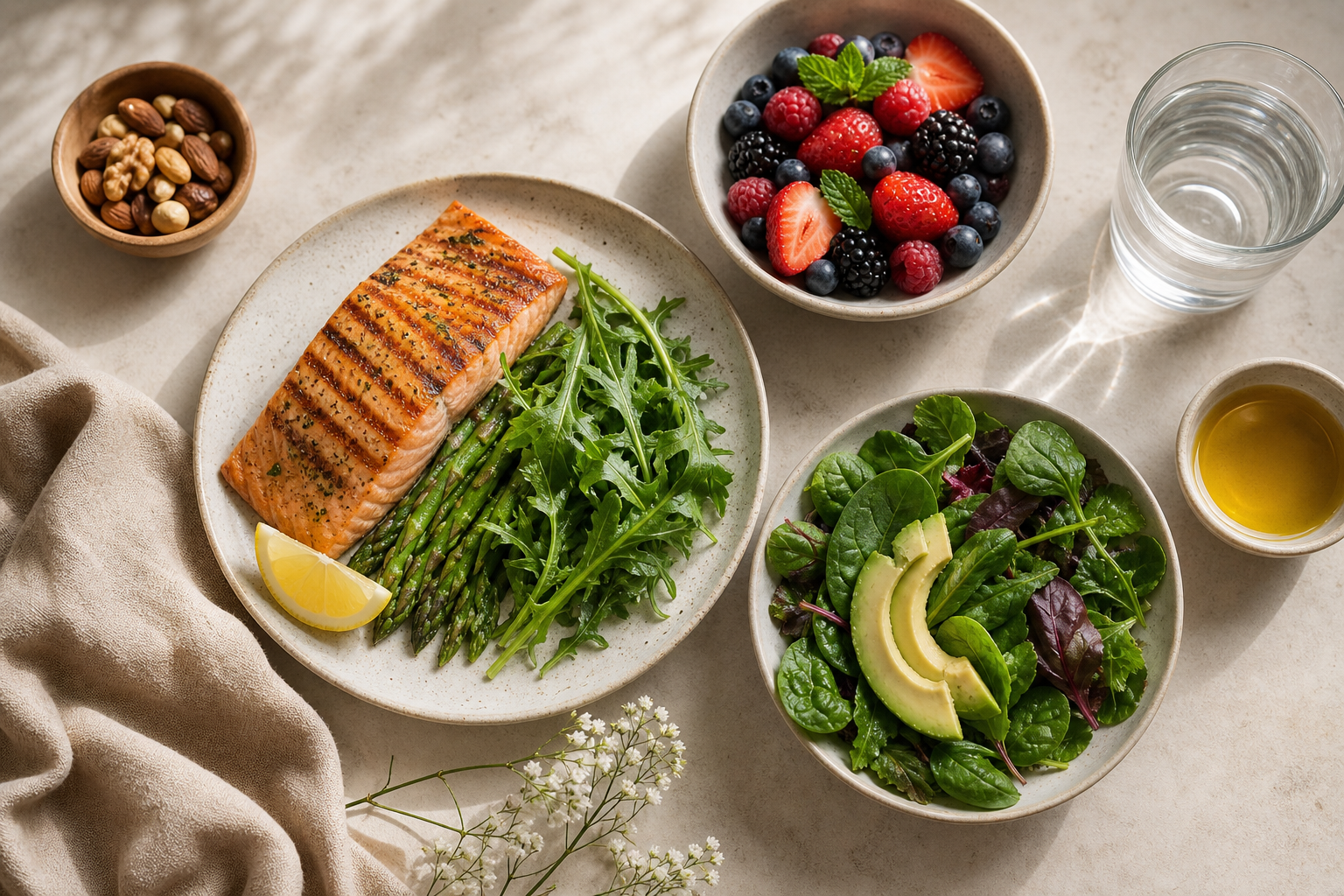
On hydration: steady water intake spread through the day supports skin hydration, with the exact volume varying by body size and activity level (Clinical and Experimental Dermatology summary). Don't chase a viral number. Sip consistently, weight it toward the first two-thirds of your day, and let thirst and urine color guide the rest. None of this is glamorous, and that is exactly why it works while the seventh serum sits unused.
You cannot serum your way out of a routine your sleep and your plate are quietly working against.
How to Track Real Progress (and Why You Must Not Quit at Day 12)
Weeks 2 and 3 are when people quit. Skin can look temporarily worse, and the instinct is to blame the routine and bail. Reframe it: much of what social media calls "purging" is actually irritant contact dermatitis from going too hard too fast — which is the entire reason the slow, one-variable build exists (diet and acne review; sleep and skin review). If you followed the sequence, you have far less to fear here than someone who stacked five products on day one.
Here is the tracking method that turns guessing into evidence.
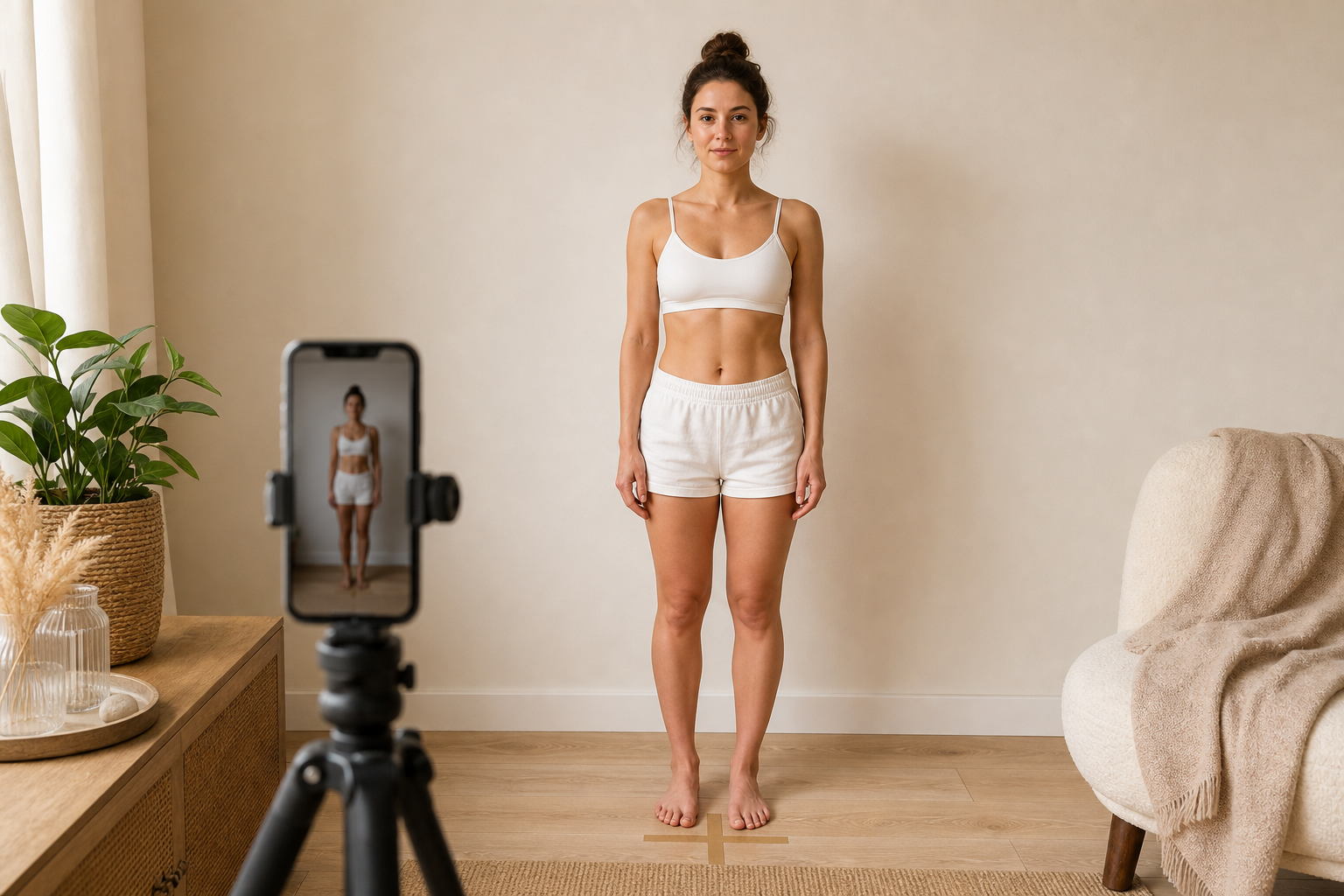
- Standardize your progress photos. Same time of day, same window or light source, same angle — front plus both sides — and no makeup. Inconsistent lighting is the number one reason people falsely conclude nothing changed. Mark a spot on the floor so you stand in the same place each time. A genuine improvement in glow up results is invisible if your Day 0 shot was lit by a window and your Day 30 shot by a bathroom bulb.
- Keep a simple symptom log. Note new products, breakout location, any stinging or redness, your sleep hours, and dietary spikes. When something changes, this log makes cause and effect traceable instead of mysterious. A breakout along the jaw the same week you added a new active and slept five hours a night tells a story your memory alone never will.
- Apply the one-variable rule. If your skin reacts, change only one thing at a time. Never strip your whole routine at once, and never add two new products together. This is the same logic that governs the week-by-week plan, carried into troubleshooting. Skincare progress is only legible when you isolate variables.
- Distinguish normal adjustment from a stop signal. Mild dryness, slight flaking, or transient tingling that settles within minutes is normal adjustment — keep going. Persistent stinging, spreading redness, burning, swelling, or steady worsening over two or more weeks is a stop signal. When you see it, drop the active and simplify back to the Week 1 reset. Lingering brown or red marks left behind by old blemishes are a separate matter from active irritation, and post-acne and discoloration treatment is the right track for those rather than another acid.
Hold the honesty thread to the end: meaningful change in wrinkle depth and pigmentation accrues over months, not weeks (Academy of Nutrition and Dietetics). Judge your 30 days on habit consistency and barrier comfort — not on a dramatic before-and-after that no single turnover cycle can honestly deliver.
When a DIY Routine Isn't Enough: Signs Your Skin Needs a Personalized Plan
A 30-day reset works beautifully for dullness, mild dehydration, and the occasional breakout. It works far less well for chronic or hormonal acne, persistent rosacea, and stubborn pigmentation — conditions driven by internal and inflammatory factors that at-home routines rarely resolve alone (sleep and skin review; Acta Dermato-Venereologica). Diet and lifestyle reviews repeatedly describe these influences as "one of several factors," which is itself a reminder that some cases need a professional assessment rather than another product (Academy of Nutrition and Dietetics article).
| Scenario | DIY 30-Day Plan Sufficient? | Recommended Next Step | Typical Timeline |
|---|---|---|---|
| Mild dullness / dehydration | Usually yes | Core Four + barrier focus | ~30 days (one cycle) |
| Occasional breakouts | Often yes | Add one active slowly | 4–8 weeks |
| Cystic / hormonal acne 3+ months | No | Personalized clinical plan | 3–4 month course |
| Rosacea flares | No | Trigger mapping + tailored care | Ongoing management |
| Deep pigmentation / melasma | Rarely | Targeted pigment protocol | Months, with SPF discipline |
The rows that say "no" or "rarely" are not failures of effort. They are conditions where guessing has a low ceiling. Cystic and hormonal acne treatment that has persisted for three months or more is responding to factors a spot treatment cannot reach. Rosacea management depends on identifying and avoiding individual triggers, which takes structured observation, not a stronger cream. Deep pigmentation and melasma covered under age spots and hyperpigmentation treatment demand a targeted protocol paired with relentless sun protection, and they reward patience measured in months.
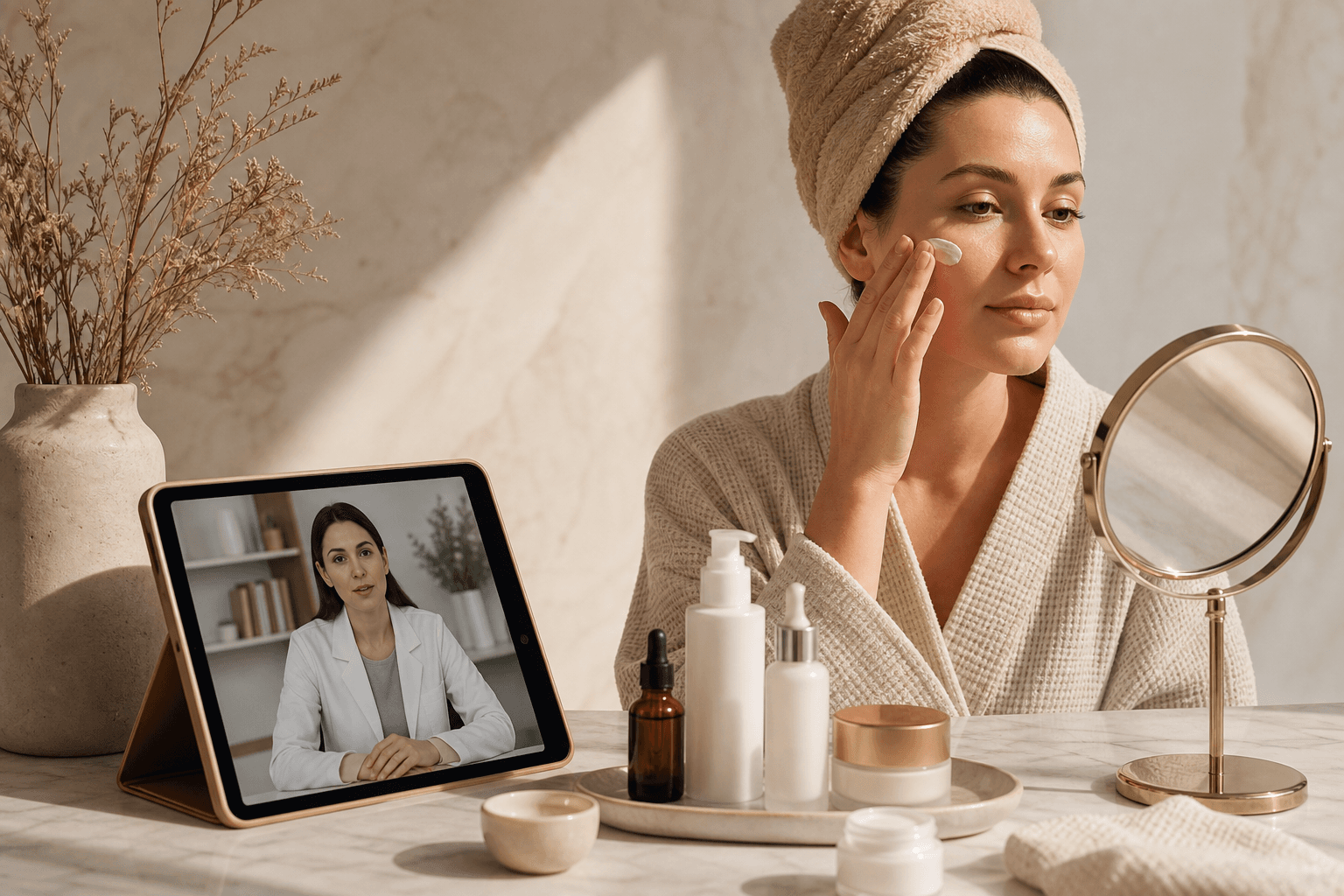
This is where a remote model becomes the logical escalation rather than a hard sell. You complete a form, submit skin photos, and receive a personalized plan covering topical skincare, nutrition, and lifestyle — the three layers this article has walked through, assembled for your specific skin instead of a generic profile. The signature ProAcne Program runs bi-weekly follow-ups across a 3–4 month course, which maps directly onto the cystic and hormonal acne timeline in the matrix above, with English and Russian-language support and consultations from $115 | €99. For readers thinking about the long game, mapping out early signs of aging prevention early is far cheaper than reversing photoaging later. The difference between a DIY routine and a personalized plan is the difference between guessing and being guided.
The goal is not to follow a routine forever — it is to understand your skin well enough to know when it needs a professional.
Your Glow-Up Starter Checklist: What to Do Today
You don't need a new product to start. You need to start. Here is the do-it-now briefing.
- Identify your skin profile. Run the 30-minute test and place yourself honestly in one of the five profiles. Everything downstream depends on this one observation.
- Audit your shelf. Keep the Core Four. Box up everything else for 30 days. Fewer products and more consistency beats a crowded shelf every time.
- Take your Day 0 progress photo. Same light, same angle, no makeup. This is your honest baseline, and you only get one chance to capture it before the work begins.
- Set AM and PM phone reminders. Habit beats intensity. The routine that survives is the one you actually repeat, and a reminder bridges the gap until it becomes automatic.
- Plan three nutrition swaps. Add, don't just remove: oily fish, more vegetables and whole grains, steady water through the day. Supportive, never restrictive.
- Calendar your milestones. Mark Week 2 — "introduce one active" — and Day 30, your progress photos and decision point. A plan on the calendar is a plan you keep.
The glow you are after is not a 30-day stunt. It is a relationship with your skin you are only just beginning, and the best skincare routine for glow up is the unremarkable one you still follow in month three. If your self-assessment flagged a red-flag scenario from the decision matrix — chronic acne, persistent flushing, stubborn marks — that is not a failure. It is information. The next gentle step is a plan built for your skin rather than someone else's, and acne treatment tailored to you starts exactly where your honest baseline left off.
Glow-Up Skincare Questions, Answered
How long does a real skincare glow up actually take?
One epidermal turnover cycle is roughly 28 days (dermatology physiology reviews), so 30 days delivers a visible reset — calmer, more even, better-hydrated skin. But meaningful change in fine lines and deep pigmentation accrues over months to years of consistent SPF and lifestyle habits (Academy of Nutrition and Dietetics). Think foundation first, then momentum. The reset earns you the right to the bigger changes that follow.
Can I do a glow up routine if I have sensitive or rosacea-prone skin?
Yes — but the Core Four shifts gentle. Use fragrance-free basics, skip high-alcohol formulas, avoid physical scrubs entirely, and introduce low-concentration chemical exfoliants very slowly (Acta Dermato-Venereologica). If redness flares persistently, that is a stop signal, not a "push through" moment. Sensitive skin rewards patience and punishes ambition, so let tolerance — not the calendar — set your pace.
Do I need to spend a lot of money to glow up my skin?
No. Research frames an effective routine as just four pillars — cleanser, moisturizer, SPF 30+, and one active (Academy of Nutrition and Dietetics; sleep and skin review). Daily sunscreen, often the cheapest step, is the single highest-yield habit. Consistency outperforms a crowded, expensive shelf, and the money you save on serums you'll never finish is money better spent on enough SPF to actually hit the research dose.
Is my skin supposed to break out before it gets better?
Often, no. What gets labeled "purging" is frequently irritant contact dermatitis from too many actives too fast (diet and acne review; sleep and skin review). Mild, settling tingling is normal. Spreading redness, burning, or worsening over two or more weeks means simplify back to the reset phase. A good routine should feel comfortable far more often than it feels like a battle.