





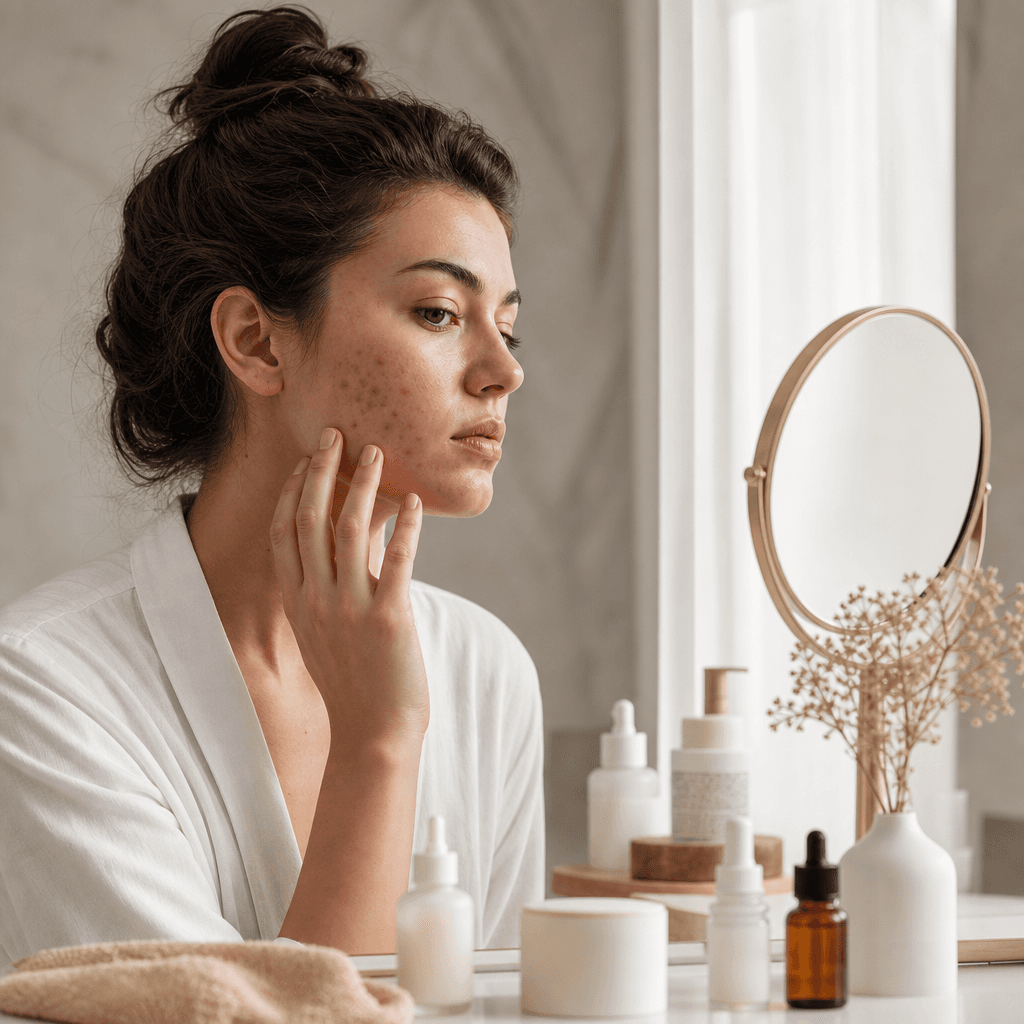
acne treatment for hormonal: Hormonal Acne Treatment: How to Finally Break the Breakout Cycle
This article is educational and does not diagnose a condition or replace care from a qualified medical professional.
If your breakouts arrive like clockwork along the jaw and chin, calm down for a week, then return before your next period, you are not failing at skincare. You are dealing with a pattern that ordinary products were never built to fix. Effective acne treatment for hormonal breakouts has to work with the underlying rhythm of your skin, not against it, and that is exactly where a structured, monitored plan outperforms another tube of spot cream. At Macherre Medical Center, our remote acne consultations are built around this reality: we look at how your skin behaves over weeks, adjust the plan as it responds, and keep the pressure on the cycle until it loosens its grip.
This guide explains what hormonal acne actually is, why the drugstore routine keeps letting you down, and how Macherre's ProAcne Program is designed to stabilise persistent adult breakouts over a 3–4 month course led by cosmetologist Dr. Maria. Where systemic hormonal medication genuinely belongs in the picture, we explain that too, and how our documentation helps your own physician make that call.
Table of contents
- What hormonal acne looks like and why it persists
- Why over-the-counter routines keep failing
- How Macherre's remote acne consultation works
- Inside the ProAcne Program: breaking the cycle over 3–4 months
- Where hormonal medication fits and how we support that decision
- Treating what breakouts leave behind
- Frequently asked questions
What hormonal acne looks like and why it persists
Hormonal acne in adults, especially women, has a recognisable signature. Inflammatory lesions tend to cluster along the lower face and jawline, flares often intensify in the days before a period, and the acne frequently persists well beyond the teenage years or appears for the first time in adulthood. It is commonly linked to hyperandrogenism or other endocrine changes, and this connection to circulating hormones is what makes it behave so differently from the occasional stress spot.
Underneath the surface, androgens are doing most of the driving. These hormones stimulate the sebaceous glands to produce more sebum, and that excess oil combines with follicular hyperkeratinisation — a build-up of skin cells inside the pore — to create the blocked, inflamed lesions you see and feel. In conditions such as polycystic ovary syndrome and other hyperandrogenic states, elevated androgen levels push this process harder, which is why treatment strategies in those cases often focus on reducing or blocking androgen activity.
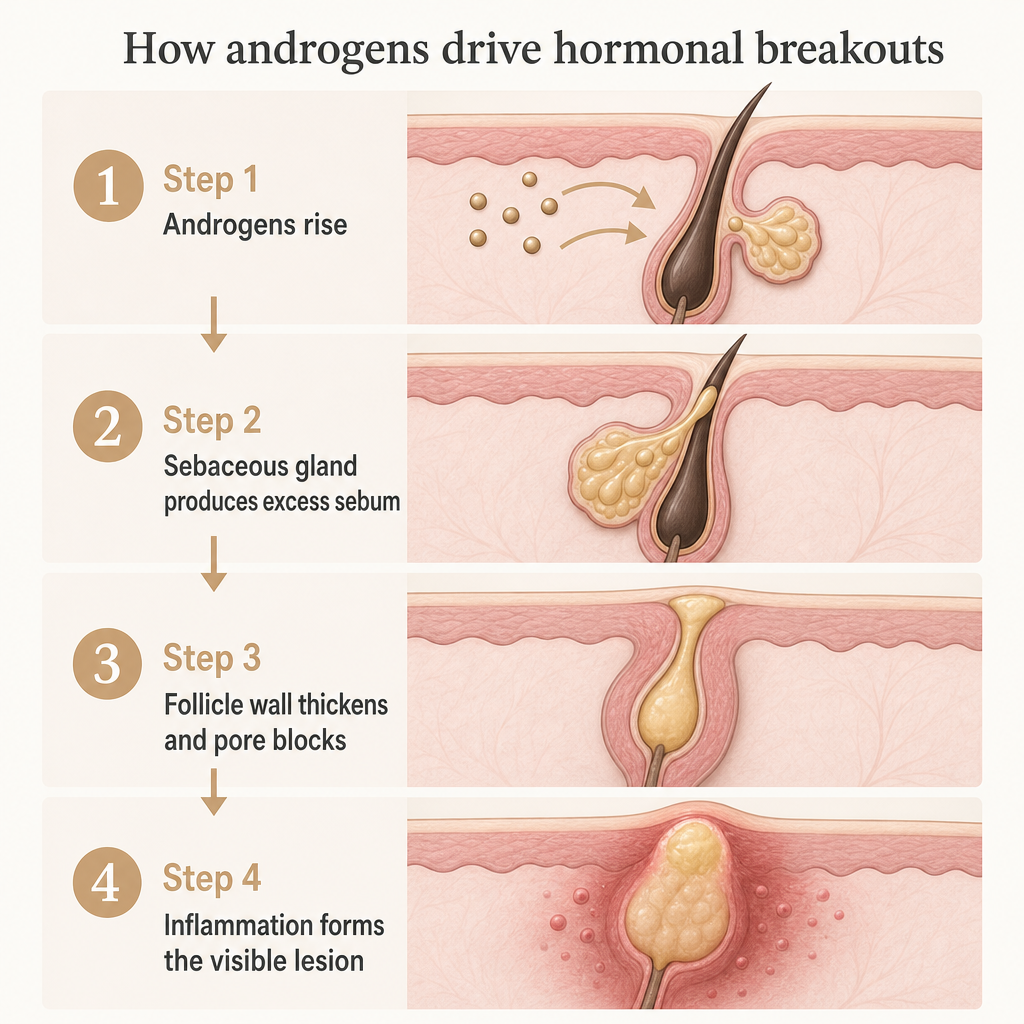
The practical consequence is that hormone-related acne is cyclical and stubborn. Because the hormonal signal keeps returning, the breakouts keep returning, and any treatment that only addresses the surface lesion without adapting over time tends to lose ground. This is also why so many adults describe their acne as resistant: standard topical regimens that clear a teenager's skin can barely hold the line against an androgen-driven pattern in a 30-something adult.
Understanding the pattern matters because it changes what a successful plan should look like. Instead of chasing individual pimples, the goal becomes reducing baseline inflammation, controlling oil, protecting the skin barrier, and then holding those gains through the predictable flare points month after month. That is a job for a monitored programme, not a one-time purchase.
Why over-the-counter routines keep failing
Most people arrive at a professional consultation after a long, expensive tour of the drugstore. The frustration is understandable. Over-the-counter products can genuinely help mild, occasional breakouts, but hormonal acne is a moving target, and a static shelf of products rarely keeps up.
The first problem is mismatch. Comedonal, inflammatory, and cystic lesions respond to different actives, and effective care usually depends on matching the right ingredient to the right lesion type at the right strength. Standard therapies used across acne include topical retinoids such as tretinoin and adapalene, benzoyl peroxide, topical antibiotics, and — in more severe cases and under medical supervision — systemic options like oral antibiotics or oral isotretinoin. Buying products at random, without knowing which category your acne falls into, means you may be treating the wrong problem entirely.
The second problem is relapse. Because androgen-driven sebum production and chronic inflammation keep resetting the process, breakouts commonly return the moment an effective routine is abandoned or a product loses its edge. Clinical experience with chronic adult acne consistently points to the same lesson: long-term, monitored therapy with adherence support and dose adjustment is what sustains clearance. A routine that never changes cannot respond to a condition that keeps changing.
The third problem is over-correction. Frustrated by slow results, many people stack strong actives, scrub aggressively, or switch products every few days. This damages the skin barrier, which is especially risky if your skin is already reactive, and it often creates redness and sensitivity on top of the acne. Gentle cleansing, non-comedogenic products, and consistency matter, but on their own these supportive measures are not a stand-alone fix for hormonally driven breakouts.
Hormonal acne rewards patience and precision, not a bigger pile of stronger products.
There is a fourth, quieter issue: everything beyond the bottle. Stress, sleep, diet, and the monthly hormonal cycle all shape how skin behaves, and no product label accounts for any of that. A plan that ignores these inputs is working with half the information. Our approach to acne-safe daily routines is built specifically to fold lifestyle, stress, and diet into the treatment rather than treating them as afterthoughts, because with hormonal acne the context is part of the condition.
How Macherre's remote acne consultation works
Macherre Medical Center is an online skincare consultation clinic led by Dr. Maria, a cosmetologist with five years of experience in acne, pigmentation, rosacea, sensitive skin, and early signs of ageing. The entire model is remote-first, which suits hormonal acne unusually well: because the condition is cyclical, being able to check in regularly and track flares over time is more valuable than a single in-person appointment.
The process on the homepage is deliberately simple, and it follows four steps. First, you fill out a form describing your concerns and goals. Second, you send photos of your skin. Third, you receive a consultation in which an expert develops an individual plan. Fourth, you follow the recommendations with the clinic supporting you at each stage. Intake happens through a secure portal where you submit your medical details and skin photos, and the follow-up work — remote monitoring, adjustments, and messaging — continues through a secure dashboard.
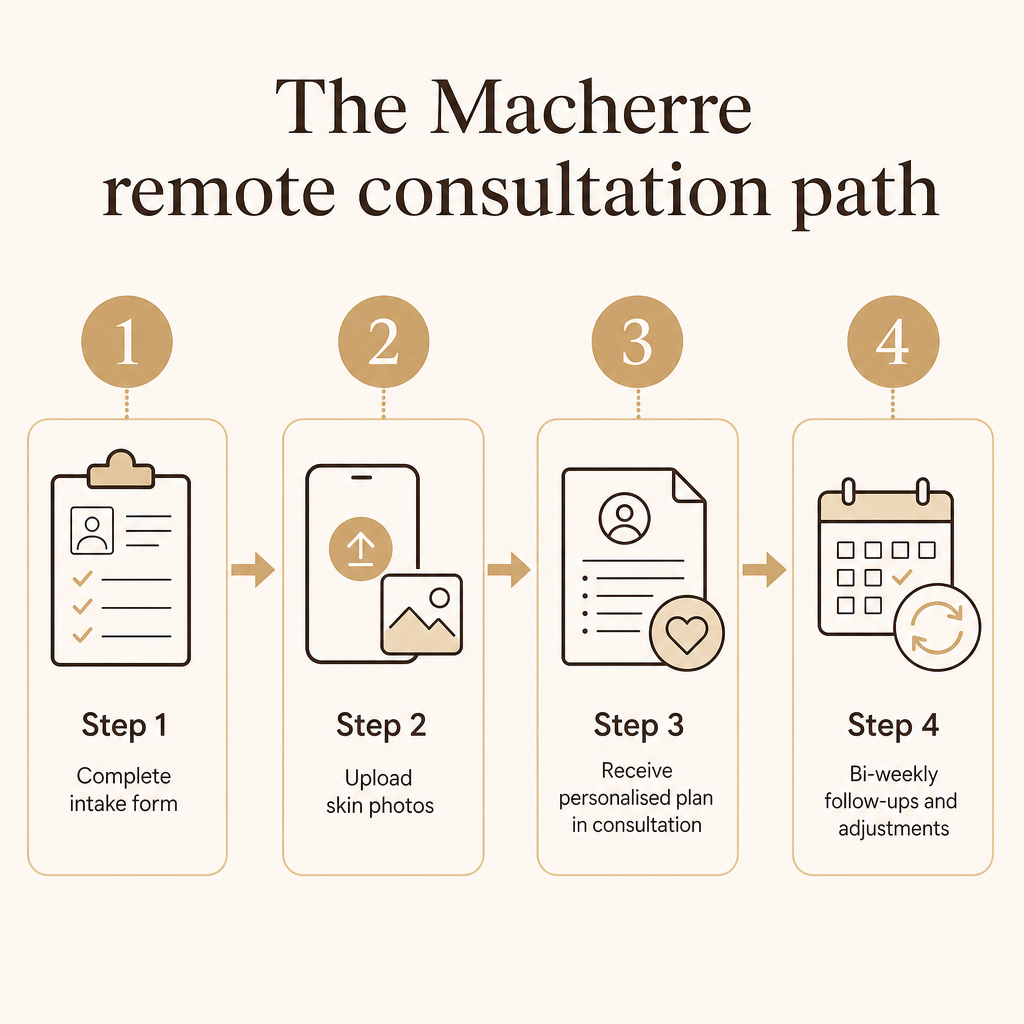
During the consultation itself, the provider reviews your skin photos, medical history, past treatments, and lifestyle factors, then builds a customised plan. That plan is not just a product list. It covers topical skincare, nutrition, and lifestyle adjustments, and it includes clear guidance on routine structure so you know exactly what to use, when, and why. The dedicated acne consultation service is designed around analysing your skin condition and history first, then producing a treatment plan with ongoing support rather than a static recommendation.
Consultations start from $115 | €99, which positions Macherre as a premium yet accessible alternative to in-person dermatology, and the service supports both English- and Russian-speaking clients. For international patients who would otherwise struggle to find local specialists who understand adult hormonal acne — or who simply want continuity of care in their own language — that accessibility is a genuine advantage. The remote format mirrors the intake, assessment, and monitoring rhythm of standard clinical acne workflows, without requiring travel or repeated in-office visits.
What makes this workflow effective for hormonal acne specifically is the pattern tracking. Because you upload photos over time and describe how breakouts line up with your cycle, stress, or season, the plan can be tuned to your actual triggers rather than a generic profile. Skin that flares premenstrually is treated differently from skin that reacts to a new season or a stressful stretch, and remote monitoring makes those distinctions visible.
Inside the ProAcne Program: breaking the cycle over 3–4 months
The ProAcne Program is Macherre's signature course, and it is built around a simple principle borrowed from how chronic acne actually behaves: you cannot break a cyclical pattern with a single intervention. You break it by staying on it long enough, and adjusting often enough, to outlast the cycle.
Structurally, the programme runs as a 3–4 month course with bi-weekly follow-ups. Each check-in is an opportunity to review new photos, assess how the skin is responding, and refine the protocol — stepping actives up or down, swapping products that irritate, and reinforcing the lifestyle and nutrition side of the plan. This continuous adjustment is the mechanism that matters. Instead of relying on static product recommendations that stop working when the skin shifts, the plan evolves with you across the months where hormonal flares would normally derail progress.
This structure lines up with what clinical experience consistently shows about chronic adult acne: sustained clearance depends on adherence, dose adjustment, and side-effect monitoring over time. Bi-weekly touchpoints keep adherence high because you are accountable and supported, and they catch problems — irritation, a barrier flare, a product that is not tolerated — before they undo weeks of progress. Our work on medical-grade skincare that actually delivers results explains why the combination of evidence-backed actives and real customisation, rather than one or the other, is what moves stubborn skin.
Macherre reports a 95% success rate for acne outcomes from the programme. It is honest to be precise about what that figure is: it is the clinic's own reported outcome from its internal programme, not a number drawn from an independent published clinical study. We share it because it reflects the results we see when clients complete a full structured course, and we would rather state its origin plainly than dress it up as external validation.
A note on pricing and duration is also worth making, because our materials have evolved over time. Older content described a $115 | €99 initial consultation and a $880 | €750 six-month package with a product kit; current site materials reference consultations from $115 | €99 and frame the ProAcne concept as a 3–4 month, bi-weekly remote course. Treat $115 | €99 as the current entry point, and confirm the exact programme pricing and length on the latest consultation pages or directly with the clinic before you commit, so there are no surprises.
The reason the programme window is measured in months rather than weeks is biological, not commercial. Skin cell turnover, the settling-in period for retinoids, and the need to ride out at least a couple of full menstrual cycles all mean that a fair test of a hormonal acne plan takes time. A 3–4 month course gives the plan enough runway to stabilise the skin and then hold it stable, which is the difference between a temporary clear-up and an actual break in the cycle.
Where hormonal medication fits and how we support that decision
For some adults with hormonal acne, topical and lifestyle optimisation is enough to regain control. For others — particularly those with obvious endocrine features, strong monthly flares, or acne that has resisted conventional therapy — systemic hormonal treatment becomes part of the conversation. It is important to be clear about what that involves and where Macherre sits in it.
Combined oral contraceptives (COCs) and spironolactone are widely recognised hormone-based therapies for adult female acne, used either on their own or alongside standard treatments when topicals alone are inadequate. COCs may be considered when hormonal contraception is also desired or when standard topical treatment falls short, while spironolactone works as an androgen receptor antagonist that can help with inflammatory and menstrual-related acne. These are generally positioned as second-line options, reserved for cases with hyperandrogenic features or resistant acne rather than as the first step for everyone, and they are typically combined with topical retinoids, benzoyl peroxide, or antibiotics for the best effect.
Here is the essential point about safety and scope. COCs, spironolactone, cyproterone acetate, and isotretinoin are prescription medications with systemic effects, and they must be prescribed and monitored by licensed physicians — dermatologists or gynaecologists — with attention to side effects, blood pressure, and, in the case of COCs, thromboembolic risk. Their use also has to follow local medical, contraceptive, and teratogenic-risk rules, which vary from country to country. Macherre is a cosmetologist-led consultation clinic, not a systemic-prescribing dermatology service, so we do not present ourselves as prescribing these medications across jurisdictions.
What we do is arguably more useful when systemic treatment is on the table: we build the documentation that makes your physician's decision easier and better informed. Over a structured course, we record acne severity, your response to a well-designed topical and lifestyle plan, and the pattern of your flares — including how they track with your cycle. If your results suggest systemic therapy is worth discussing, you walk into your local physician's office with a clear, dated record instead of a vague description, which is exactly the information a prescriber needs to weigh a second-line option responsibly.
This is why the remote model and hormonal medication are complementary rather than competing. Many adults prefer to minimise systemic drugs, and the evidence supports the idea that hormone-based therapy is not mandatory for every patient. Macherre lets you exhaust well-supervised topical and lifestyle optimisation first, then hand off a documented case if and when a prescription is genuinely warranted.
Treating what breakouts leave behind
Breaking the active breakout cycle is only part of the goal. Hormonal acne often leaves a trail — post-inflammatory hyperpigmentation, uneven texture, and heightened sensitivity — and a plan that clears the spots but ignores the aftermath leaves you looking at reminders in the mirror for months. Because Macherre treats the whole skin picture, the same personalised approach extends to these sequelae.
Marks left by acne are common and treatable, and they respond best to a plan sequenced correctly: calm the active acne first, then address the discolouration without provoking new irritation. Our post-acne and discoloration treatment focuses specifically on post-inflammatory hyperpigmentation and acne scarring, while our age spots and hyperpigmentation treatment covers broader pigmentation concerns that can overlap with post-acne marks and sun damage. Handling both under one coordinated plan avoids the common mistake of layering brightening actives onto skin that is not yet stable.
Sensitivity is the other frequent complication. Aggressive self-treatment, or simply the reactivity that comes with inflamed hormonal skin, can leave the barrier compromised, which then limits how much active treatment the skin can tolerate. Working through sensitive skin care in parallel means the acne protocol can be paced to what your skin can actually handle, rather than pushing strong ingredients onto skin that is already struggling. For clients whose main lingering concern is roughness or unevenness after the acne settles, texture-focused care rounds out the recovery so the finished result feels as clear as it looks.
Bringing these threads together under one clinic and one continuous record is the practical benefit of a remote, monitored model. Your acne, your pigmentation, your sensitivity, and your lifestyle triggers are not treated as separate problems handed to separate providers. They are managed as one evolving case, which is what a condition as connected as hormonal acne actually requires.
Frequently asked questions
How do I know if my acne is hormonal?
Hormonal acne tends to concentrate along the lower face and jawline, flare in the days before a period, and persist into adulthood or begin later in life rather than resolving after the teenage years. It is often linked to androgen activity or endocrine changes and is frequently resistant to basic over-the-counter routines. During a Macherre consultation, Dr. Maria reviews your photos, history, and flare patterns to help identify whether this cyclical pattern fits your skin and to build a plan around it.
Can Macherre prescribe hormonal medication like spironolactone or the pill?
Macherre is a cosmetologist-led online consultation clinic, not a systemic-prescribing dermatology service, and these are prescription medications that require a licensed physician's oversight and vary by country in how they are regulated. What we provide is thorough documentation — acne severity, your response to a structured topical and lifestyle plan, and your flare patterns — that you can share with your own doctor if systemic hormonal therapy is being considered. This makes that conversation with a prescriber more informed and better evidenced.
How long does it take to see results?
Hormonal acne is cyclical, so a fair test of any plan needs to span several weeks and ideally a couple of full cycles. The ProAcne Program runs as a 3–4 month course with bi-weekly follow-ups precisely for this reason: it gives actives time to work, lets the plan adapt as your skin responds, and holds the gains through the predictable flare points. Rushing the process is one of the main reasons over-the-counter attempts relapse.
What does it cost to start?
Consultations start from $115 | €99, which serves as the current entry point to the service. Older materials referenced a different package structure, so the most reliable approach is to confirm the exact ProAcne Program pricing and duration on the current consultation pages or directly with the clinic before committing. This positions professional, monitored care as a premium yet accessible alternative to in-person dermatology visits.
Will you help with the marks and redness left after the acne clears?
Yes. Post-inflammatory hyperpigmentation, texture changes, and sensitivity are common after hormonal acne, and Macherre treats these as part of the same coordinated plan. The clinic offers dedicated care for post-acne discolouration, hyperpigmentation, sensitive skin, and texture concerns, sequenced so the marks are addressed once the active acne is under control, without provoking new irritation.
Does the program work if I'm outside the clinic's home country?
The entire model is remote-first and designed for international access, with support for both English- and Russian-speaking clients. You complete the intake form and upload photos through a secure portal, receive your consultation and plan online, and continue with bi-weekly follow-ups via a secure dashboard. For systemic medication, which is regulated locally, we equip you with documentation to take to a physician licensed in your own country.