





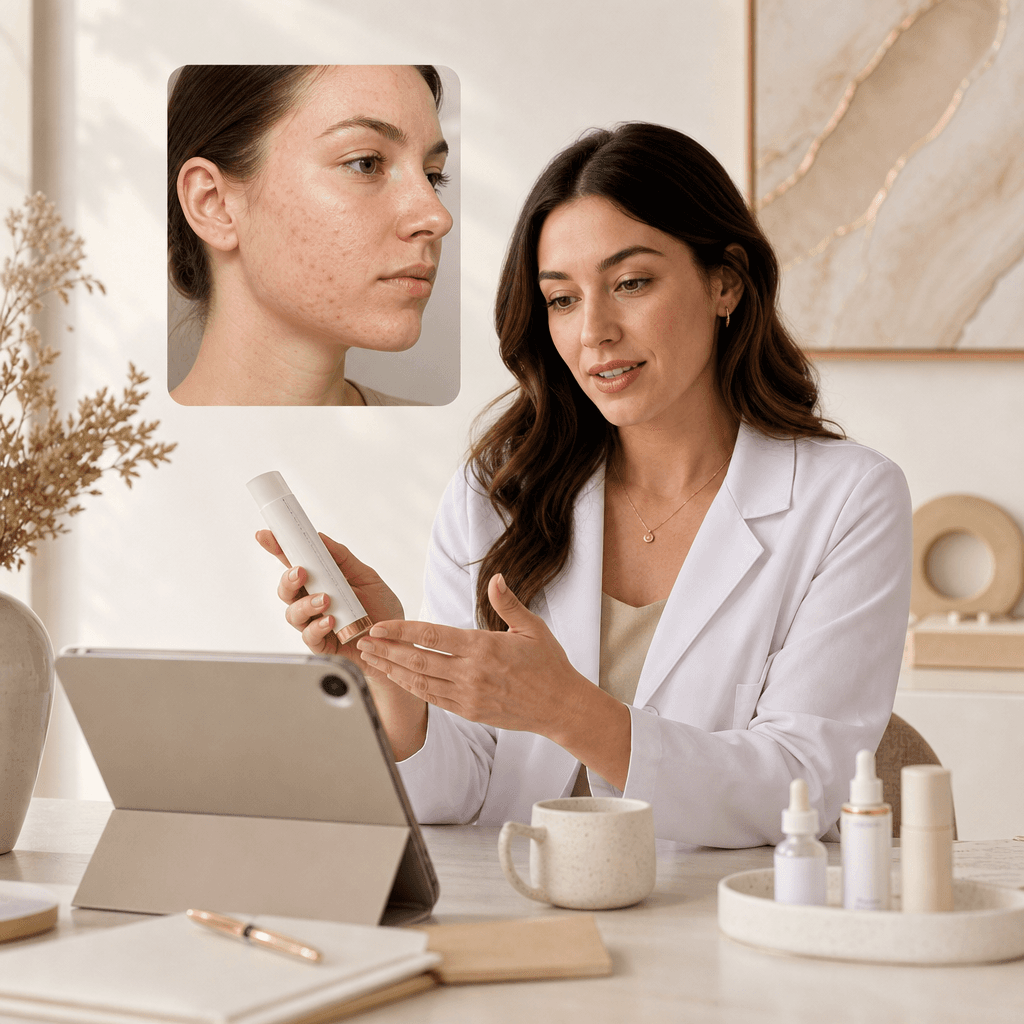
dermatologist recommendation for acne treatment: What Dermatologists Actually Recommend for Acne Treatment (And How to Get It Online)
This article is educational and does not diagnose a condition or replace care from a qualified medical professional.
Most people fighting acne have tried the same thing over and over: a new cleanser, a stronger serum, a viral spot treatment, then another product when the last one disappointed. What they rarely get is the one thing a dermatologist relies on before touching a single active — a real assessment of what kind of acne they have, how severe it is, and how their skin barrier handles pressure. That gap between what people buy and what clinicians actually do is where a proper dermatologist recommendation for acne treatment lives, and it is also where a remote clinic like Macherre Medical Center does its most useful work.
The short version is this: effective acne care is a supervised protocol, not a single miracle product. Below, we translate what mainstream dermatology guidelines recommend into plain language, then show how Macherre's remote consultation and its signature ProAcne Program are built to deliver that same structured, adjusted-over-time approach — in English and Russian, from home.
Table of contents
- Why single products keep failing
- What dermatologists actually recommend for acne
- How Macherre turns those principles into a remote plan
- Inside the ProAcne Program
- Choosing the right consultation for your skin
- Frequently asked questions
Why single products keep failing
The most common mistake is treating acne as one problem with one solution. In reality, comedonal acne (blackheads and whiteheads), inflammatory acne (red papules and pustules), and deeper cystic or hormonal acne respond to different combinations of ingredients at different strengths. A product that clears mild breakouts for a friend can irritate a compromised barrier or do nothing for hormonally driven cysts along the jawline.
Strength is the second trap. People often reach for the most aggressive option they can find, assuming faster results. Strong actives, especially retinoids, need a careful introduction schedule. Used too fast or too often, they trigger peeling, redness, and dryness that push people to quit before the medication has had time to work. The issue is rarely that the active is wrong; it is that the dose, frequency, and pairing were never matched to the individual skin.
The third trap is time. Skin does not respond to acne therapy in days. Meaningful change usually takes several weeks, and stubborn acne or post-acne pigmentation commonly needs around twelve weeks of consistent, supervised use to show clearly. Someone rotating through a new product every two weeks never stays with anything long enough to judge it fairly — and never adjusts the plan based on how the skin actually reacted.
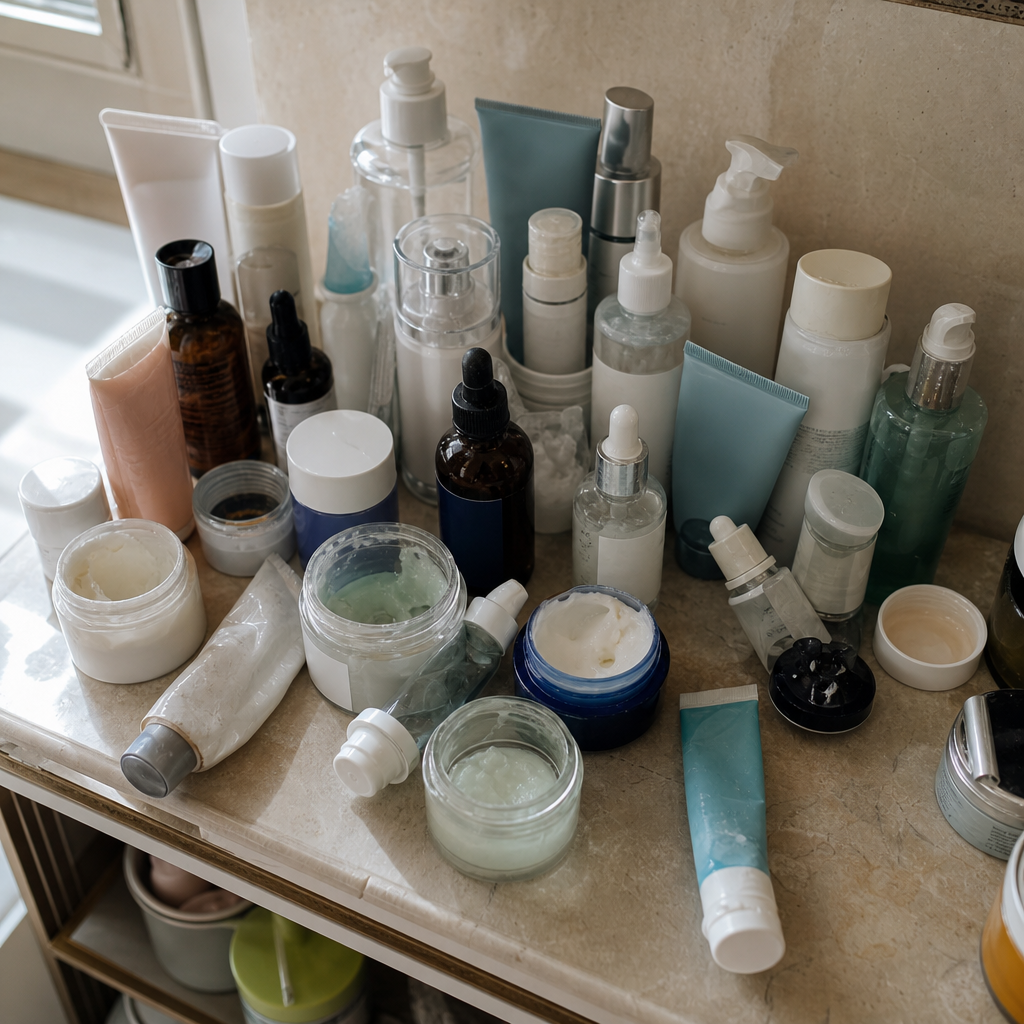
This is why so many people describe their skincare history as expensive experimentation. Without a diagnosis, a matched combination, and follow-up, even good ingredients underperform.
What dermatologists actually recommend for acne
When you look past marketing at how acne is actually treated in clinical practice, a consistent structure appears. The American Academy of Dermatology's acne guidance centers on combining topical therapies with different mechanisms of action rather than relying on any single agent, and matching the intensity of treatment to the severity of the acne.
For mild acne, the workhorses are topical: benzoyl peroxide and topical retinoids, sometimes joined by azelaic acid, salicylic acid, or a topical antibiotic. Benzoyl peroxide reduces acne-causing bacteria, retinoids normalize how skin cells shed and keep pores from clogging, and the acids help with texture and mild inflammation. A well-built mild regimen usually pairs at least two of these so they cover different parts of the problem.
For moderate acne, guidelines commonly combine benzoyl peroxide, a topical retinoid, and an antibiotic — topical or oral — with hormonal therapy considered for some women whose acne follows a hormonal pattern. The point is layered coverage: unclog, calm inflammation, reduce bacteria, and, where relevant, address the hormonal driver.
For severe acne or acne with scarring risk, treatment escalates to structured systemic options. That can mean oral antibiotics combined with topical retinoids and benzoyl peroxide, or oral isotretinoin for appropriate cases. Isotretinoin is strongly recommended for severe, scarring acne but carries meaningful monitoring and safety requirements handled under physician supervision.
Two principles cut across every severity level. First, oral antibiotics are never meant to be used alone; they are combined with topical agents like benzoyl peroxide and kept to the shortest reasonable course, often around three to four months, to limit antibiotic resistance. Second, combining mechanisms of action beats stacking one type of product. You can read the underlying clinical recommendations in the American Academy of Dermatology's acne management guidelines.
The practical takeaway for anyone shopping for acne care: the "recommendation" is not a hero ingredient. It is a diagnosis, a combination of actives at the right strengths, a safe schedule for introducing them, and a defined timeline with adjustments along the way.
How Macherre turns those principles into a remote plan
Here is the part most people miss when they compare acne solutions online: the barrier to good results is rarely access to actives. Retinoids, benzoyl peroxide, and acids are widely available. What is missing is the diagnostic step, the correctly matched combination, and the follow-up. That is exactly what Macherre's remote-first model is designed to supply.
Macherre Medical Center is an online skincare consultation clinic led by Dr. Maria, a cosmetologist with five years of experience across acne, rosacea, pigmentation, sensitive skin, and early signs of aging. The workflow is deliberately simple and mirrors the clinical process: you fill out a form describing your problems and goals, you send photos of your skin, and you receive a personalized plan covering topical skincare, nutrition, and lifestyle adjustments, followed by ongoing support as your skin responds.
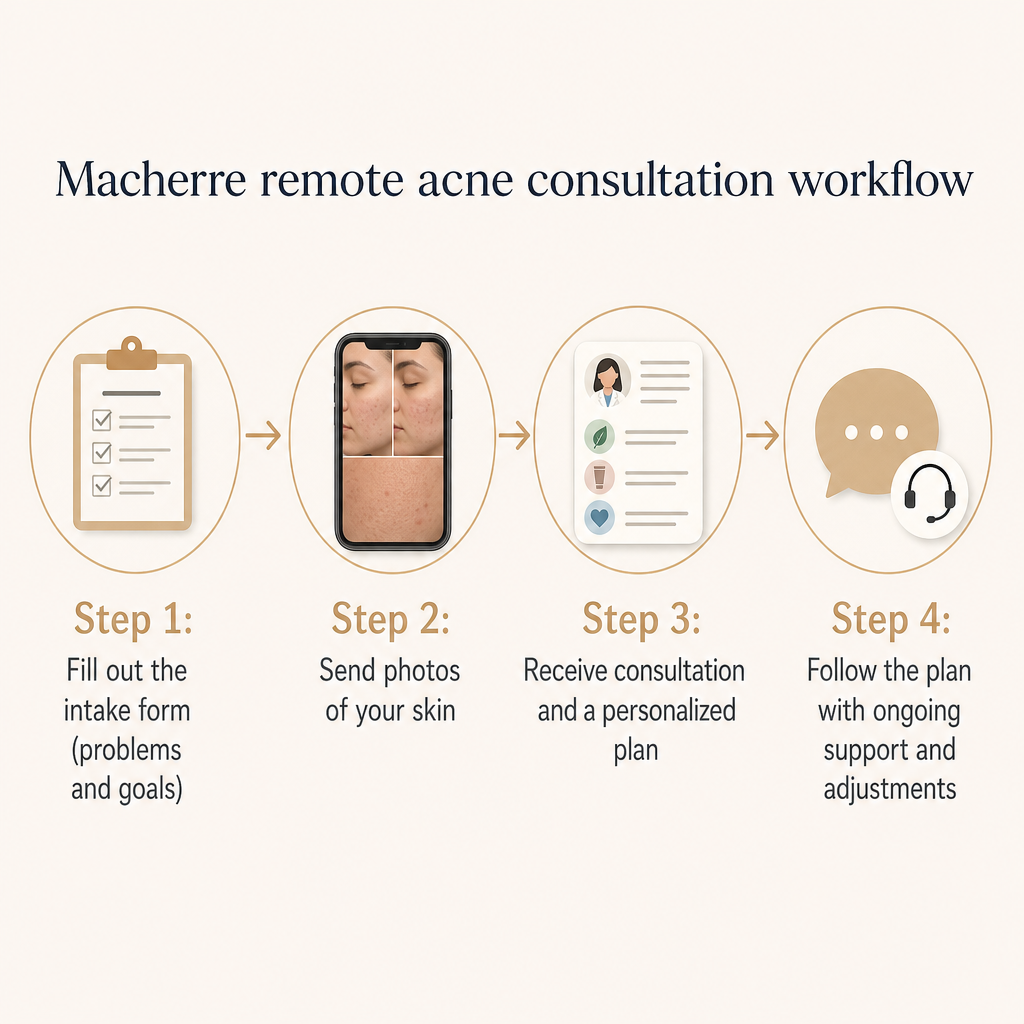
During the consultation, the clinic reviews your skin condition, medical history, and lifestyle factors, then designs a customized treatment plan with clear guidance on products and routines. On its professional acne treatment and consultation page, Macherre states a 95% success rate for acne. It is important to read that as a first-party clinic claim rather than an independently published trial result — the methodology, sample size, and definition of success are not detailed publicly — but it reflects how the clinic positions its structured, plan-led approach.
The intake and photo review recreate the diagnostic step remotely: identifying whether your acne is comedonal, inflammatory, hormonal, or mixed, whether there is post-acne discoloration, and how your barrier tolerates strong actives. From there, the plan selects which guideline-aligned components make sense for you and, crucially, at what strength and on what schedule. Macherre's own approach emphasizes medical-grade skincare matched to barrier status and introduced gradually — not maximally strong, but correct for the specific skin — which is precisely the caution dermatology recommends for retinoids and other potent actives.
Consultations start from $115 | €99, positioning the service as a premium yet accessible alternative to in-person visits, with support for both English- and Russian-speaking clients. Because it is remote, the same structured care reaches international patients who may not have easy access to a local acne specialist.
One honest limitation worth stating: public materials do not spell out whether Macherre clinicians prescribe systemic medications such as oral antibiotics or isotretinoin, or coordinate those with an external physician. For topical-first and non-medication-preferring clients this matters less, but if your case likely needs systemic treatment, confirm the prescribing pathway directly during your consultation.
Inside the ProAcne Program
For chronic or hormonal acne that has not responded to generic products, Macherre's signature pathway is the ProAcne Program — and it is where the clinic's model lines up most closely with how dermatologists run real acne treatment over time.
The program is a structured course running roughly three to four months with bi-weekly follow-ups. It begins with an initial skin assessment that reviews your history, your submitted photos, and your likely triggers. From there, the plan matches actives at an appropriate strength and sets a barrier-safe introduction schedule, particularly for retinoids. Nutrition and lifestyle layers sit alongside the topical treatment rather than replacing it.
The bi-weekly rhythm is the feature that separates a supervised program from solo experimentation. Instead of committing to a fixed routine and hoping, you and the clinic adjust strength, frequency, and adjuncts based on how your skin actually reacted. If a retinoid causes too much peeling, the schedule slows down. If breakouts are stubborn, the combination shifts. This loop of intake, personalized plan, and repeated adjustment over three to four months maps directly onto the timelines dermatology uses for topical combinations and short antibiotic courses.
A note on pricing and inclusions: earlier program content listed a $115 | €99 initial consultation and a six-month ProAcne course at $880 | €750 that bundled bi-weekly checkups and an eight-product skincare kit, while more recent statements describe consultations from $115 | €99 within the remote model. That suggests pricing has been updated, so treat these figures as historical reference points and confirm current pricing and exactly what is included before you enroll.
The program suits mild-to-severe acne in people who feel they have already tried everything off the shelf. For those who prefer a non-medication or topical-first path, the plan can lean on retinoids, benzoyl peroxide, azelaic and salicylic acid, and disciplined barrier care — while still being honest about when a prescribed systemic option may be the more appropriate route for severe or refractory cases.
Choosing the right consultation for your skin
Acne rarely arrives alone. Before you book, it helps to name your primary concern, because Macherre organizes care around specific, consultation-led services rather than a generic product menu. A few decision cues make the choice clearer.
If active breakouts are your main problem, start with the comprehensive acne consultation, which identifies the cause and builds an individual plan; the ProAcne Program is the deeper commitment when the acne is chronic, hormonal, or long-unresolved. If your breakouts are mostly clogged pores, a focused plan for blackheads and whiteheads removal targets comedonal skin and prevention.
Many people finish an acne cycle only to be left with marks. If the marks bother you more than new pimples, the post-acne and discoloration treatment addresses post-inflammatory hyperpigmentation and scarring, which influences whether a plan leans on retinoids, azelaic acid, or other pigment-targeting agents. Persistent facial redness that flares easily points toward rosacea management rather than a standard acne protocol, since the treatment logic differs.
Sensitive, reactive skin deserves its own caution, and the sensitive skin care pathway plans gentler introductions when strong actives have burned you before. In practice, several of these threads combine into one plan — for example, active acne plus post-acne marks — which is exactly why a single consultation that reviews your photos and history beats buying separate products for each symptom.
A short self-check before you book: How severe and what type is your acne? How well have you tolerated strong actives in the past? Are post-acne marks or scarring part of the picture? Do you want a topical-first approach or are you open to systemic options? And do you value bilingual, remote, follow-up-driven care over a one-off visit? Your answers point you toward either a single acne consultation or the full ProAcne Program.
To prepare, gather clear, well-lit photos of your skin and write down every product you have used recently along with how your skin reacted to each. That history saves time and helps the clinic avoid repeating what already failed.
Frequently asked questions
Do I need to see a dermatologist in person, or is online acne treatment enough?
For most mild-to-moderate acne, the core of treatment is a well-matched topical combination introduced on a safe schedule and adjusted over time — all of which can be handled remotely through an intake form, skin photos, and scheduled follow-ups. Severe, scarring, or clearly hormone-driven acne may still need systemic medication under physician supervision, so if that describes you, confirm the prescribing pathway during your consultation.
What ingredients will a dermatologist-style acne plan usually include?
Guidelines favor combinations rather than a single product: benzoyl peroxide and a topical retinoid form the backbone for many cases, with azelaic acid, salicylic acid, or a topical antibiotic added depending on severity. Moderate-to-severe acne may involve oral antibiotics (always paired with topicals and kept short) or hormonal therapy. The exact mix depends on your skin type, severity, and tolerance.
How long before I see results?
Acne treatment works on a timeline of weeks, not days. Visible improvement typically takes several weeks, and stubborn acne or post-acne pigmentation often needs around twelve weeks of consistent, supervised use. Macherre's ProAcne Program runs roughly three to four months for this reason, with bi-weekly adjustments so the plan evolves with your skin.
How much does a Macherre consultation cost?
Consultations start from $115 | €99 in the current remote model. Earlier ProAcne content referenced different figures, including a $115 | €99 initial consultation and a $880 | €750 multi-month program with a product kit, which suggests pricing has been updated. Confirm the current price and exactly what each option includes before you book.
Is the 95% success rate an independently verified figure?
No. The 95% success rate is a first-party claim from Macherre's acne consultation page. The clinic has not published the methodology, sample size, or definition of "success," so treat it as a clinic outcome claim rather than an independently verified statistic when weighing your options.
Can I get help in Russian as well as English?
Yes. Macherre supports both English- and Russian-speaking clients, which makes the remote model practical for international patients who want structured, follow-up-driven acne care without traveling to a local specialist.
If your main concern is acne that OTC products never fixed, the most useful next move is not another purchase — it is a diagnosis. Prepare your photos and product history, decide whether you want a single acne consultation or the full ProAcne Program, and start the plan that adjusts with your skin instead of guessing at it alone.