





How to Use Acne Spot Treatments Effectively (Without Damaging Your Skin)
This article is educational and does not diagnose a condition or replace care from a qualified medical professional.
How to Use Acne Spot Treatments Effectively (Without Damaging Your Skin)
The pimple appears overnight. You spot it in the bathroom mirror at 7 a.m. — raised, hot, glaring back at you from the side of your chin. You reach for the spot treatment, twist the cap, and squeeze a generous blob onto your fingertip. More is better, right? You smear it across the lesion, pat moisturizer over the top, and head out the door. The next morning: the pimple is still there. But now it has company — a flaking, tight, red halo of irritated skin spreading two centimeters around it. Concealer cakes. Foundation flakes. You've turned one problem into two.
Here is the truth that almost no skincare brand will tell you plainly: the acnes spot treatment itself is almost never the problem. The active ingredients work. Benzoyl peroxide kills C. acnes. Salicylic acid dissolves the sebaceous plug. Azelaic acid calms inflammation. The breakdown happens in the dose, the timing, what touched your skin five minutes before, and what you layered over the top thirty seconds later. The protocols below are the ones Dr. Maria uses with her ProAcne clients to shrink isolated breakouts without barrier collateral damage — which ingredient for which lesion, exactly how much, how often, and the single layering mistake that quietly cancels every other step you took.
Most readers are doing 80% of the protocol right and getting 0% of the result because of one wrong move. Find the move. Fix it. Watch the lesion behave.
Table of Contents
- Why Most Spot Treatments Fail (Even the "Right" Ingredient)
- Matching the Ingredient to the Lesion: A Decision Matrix
- The Seven-Step Application Protocol That Won't Burn Your Barrier
- The Layering Mistakes That Cancel Out Your Spot Treatment
- Timing, Frequency, and Knowing When to Stop
- Reading Your Skin: Normal Response vs. Damage Signal
- Your Triage Path: Where to Go From Here
- Frequently Asked Questions
Why Most Spot Treatments Fail (Even the "Right" Ingredient)
There are five distinct ways a perfectly valid acnes spot treatment fails on a face that should respond to it. Each has a mechanism. Knowing the mechanism is the first step out of the cycle.
Over-application strips the barrier before the active reaches the lesion. Both benzoyl peroxide and salicylic acid are concentration-active ingredients. According to dermatologist Dr. Sam Bunting, the therapeutic ranges for over-the-counter use are 2.5–5% for benzoyl peroxide and 1–2% for salicylic acid. A pea-sized amount delivered onto a single lesion contains the full therapeutic dose. Applying a dime-sized blob does not deliver more active to the pimple — the pimple has a fixed surface area and absorption ceiling. The excess simply spreads across healthy skin that does not need treatment, where it inflames the perimeter. The pink-to-red "treatment ring" you sometimes see around a shrinking pimple is not the active doing extra work. It is over-application, and it is doing nothing for the pimple itself.
Damp-skin application changes everything. Skin that is still wet from cleansing absorbs actives faster and deeper. That sounds productive. It is not. Faster absorption past the lesion means the active reaches surrounding tissue where it has no useful job — only an irritation effect. Dr. Sam Bunting specifies a 5–10 minute wait until the skin is fully dry before spot application. Most people wait 30 seconds. The difference between 30 seconds and seven minutes is the difference between targeted treatment and chemical scatter.
Layering on top of other actives creates pH conflict or oxidative degradation. Benzoyl peroxide is an oxidizer. When you apply it over or near L-ascorbic acid (vitamin C), the BP oxidizes the vitamin C, neutralizing both. Applying BP on the same night as a retinoid compounds barrier stress without compounding efficacy. These are widely-observed formulator cautions in dermatology practice — head-to-head trials specifically isolating these interactions in spot-treatment contexts are not what's being cited here, but the practitioner guidance from Dr. Sam Bunting on single-active spot use is consistent across her published protocols.
The treatment ring of red skin around a shrinking pimple is not the active working. It is over-application, and it is doing nothing for the pimple itself.
Wrong ingredient for the lesion type. Comedonal acne — closed and open non-inflamed bumps (blackheads, whiteheads) — responds to salicylic acid because SA is lipophilic. It penetrates the oily sebaceous plug and dissolves it from inside. Inflamed papules and pustules respond to benzoyl peroxide because BP is antibacterial against C. acnes, the organism driving the inflammation. Most people reach for whatever spot product is already in the cabinet, regardless of what is actually on their face that morning. A benzoyl peroxide stick on a closed comedone will dry the skin around the bump while leaving the plug intact. A salicylic acid dab on a deep inflamed pustule will exfoliate the surface and do nothing for the bacterial colony underneath.
Barrier damage masquerading as acne. When the barrier is compromised — from over-cleansing, over-exfoliating, or, yes, overusing spot treatments — small bumpy reactive flare-ups appear that look like breakouts but are not. These reactive sensitive-skin presentations are not infectious or comedonal. They are inflammation. Spot-treating them makes them worse, because the active is the thing the skin is reacting to in the first place. The visual distinction matters: a true pimple has a defined head and an inflamed core. Barrier-damage bumps are diffuse, often itchy, frequently clustered in areas that did not previously break out, and they appear in clusters or halos rather than singly.
The right ingredient on the right lesion at the right dose works. Everything else is noise.
Matching the Ingredient to the Lesion: A Decision Matrix
If wrong-ingredient-on-wrong-lesion is one of the top failure modes, the matching system has to be readable in fifteen seconds. Use the table below as a triage layer over any acnes spot treatment you currently own.
| Active | OTC Concentration | Best for | Onset | Irritation Risk |
|---|---|---|---|---|
| Benzoyl peroxide | 2.5–5% | Inflammatory papules, pustules | 2–4 days | Moderate–high |
| Salicylic acid | 1–2% | Comedones, oily zones | 3–5 days | Mild–moderate |
| Azelaic acid | 10–20% | Hormonal, rosacea-prone, post-acne redness | 5–7 days | Low |
| Niacinamide | 5–10% | Inflammation, redness | 3–5 days | Very low |
| Sulfur | 3–10% | Pustular, fungal-pattern bumps | 5–7 days | Moderate |
| Adapalene 0.1% | 0.1% gel | Comedonal, preventive (not acute) | 4–8 weeks | Moderate (purge) |
A second view — which skin types and conditions each active fits, and where to avoid:
| Active | Ideal Skin Type | Avoid If |
|---|---|---|
| Benzoyl peroxide | Oily, resilient | Pregnant, very sensitive, retinoid same night |
| Salicylic acid | Combination to oily | Already using BHA/AHA exfoliant in routine |
| Azelaic acid | Sensitive, barrier-compromised | (Generally well tolerated) |
| Niacinamide | All, especially sensitive | (Best as support, not primary spot active) |
| Sulfur | Oily | Dehydrated skin, strong scent sensitivity |
| Adapalene 0.1% | Resilient | You need fast results on a single pimple |
Benzoyl peroxide vs salicylic acid is the single most common reader question, and the answer is mechanistic: if the lesion is red, raised, and hot, BP. If the lesion is a small flesh-colored or dark-headed bump with no inflammation, SA. Mixing them on the same lesion does not double the result — it doubles the irritation. Pick the one that matches the pathology.
Concentration is not efficacy. A 10% benzoyl peroxide is not "stronger" than 5% in clinical-outcome terms. The antibacterial benefit plateaus past roughly 5%, while irritation continues to climb. For most readers, 2.5–5% is the ceiling worth using. Higher concentrations exist primarily for prescription combination products and resilient body acne, not facial spot use.
Adapalene appears on the matrix because readers will ask about it, but it is not really a spot treatment. It is a retinoid that works at the comedone-formation stage and prevents future pimples over a 4–8 week horizon. Using adapalene on a single existing pimple tonight is a long-game tool deployed against a short-game problem. Keep it in the routine; do not expect it to flatten the lesion you have right now.
The overlap most readers in their 20s and 30s sit inside: a hormonal pattern on the jaw and chin combined with reactive, easily-flushed skin. Benzoyl peroxide is often too aggressive for this profile. Salicylic acid can work if breakouts are comedonal. For inflammatory lesions in this overlap group, azelaic acid is frequently the only consistently tolerated option, and it doubles as a treatment for the post-inflammatory redness that lingers after the pimple heals. If your breakouts are primarily comedonal acne — blackheads and whiteheads — salicylic acid is the lead, and benzoyl peroxide is a wasted match.
The Seven-Step Application Protocol That Won't Burn Your Barrier
This is how to apply an acnes spot treatment with the right dose, the right timing, and the right layering. Each step has a reason. Skip one, and the others stop compounding.
1. Cleanse to bare skin with a gentle, non-stripping wash. Use a low-foam, sulfate-free cleanser. Pat dry — never rub. Residual makeup, sunscreen, or facial oil sits between the active and the lesion and blocks absorption. Hot water makes the barrier more permeable than you want it. Lukewarm is the standard. This is the foundation step everyone rushes past.
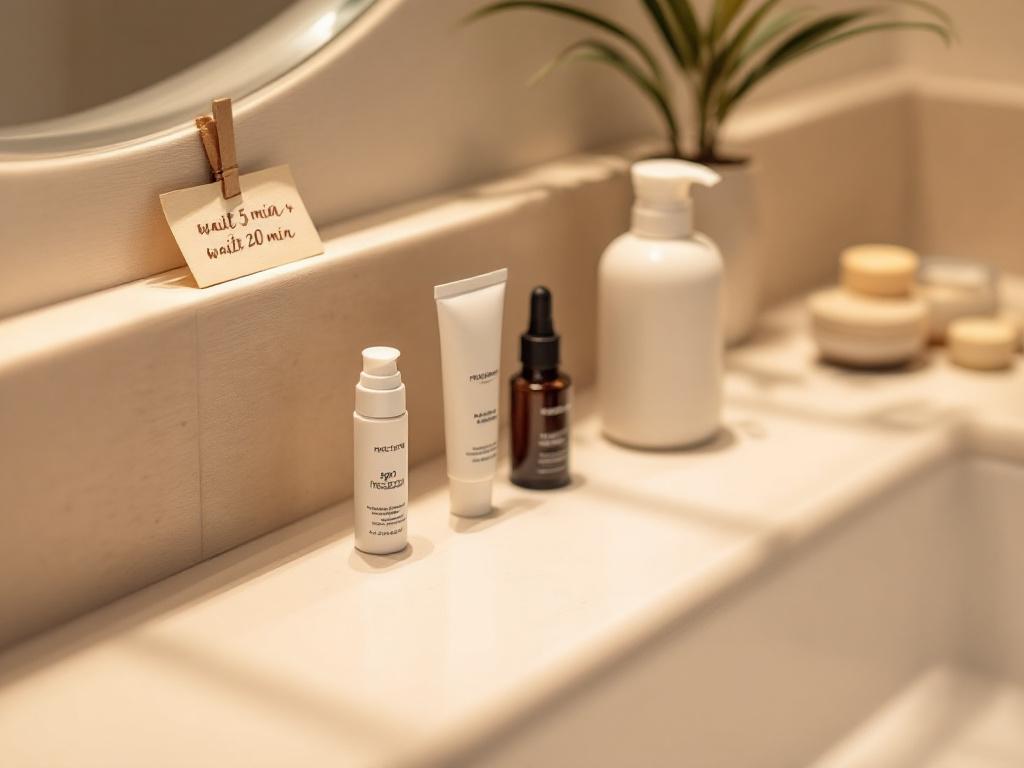
2. Wait 5–10 minutes until the skin is fully dry. This is the most-skipped step in the protocol and the highest-impact one. Per Dr. Sam Bunting's guidance, damp skin pulls the active deeper than the lesion needs it, and laterally into the surrounding tissue, where the only thing it produces is irritation. If you are the type to rush a routine, set a timer. Brush your teeth. Make tea. Do anything except apply the next product before the skin is genuinely dry to the touch.
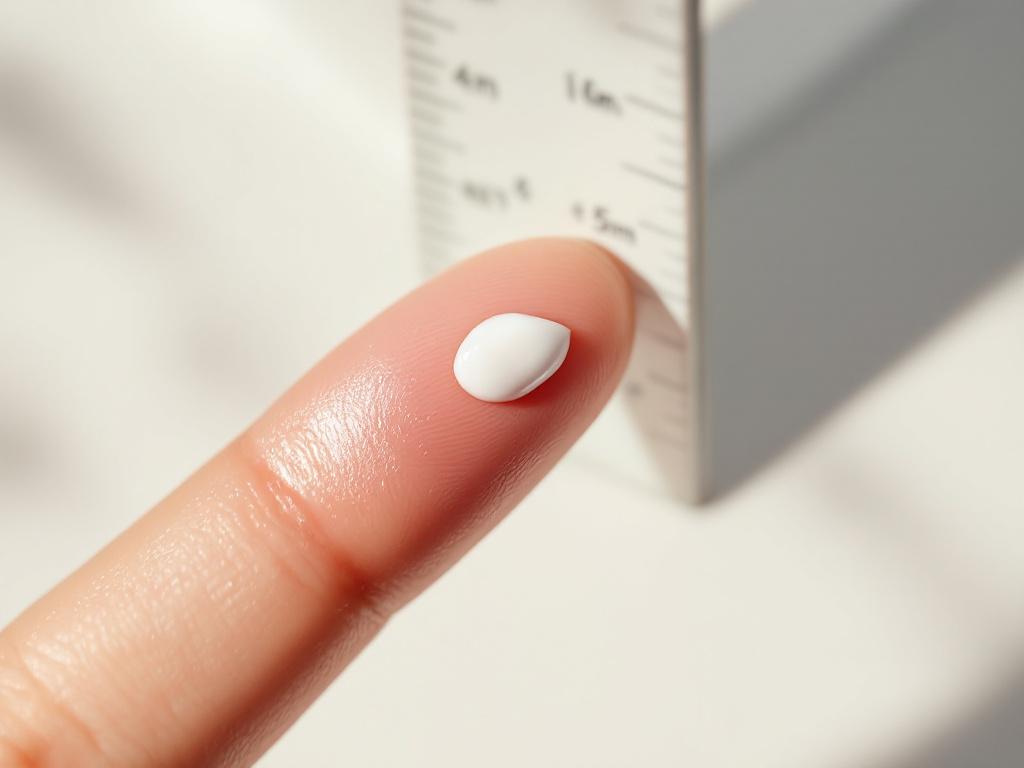
3. Dispense a pea-sized amount — or smaller — on a clean fingertip or cotton swab. A single pimple needs roughly the volume of half a grain of rice. A pea-sized amount covers a small cluster of three to five lesions, not a single bump. According to packaging and product education from Kiehl's [VENDOR SOURCE], pea-sized is the convention for an application zone; scale down for a single lesion. "Pea-sized" is practitioner convention rather than a clinically standardized dose, but it is the consensus across the dermatology educators citing it.
4. Apply directly to the lesion with a 2–3 mm buffer of untreated healthy skin around it. Place the product on the pimple itself, not the ring around it. If overage spreads, dab off the excess immediately with a clean cotton swab. Healthy skin does not need treatment. Treating it is what creates the red halo and the flaking ring you have probably seen before.
5. Wait 15–20 minutes before applying moisturizer. The active needs time to settle into the lesion without being diluted or pushed sideways into surrounding skin by occlusive layers stacked on top. This lengthens your routine. It is worth it. Skipping this step is what turns a precise treatment into a diffuse irritation.
6. Apply moisturizer to the rest of the face — including over the dried treatment spot. Moisturizer over a properly settled spot treatment does not cancel the active. It protects the barrier of the surrounding skin. Skipping moisturizer "so the treatment can work harder" is one of the most self-defeating moves in skincare. A compromised barrier amplifies irritation while reducing the active's targeted benefit.
7. Apply broad-spectrum SPF 30+ the next morning, every morning, no exceptions. Benzoyl peroxide application and salicylic acid use both increase photosensitivity. Sun on freshly treated skin creates the post-inflammatory hyperpigmentation that takes six months to fade. The spot treatment shrinks the pimple. The sun leaves the mark.

One pea-sized dot applied once daily will outperform three applications of just a bit more. The barrier you keep intact is the variable that determines how fast the pimple flattens.
The Layering Mistakes That Cancel Out Your Spot Treatment
The standalone protocol above is clean. Real routines are not. Most readers are stacking spot treatment into a regimen that already contains other actives, and that is where good protocols die. Here are the six layering combinations that quietly cancel results — most of them silently, with no obvious warning sign until the skin starts flaking days later. These are the acne treatment combinations to avoid.
- Benzoyl peroxide and retinol together on the same night. Using benzoyl peroxide and retinol together — or BP with retinal, adapalene, or tretinoin in the same evening — compounds barrier stress without compounding efficacy. BP is an oxidizer; some retinoid molecules are degraded by direct contact with it, particularly in the same layer. Per Dr. Sam Bunting's layering guidance, alternate them on different nights, or use BP in the morning and the retinoid at night with a full cleanse between them. Never apply them on top of each other in a single session.
- Benzoyl peroxide and L-ascorbic acid vitamin C in the same routine. BP oxidizes vitamin C on contact. You end up with two neutralized products on your skin plus the irritation of having applied both. If you want both in your regimen, separate by at least twelve hours — vitamin C in the morning, BP at night — and never under the same moisturizer layer.
- Salicylic acid spot treatment over an AHA or BHA exfoliating toner or serum. This is chemical double-exfoliation concentrated on a single point. The result looks like rapid drying on day one, followed by days of peeling that you may mistake for the pimple "scabbing over." It is not. It is over-exfoliation. Pick one chemical exfoliant per routine; on the lesion zone, let the spot treatment be it. Repeated stacking like this is one of the fastest paths to uneven texture and roughness across the cheek and jaw zones.
- Niacinamide and azelaic acid stacked directly on top of each other on flushing-prone skin. Both are well tolerated solo and both are typically recommended for sensitive skin. Stacked, their combined vasoactive effect can trigger flushing in rosacea-prone skin and flushing patterns. Buffer with a moisturizer layer between them, or use one as the spot active and place the other elsewhere in the routine.
- Two different spot treatments on the same lesion. Readers with one stubborn pimple sometimes layer benzoyl peroxide and sulfur, hoping the combination will work where one active didn't. The compound effect is irritation, not efficacy. One active per lesion. If the chosen active is not working after 5–7 days, switch ingredient class — do not stack.
- Hydrocortisone over a spot treatment. OTC hydrocortisone (0.5–1%) calms inflamed cystic lesions short-term but does not treat acne. Layering it over an active treatment does not enhance results — it suppresses the inflammation the active is using as part of its resolution mechanism. Use one at a time. Limit hydrocortisone to a maximum of three consecutive days; longer use thins the skin.
The second-most common reason a spot treatment fails is not the treatment. It is the active you applied twenty minutes earlier that competed with it, or the one you applied twenty minutes later that smothered it.
Timing, Frequency, and Knowing When to Stop
Application is set. Layering is set. The remaining question is how often to use acne spot treatment and when to walk away from it. Four scenarios, four protocols.
Acute response — a new inflamed pimple, day one or day two. Apply once daily, evening only, for three to five days. The first 48 hours is the critical window where active intervention can shorten the lesion's natural lifespan from the usual 7–10 days down to roughly 4–6. After day two, the lesion is in its resolution phase, and spot treatments help less because the bacterial driver is already being cleared by the immune response. Daily-until-flat is the protocol Dr. Sam Bunting describes, followed by a switch to a gentler active for redness resolution.
Maintenance — a zone that breaks out repeatedly, like the same chin spot every cycle. Move from daily acute treatment to two or three nights per week of preventive application. Switch the active here, too: azelaic acid or a low-percentage salicylic acid is more appropriate than benzoyl peroxide for sustained zone use, because BP's irritation profile becomes a problem when you are using it on the same skin every week. The goal has shifted from "kill this pimple" to "keep this follicle clear."
Chronic acne — multiple breakouts across multiple zones. At this stage, spot treatment is a supporting actor, not the lead. You need a full routine: gentle cleanser, daily preventive active (usually a retinoid), barrier-supportive moisturizer, daily SPF. Spot treatment goes on active flare points only. If you are dabbing treatment onto five or more pimples at once, the math has stopped working. That is a face-wide preventive active's job, not a spot product's.
Day versus night application. Overnight application gives roughly eight hours of contact time versus two to four hours during the day, but it risks transfer to pillowcases (benzoyl peroxide bleaches fabric — use white cotton or a dedicated treatment pillowcase). Daytime application allows immediate SPF protection but reduces contact time. The practical rule for overnight acne treatment: night for inflamed lesions where you want maximum contact, day for comedonal salicylic acid use where shorter contact still does the job. Hydrocolloid acne patches sit in a separate category — they are a daytime option for raised pustules with surface fluid, absorbing exudate rather than delivering an active. Useful, but not interchangeable with a chemical spot treatment.
The stop signal. This is the protocol almost no one follows, and it is the difference between healthy skin and a barrier emergency. If a correctly applied spot treatment shows no flattening or color reduction in 5–7 days, the ingredient is wrong for that lesion type. Do not escalate the dose. Do not double-apply. Do not add a second active. Go back to the matrix in the previous section and switch ingredient class. Comedonal lesions on salicylic acid that are not responding may be deeper cysts requiring professional intervention. Inflamed lesions on benzoyl peroxide that are not responding may be hormonal in origin and need a hormonal pattern in the chin and jaw zone approach rather than a topical antibacterial.
The acne spot treatment frequency framework, simplified:
- Day 1–2: Apply once nightly. Assess at day three.
- Day 3–5: If the lesion is flattening or fading, continue. If unchanged, audit your protocol (dose, dry-down time, layering) before assuming the product is the failure.
- Day 7: If there is still no change, the ingredient is wrong. Switch class. Do not escalate dose.
Reading Your Skin: Normal Response vs. Damage Signal
A working spot treatment produces predictable feedback. So does a damaging one. Reading the difference is the skill that separates skincare that improves your face from skincare that slowly degrades it. Use this table to interpret acne spot treatment irritation and distinguish it from healthy response.
| Signal | Normal Response (Continue) | Damage Signal (Modify) |
|---|---|---|
| Redness | Light pink immediately, fades in 2–4 hours | Persistent redness 12+ hours or spreading |
| Dryness or flaking | Mild tightness at lesion site only | Flaking across multiple zones, including untreated areas |
| Pimple appearance | Flatter, less inflamed by day 2–3 | No change by day 5–7, or visibly worse |
| New bumps near spot | None | Small, diffuse, itchy bumps in a halo around treated area |
| Sensitivity to water | Normal | Stinging from plain water, moisturizer, or sunscreen |
| Texture | Smooth, intact | Rough, papery, or shiny-tight (barrier compromise) |
The three-tier response framework keeps the decision simple. Normal response across most rows: continue the protocol as written. The treatment is working at the intended dose, and the mild signals you see are the active doing its job within tolerable limits. One or two damage signals: cut application frequency by half — every other night instead of nightly — and reinforce the barrier with a bland ceramide moisturizer for 3–5 nights before resuming. Do not abandon the treatment entirely if the lesion is still active; reduce the dose intensity instead. Three or more damage signals, or any stinging-from-plain-water signal: stop the spot treatment for 5–7 days. The work right now is barrier reinforcement and ceramide repair, not acne management. A compromised barrier does not respond to acne actives. It amplifies their irritation while blocking their benefit. Sometimes the fastest path to a flatter pimple is to stop treating it entirely for a week.
The most damaging spot treatment side effects come from one specific look-alike trap. Barrier-damage bumps — small, diffuse, often clustered in a halo around the original treated lesion — get misread as "new breakouts." That misreading prompts more treatment. More treatment makes them worse, which prompts more treatment again, and the cycle compounds for weeks before the reader realizes the breakouts are not breakouts at all. The visual cue that distinguishes them: location and pattern. True new acne appears in zones consistent with your normal breakout pattern (chin, jawline, T-zone). Irritation bumps appear in a radius around a treated lesion or across zones that have not historically been acne-prone for you. If the bumps formed around where you applied product yesterday, the product is the cause.
Your Triage Path: Where to Go From Here
Spot treatments are precision instruments. They resolve isolated breakouts beautifully when the right active meets the right lesion under the right protocol. They were never designed to manage chronic, widespread, or hormonally-driven acne, and most reader frustration with them is not about product failure — it is about asking a precision tool to do system-level work it was never built for. The triage below tells you which path you are on, and what to do next.
Path A — Continue and refine. Your protocol is working.
- Spot treatment is shrinking individual lesions within 3–5 days
- No persistent redness, flaking, or stinging
- Breakouts are occasional and isolated (1–3 lesions per cycle)
- No hormonal pattern locked to the jaw or chin
→ Maintain your current protocol. Rotate to a gentler active — azelaic acid or niacinamide — during maintenance weeks between breakouts. Reassess seasonally; humidity, climate change, and stress shift skin needs every three months.
Path B — Build a full routine. Spot treatment alone is not enough.
- Breakouts recur in the same zones every month
- More than five active lesions at any given time
- Post-pimple marks taking months to fade
- Skin feels reactive even between breakouts
→ Spot treatment is now the supporting actor. The lead role belongs to a preventive daily active (often a retinoid), a barrier-supportive moisturizer, and SPF as the non-negotiable floor. Post-acne discoloration needs its own targeted approach — pigment correctors and tyrosinase inhibitors — not more spot treatment on already-healed lesions. Treating a fading red mark with benzoyl peroxide will not fade it faster. It will only damage the skin that is trying to repair itself.
Path C — Escalate to professional assessment. This is chronic acne treatment territory.
- Tried three or more ingredient classes with no consistent response
- Acne pattern strongly hormonal: chin, jaw, cyclical timing
- Cystic lesions that don't surface or resolve in 7–10 days
- Acne covers more than 20% of facial area
- Visible scarring or deep post-inflammatory pigmentation
→ This is when to see a dermatologist for acne — or, given the realities of waitlists and cost, when to consider a structured remote consultation that combines nutritional review, hormonal screening guidance, and prescription-level topical planning into one coordinated plan. Topicals alone, no matter how well-applied, will not resolve a root cause that lives in hormones, inflammation, or diet. The ProAcne Program is built specifically for clients sitting at this threshold — those who have exhausted OTC protocols and need a multi-vector plan that runs over three to four months with bi-weekly check-ins.
Spot treatments are precision tools, not bandages. They resolve isolated breakouts brilliantly. Widespread, recurring, or hormonal acne needs a system — and a system starts with knowing what you are actually treating.
Frequently Asked Questions
Can I use an acnes spot treatment under makeup?
Yes, with conditions. Apply the spot treatment first, wait the full 15–20 minutes for absorption (per Dr. Sam Bunting's guidance), follow with moisturizer, let that settle for five more minutes, then apply SPF and makeup over the top. Skipping the wait time is what causes the visible red ring under foundation — the active gets pushed sideways during application and deposits on healthy skin around the lesion. Avoid layering treatment directly under thick cream foundations or stick concealers on the treated spot itself; the occlusion changes how the active behaves and can trap irritation rather than resolve it.
Why did my spot treatment work for two days and then stop?
Three likely reasons, in order of frequency. First, the lesion has simply moved into its resolution phase — the active did its early-stage antibacterial work, and the pimple is now finishing on its own timeline regardless of further application. Second, mild tachyphylaxis (short-term tolerance) to the active, especially with daily benzoyl peroxide use. Rotating to a different mechanism — salicylic acid or azelaic acid — for a week typically resets responsiveness. Third, and most commonly missed, the lesion was misdiagnosed: a closed comedone or hormonal cyst treated with an antibacterial active will plateau quickly because the mechanism does not match the pathology.
Is prescription spot treatment better than over-the-counter for prescription vs OTC acne treatment decisions?
"Better" depends entirely on the lesion. Prescription-strength clindamycin or higher-dose benzoyl peroxide combinations are more potent against inflammatory acne, but potency is not always what your skin needs. OTC at the right dose, applied with the protocol above, will outperform prescription at the wrong dose applied carelessly. The genuine advantage of professional involvement is diagnostic — knowing whether you are looking at bacterial inflammation, hormonal cysts, fungal folliculitis, or barrier-damage bumps — and matching treatment to mechanism. The protocol you follow matters more than the prescription pad the product came from.
Still applying these protocols and still breaking out? Recurring or hormonal acne usually needs more than the right topical applied the right way. A professional acne consultation through the ProAcne Program — led by Dr. Maria — combines targeted topicals with nutrition, lifestyle adjustments, and bi-weekly follow-ups across a 3–4 month course. Consultations are fully remote, start at $115 | €99, and begin with a skin photo review and a personalized plan built around your specific lesion patterns. Book a consultation →